
5 Best Game Boy Games Of All Time, Ranked
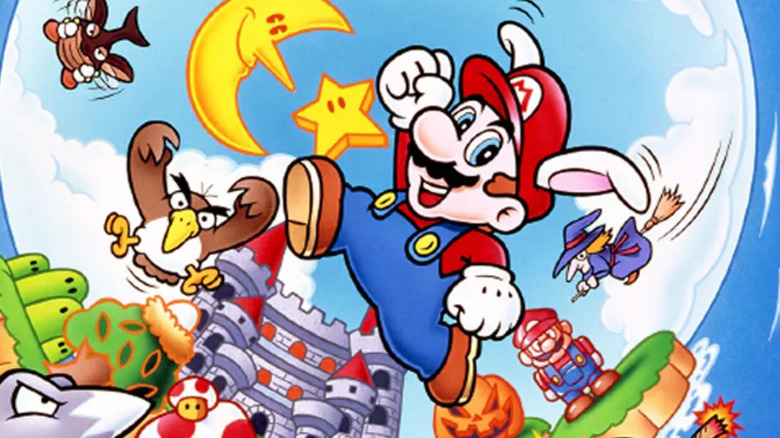
Nintendo's first handheld console to use individual game cartridges was the Game Boy, which launched worldwide in 1989. In contrast to competitors like Sega's Game Gear or the Atari Lynx, the original Game Boy prioritized affordability in order to appeal to potential consumers. This was exemplified by the Game Boy's signature green screen, providing a monochromatic display that kept the console's development cost and sales price lower. This strategy paid off because, along with the Game Boy Color introduced in 1997, the Game Boy sold over 118 million units.
This success wasn't based around pricing strategy and hardware capabilities alone, of course, with the Game Boy boasting an extensive catalog of titles. Many of Nintendo's biggest franchises at the time had their own Game Boy releases while others got their start on the console. Nintendo followed up this success with more handheld consoles, starting with the Game Boy Advance, but the original Game Boy still holds a special place in the company's legacy. These are the five best Game Boy games of all time ranked, giving the Nintendo handheld a legacy that endures today.
5. Tetris (1989)
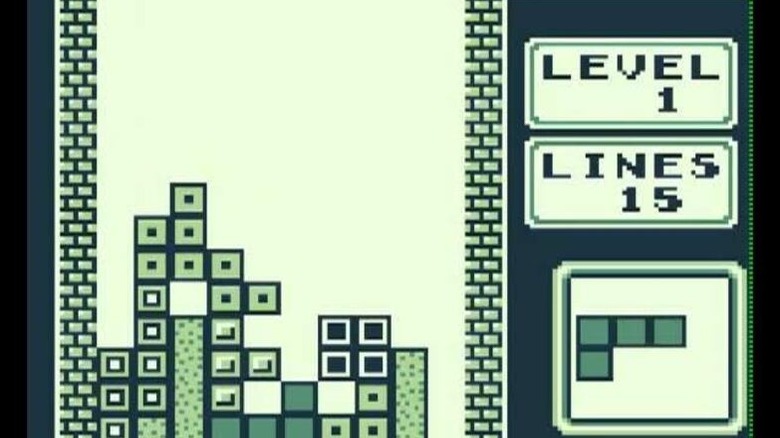
When the Game Boy debuted in North America and Europe, it wasn't bundled with "Super Mario Land" as its pack-in game. Instead, it was "Tetris." The ultimate puzzle game, the title features the classic gameplay of organizing descending blocks into complete rows to clear them out. For players with the console's Link Cable peripheral, the game offered two-person competitive multiplayer to see who could last the longest. The game eventually received an enhanced version for the Game Boy Color, "Tetris DX," with additional game modes and a revamped presentation.
"Tetris" is one of those games that feels perfectly suited for the Game Boy, easy to take on the go and not too technically demanding on hardware. Gamers thought so too, with the title selling over 35 million copies across the console's lifecycle. While certainly not the flashiest release in the Game Boy's library, that was never really the goal for "Tetris," favoring endless replay value over technological bells and whistles. A reminder that the best games aren't always the most advanced, "Tetris" remains a tried-and-true highlight on the Game Boy.
4. Donkey Kong (1994)
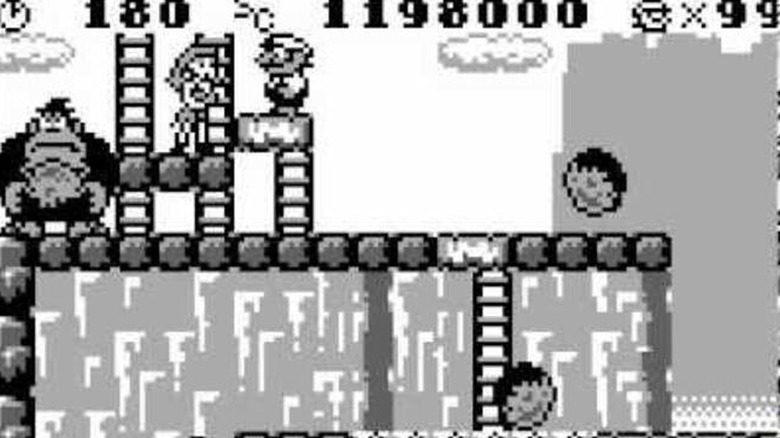
The 1994 Game Boy version of "Donkey Kong" has an ingenious twist, initially starting out as a recreation of the four levels of the early '80s arcade game. Rather than concluding, the titular ape absconds with Pauline once again, prompting Mario to chase him on a brand-new, expansive adventure. Bringing in gameplay mechanics from "Donkey Kong Jr." and "Super Mario Bros. 2," Mario pursues Donkey Kong across 97 levels that feature a greater emphasis on puzzle-solving. Along the way, the platforming grows considerably more complex, while Mario gains new abilities with every fresh set of levels, all before a final confrontation with Donkey Kong.
"Donkey Kong" was the first new game starring the titular ape since the lackluster "Donkey Kong 3" in 1983. The Game Boy title provides some of the most complex and imaginative level designs of any platforming title on the console. Though incredibly difficult in its later levels, the gameplay mechanics are intuitive enough where the frustration never feels untenable or cheaply overpowering. Overshadowed these days by "Donkey Kong Country," launched later that year on the Super Nintendo, the Game Boy "Donkey Kong" is one of the best platformers of its era.
3. Super Mario Land 2: 6 Golden Coins
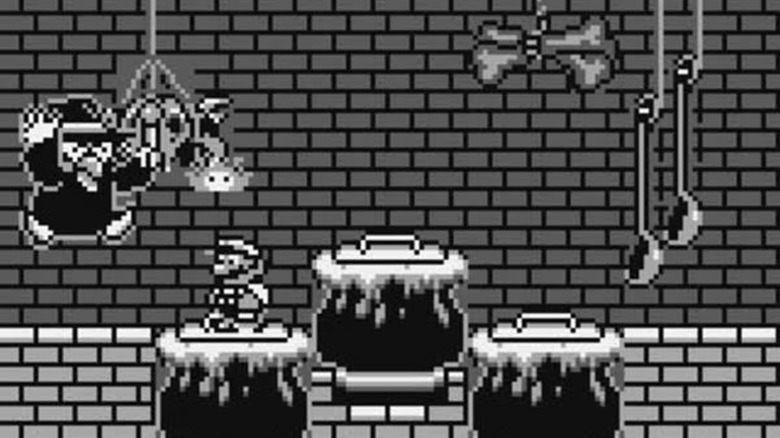
While certainly good, the original "Super Mario Land" was the shortest "Super Mario" game to beat, only touching on what the Game Boy was capable of. The game's 1992 sequel, "Super Mario World 2: 6 Golden Coins" improved upon the platforming gameplay and presentation on every conceivable level. The game opens with Mario returning to his home of Mario Land only to find his greedy rival Wario, in his debut appearance, has conquered it in Mario's absence. Mario travels to different regions within Mario Land to obtain six magical coins to unlock his castle and banish Wario from his domain.
"Super Mario Land 2: 6 Golden Coins" brings a more cartoonish design to the "Super Mario" franchise, definitely in comparison to its predecessor. The sprites are more detailed and visibly exaggerated, matching the wacky environments that Mario traverses this time around. But beyond its presentation, the game genuinely feels like an all-around improvement, with more engaging level design and distinct enemy types, including boss characters. The best "Super Mario" title on the original Game Boy, "Super Mario Land 2" looks and handles wonderfully.
2. The Legend of Zelda: Link's Awakening
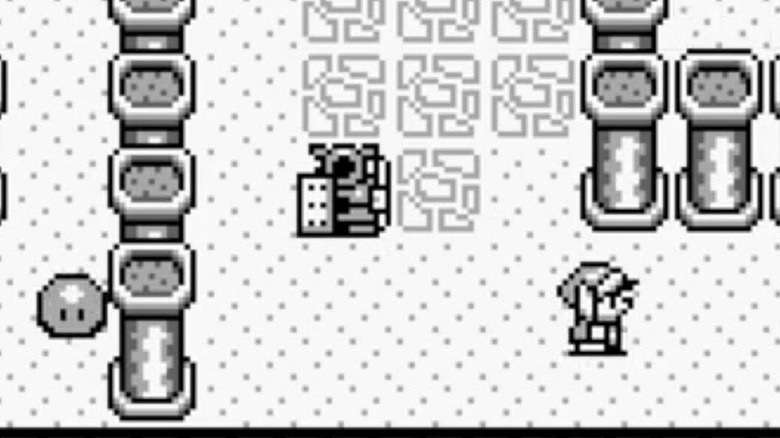
Whenever "The Legend of Zelda" shows up on a console, it's a big deal and 1993's "Link's Awakening" was no different. A sequel to "A Link to the Past" on the Super Nintendo, the game opens with Link sailing the high seas after vanquishing Ganon back in Hyrule. After being caught in a shipwreck, Link regains his senses on the mysterious Koholint Island, which has its own monsters and cavernous dungeons. Defeating these monsters, Link recovers a group of magical instruments to awaken the mythical Wind Fish to finally leave the island.
With similar gameplay mechanics and presentation as "A Link to the Past," albeit with the Game Boy's eight-bit monochromatic display, "Link's Awakening" is a solid "Legend of Zelda" experience. The series' usual top-down perspective and combat translates well to the handheld platform and the dungeon designs are complex and appropriately puzzle-driven. After the initial game's success, Nintendo released an enhanced version for the Game Boy Color and a faithful remake for the Nintendo Switch decades later. Providing a slightly dream-like take on the long-running franchise, "The Legend of Zelda: Link's Awakening" effectively took the series on the go with a memorably epic adventure.
1. Pokémon Red/Blue/Yellow
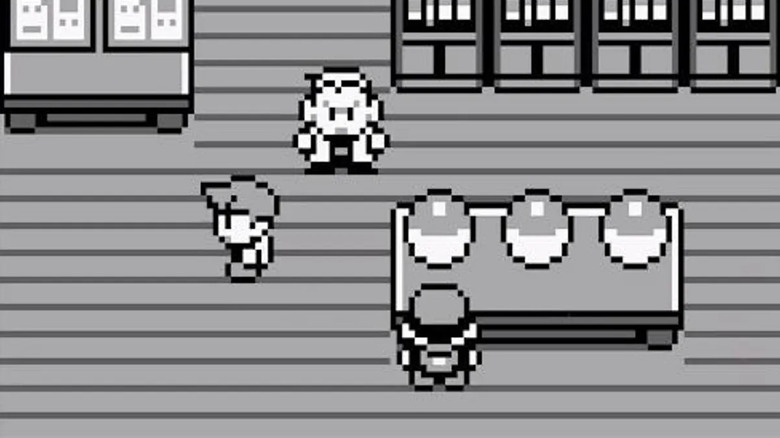
The Game Boy game that was the console's best seller wasn't from an established franchise like "Super Mario" or "The Legend of Zelda" title but "Pokémon." Given what a global phenomenon the property became, across television, merchandising, and countless follow-ups, this is to be expected, but those initial three games are still standout experiences. The series' first two simultaneously released titles, "Pokémon Red" and "Blue" had players explore the Kanto region, trying to capture Pokémon, battling other trainers to become the region's champion. 1998's "Pokémon Yellow: Special Pikachu Edition" leaned more into the popular anime, with players getting Pikachu as their starter Pokémon, and with the Pokémon natively available in the game slightly remixed.
The international success of Pokémon wasn't a limited time fad, but stemmed from the way the games blended collector mechanics with accessible RPG gameplay. Every kid in the '90s had their own favorite Pokémon, as a testament to the game's diversely appealing character design. The mainline entries of the series retain a lot of sensibilities from the initial pair of 1996 games, both in gameplay and presentation, highlighting its consistent effectiveness. There's a reason why Nintendo keeps releasing remakes and remasters of the original Pokémon games. It's because the sheer fun factor remains an integral part of the overall experience.