
5 Titles That Prove 1983 Was The Best Year In Gaming History
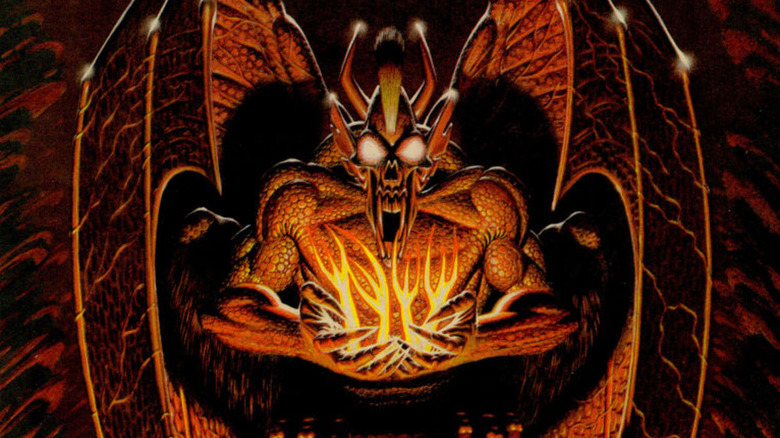
The gaming industry saw tremendous highs and lows around the time of the video game crash of 1983, which particularly impacted the North American market. Despite this huge setback, game developers were still innovating and pushing the medium forward throughout the year. Publishers dropped games that made an impact on the arcade scene (there are actually several arcade games from 1983 that changed gaming forever) and there were some memorable home platform releases, too. With that in mind, we're highlighting the standout games that managed to find an audience as the industry regrouped. In some cases, the impact of these titles is still being acutely felt even now, several decades later. Here are five video games that prove 1983 was actually the best year in gaming history despite the impact of the crash.
Xevious
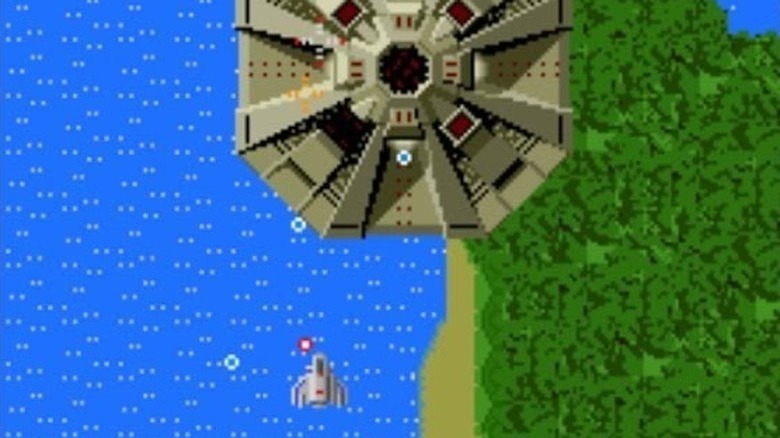
Space shooters began dominating the video game industry after "Space Invaders" dropped in 1978 and they were still very popular by 1983. After creating its own space shooter in "Galaga" (one of several '80s video games with endless replay value), Namco took an even more ambitious approach to the genre with "Xevious." The game is named after an invading extraterrestrial force, with players controlling a lone spaceship defending Earth. What sets it apart from "Space Invaders" and "Galaga" is that players aren't restricted to horizontal movement as they traverse the vertical-scroll screen.
"Xevious" might not be particularly well known today, but it was an arcade game from 1983 that kids couldn't stop playing. It took the genre out of its usual cosmic backdrop with some detailed and vibrant terrestrial levels, doing so a full year before Capcom's "1942" series launched. The attention to detail was mindblowing at the time, and this went beyond the visuals — design leader Masanobu Endō actually created a language called Xevian so he could name individual alien invaders. "Xevious" marked a subtle but important step forward for shoot'em-ups, proving the genre still had plenty of life left in it.
Nobunaga's Ambition
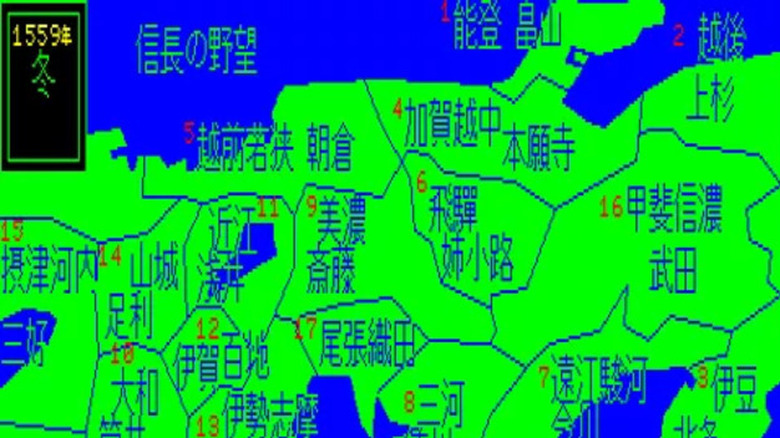
Nearly a decade before Sid Meier launched the "Civilization" series in 1991, Koei released its own turn-based strategy game with "Nobunaga's Ambition." Set in 16th century Japan, the game follows different factions vying for control of the feudal country. Players build up their communities as well as their armies, with gameplay unfolding in turns, including combat sequences. The goal is not only to defeat rival factions' armies, but also to maintain the loyalty of their people as you progress.
"Nobunaga's Ambition" spawned an entire strategy game series for Koei, and while future installments would look a lot different, the franchise's foundations were laid masterfully in the inaugural 1983 title. It wouldn't be until its second installment that it officially came to North America. From that point onwards, the franchise became a strategy game staple, helping the genre flourish on PCs. Where the Koei game outdid its contemporaries was in its seamless blend of community building and tactical combat.
Mario Bros.
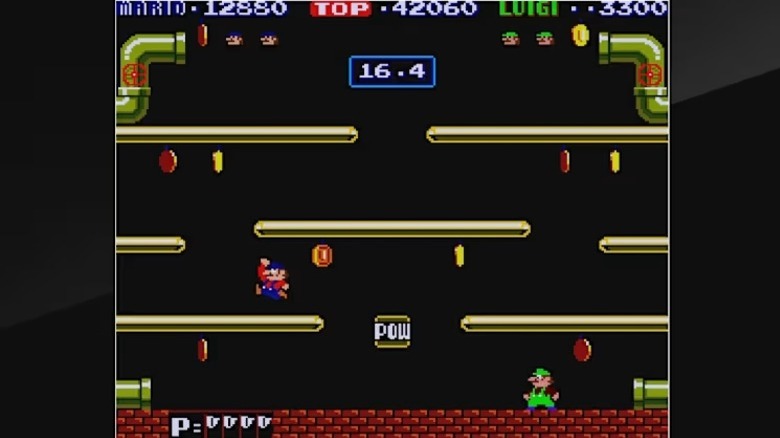
After being introduced in 1981's "Donkey Kong" and then appearing in both "Donkey Kong II" and "Donkey Kong Jr." the following year, Mario got top billing in 1983's "Mario Bros.," in which he and his brother Luigi traverse a sewer system swarming with various monsters emerging from pipes at the top of the screen. Players defeat these creatures by hitting the ground underneath them and then kicking them away, with the enemies moving faster and faster as the game progresses.
"Mario Bros." is a lot different from the types of adventures that Mario is now known for, but the game marked an important step in defining the franchise. Over the next couple of years, Mario completely took over Nintendo, with "Super Mario Bros." being a pack-in title for the Nintendo Entertainment System. It may not have been his debut, but this 1983 game made it clear that Mario was set to become Nintendo's superstar moving forward.
Bomberman
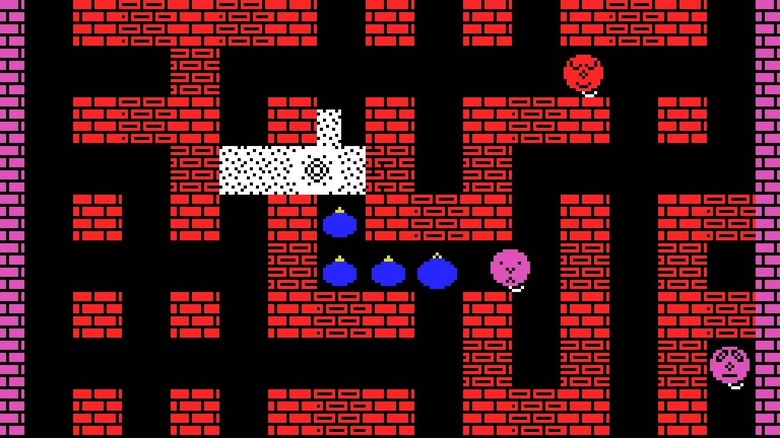
Another major gaming franchise that got its start in 1983 is the explosive maze game "Bomberman." Originally released for Japanese home computers, the game features a diminutive robot who navigates mazes from a top-down perspective. Certain blocks in the mazes can be blown up with bombs, which players also use to defeat various enemies in the labyrinth. As you progress, you gain new power-ups, including the option to drop multiple bombs at once and expand the blast radius.
The original 1983 version of "Bomberman" is considerably cruder in its presentation than one might expect, with even its titular hero not gaining his familiar design until console ports years later. But the explosive gameplay mechanics and maze layout are very much intact, and this is what gives the inaugural title its enduring appeal. It lacks a multiplayer component, which the series became known for later on, but the original "Bomberman" introduced much of the franchise's core gameplay that served it well in the decades that followed.
Ultima III: Exodus
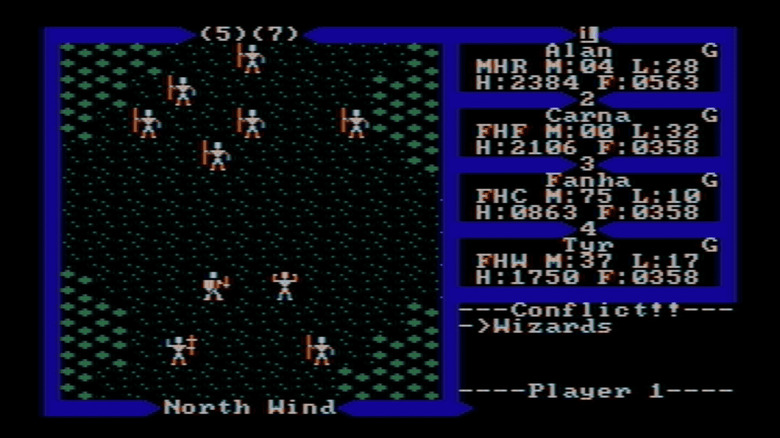
Though the seminal RPG franchise "Ultima" began in 1981, its third mainline installment, 1983's "Ultima III: Exodus," introduced a major innovation. In contrast to its predecessors, the game features turn-based combat rather than crudely animated battle sequences for each enemy encounter. The gameplay also expands from controlling a single character to commanding an entire party of up to four individuals. The story takes place in the fantasy realm of Sosaria, the setting of the first "Ultima," with players defending the kingdom from the villainous Exodus.
To put things into context, "Ultima III: Exodus" predates both "Dragon Quest" and "Final Fantasy," which both helped popularize turn-based RPGs. The 1983 game was the first in the series developed and published by Origin Systems, with the behind-the-scenes switch up likely informing the change in gameplay direction. The new approach was well-received, with the game a top performer on the Apple II by 1985 and selling 120,000 copies by 1990, which was no mean feat for the fledgling home PC market. Though not much has happened with the "Ultima" series for years, "Ultima III: Exodus" remains an enormously influential title in the RPG genre.