
5 Best Assassin's Creed Games, Ranked
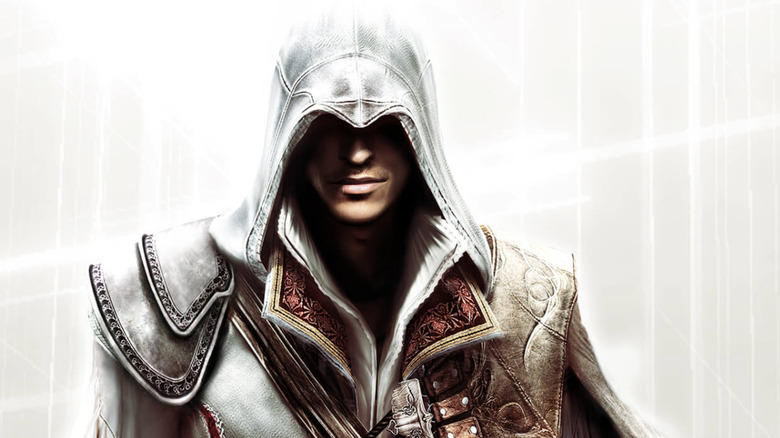
One of the most prolific video game series developed and published by Ubisoft is "Assassin's Creed." Originally intended to be a spin-off of the "Prince of Persia" franchise, the series depicts a shadowy war between the Assassin Brotherhood and the Templar Order. This conflict spans global history, with the series using a framing device built around the Assassins and Templars' descendants using experimental technology to relive their ancestors' memories. This includes historical moments from the Crusades and American Revolution to the Viking Age and feudal Japan.
With over a dozen titles in the mainline series alone, "Assassin's Creed" has maintained a steady presence in the gaming industry for nearly 20 years. Each of these titles offer their own twist on that familiar stealth action gameplay, with a fresh setting and a handful of distinct mechanics. With that in mind, we're highlighting the games that most saliently capture the series' overall fun factor. These are the five best "Assassin's Creed" games ranked, defining the appeal of Ubisoft's long-running franchise.
5. Assassin's Creed: Brotherhood
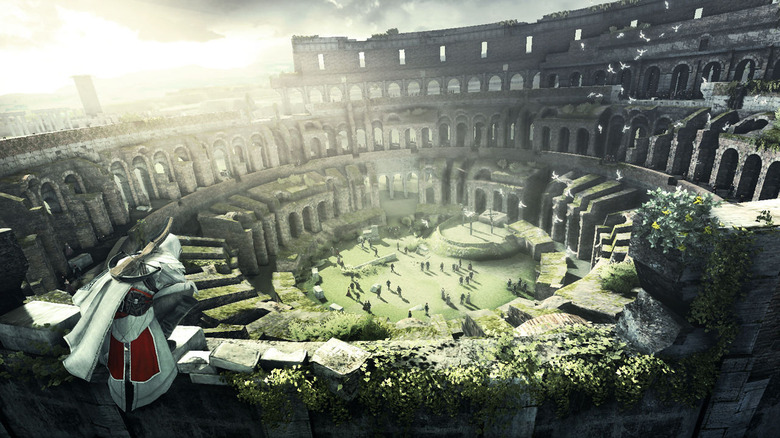
There was a time when Ubisoft pumped out a new "Assassin's Creed" game every year, not unlike Electronic Arts' various professional sports franchises. The first game to firmly establish this pace was 2010's "Assassin's Creed: Brotherhood," the direct sequel to the previous year's "Assassin's Creed II." Continuing the adventures of protagonist Ezio Auditore da Firenze as he enters the 16th century, the game revolves around the Assassins' battle against the Templar Order in Rome. Rebuilding the Assassins' presence in the city, Ezio takes on the powerful Borgia family while searching for the mysterious Apple of Eden.
By all accounts, "Brotherhood" could've been a cheap cash-in title heavily derivative of "Assassin's Creed II." Fortunately, Ubisoft went the extra mile, making the game's open-world environment of Rome atmospheric and distinct from the Italian cities explored in its immediate predecessor. Moreover, the game's narrative feels like the organic next step of Ezio's lifelong journey, going deeper into the pivotal protagonist's role in shaping the Assassin Brotherhood. The most underrated title in the Ezio trilogy, "Assassin's Creed: Brotherhood" doubles down on what made its predecessor so great while subtly adding some new toys to the toybox.
4. Assassin's Creed Origins
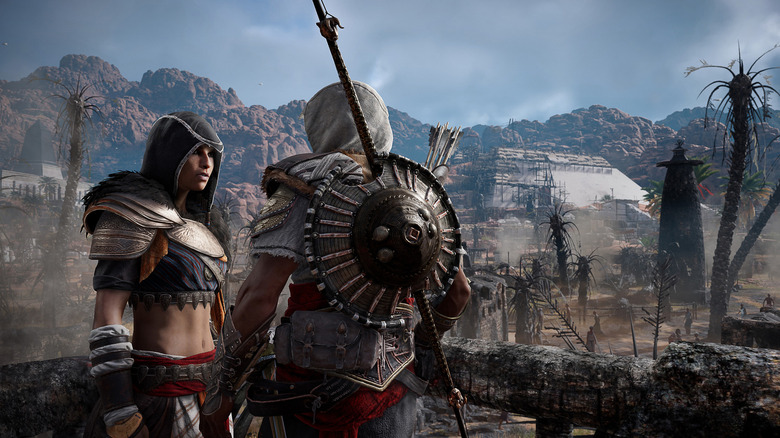
After 2015's "Assassin's Creed Syndicate," the franchise decided to trace some of the earliest days of its mythos with 2017's "Assassin's Creed Origins." Set in ancient Egypt during the reign of Pharaoh Ptolemy XIII, the game follows Bayek and his wife Aya as they form what will eventually become the Assassin Brotherhood. The couple's quest is fueled by revenge, losing their son to the mysterious figures secretly steering the course of Egypt and its complicated dynamic with the Roman Empire. As historical figures like Cleopatra and Julius Caesar become increasingly involved in Egypt's fortunes, Bayek and Aya's vendetta grows more complicated.
"Assassin's Creed Origins" really does feel like a rebirth for the franchise, revamping its scope and core gameplay. Of note are the alterations to the combat system, with a whole variety of weapons available and changes to melee mechanics. The game's Egyptian setting also feels like a fresh environment to explore, backed by side quests that don't feel overly repetitive or uninspired compared to past entries. Going back to the franchise's roots more effectively than "Assassin's Creed Mirage" had, "Origins" gave the series a much-needed shot in the arm.
3. Assassin's Creed II
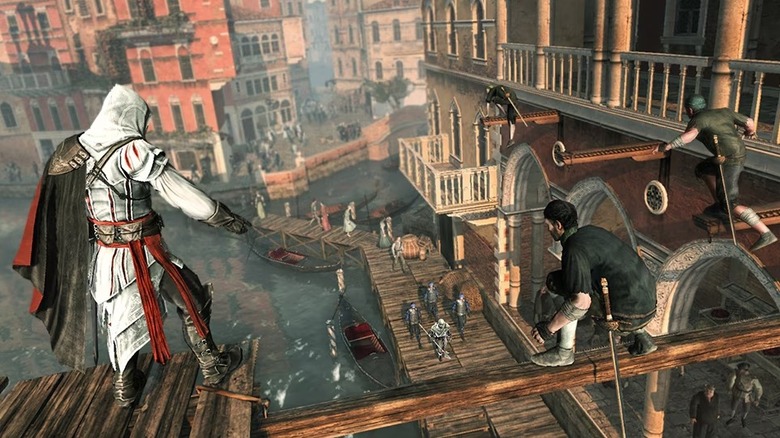
While the original 2007 "Assassin's Creed" was fun and featured a lot of visible promise, it felt rough around the edges. 2009's "Assassin's Creed II" masterfully refines and builds upon that foundation, turning the series into what fans largely recognize it to be today. The game introduces Ezio Auditore da Firenze, who joins the Assassin Brotherhood after losing his family to political rivals in 15th century Italy. Ezio's role in the secret society grows as the Templar Order make a bid for the papacy as part of their crusade to shape the future of humanity.
While the DNA and premise between the first two games are certainly similar, "Assassin's Creed II" is a sequel that feels nothing like the original. The story takes a more cinematic presentation with its story and scope, wisely downplaying the 21st century sequences for a period piece narrative fans keep coming back for. At the same time, the combat and freerunning mechanics feel noticeably improved compared to the original game, retaining the broad strokes while improving them. The point when the series found its creative voice, "Assassin's Creed II" dials up the operatic scale and heightens the immersive fun factor.
2. Assassin's Creed Odyssey
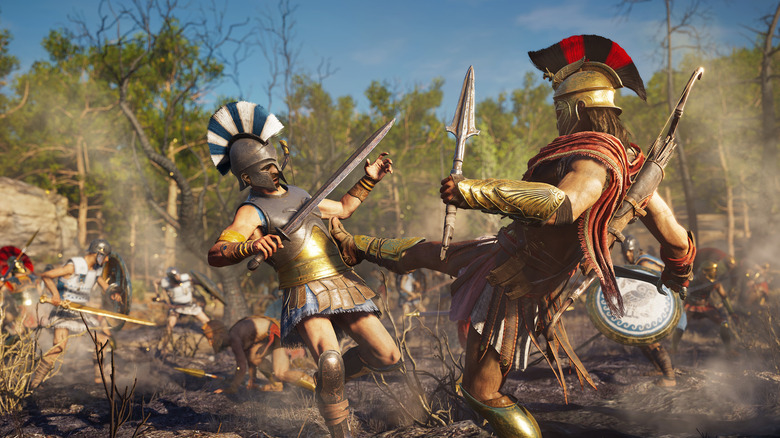
Following up on how "Assassin's Creed Origins" reinvigorated the franchise, that game's own changes to the series were refined by its direct descendant, "Assassin's Creed Odyssey." The 2018 game goes further back into the narrative's past, this time during the time of ancient Greece during the Peloponnesian War. In the midst of the conflict between Athens and Sparta, players choose between protagonists Kassandra or Alexios as they search for their family. Throughout this wartorn search, Kassandra and Alexios battle the shadowy Cult of Kosmos while accepting jobs fighting for both sides during the pivotal conflict.
What puts "Odyssey" above most of its counterparts, including "Origins," is how ambitiously the game has retooled its side quests. Rather than the more repetitive busy work that many "Assassin's Creed" games include, "Odyssey" delivers rewarding and surprisingly lengthy side quests that feel just as vital as the main story. The game also improves the revamped combat system that "Origins" introduced while taking advantage of its ancient Greek backdrop. With a greater emphasis on combat and enjoyable gameplay, "Assassin's Creed Origins" stands as a recent classic for the series.
1. Assassin's Creed IV: Black Flag
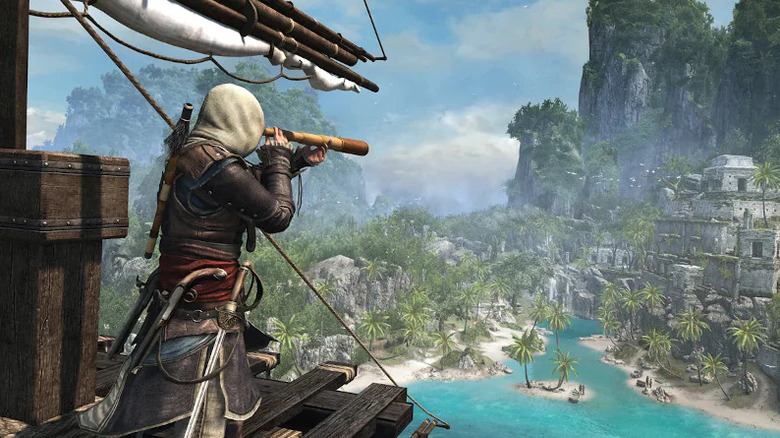
Any major "Assassin's Creed" fan knew that "Black Flag" was going to show up somewhere on this list, and show up highly placed. The 2013 game follows the high seas adventures of 18th century pirate Edward Kenway as he cruises the Caribbean, taking on the Templars in between streaks of building his buccaneer reputation. The game builds upon the ship-to-ship gameplay from "Assassin's Creed III" significantly, making it into the crux of the experience, and entertainingly so. The Caribbean setting is ambitiously developed, including underwater exploration with Edward delving into shipwrecks, each intuitively executed. Plus, there are pirate shanties to enjoy.
The majority of players think that "Black Flag" is the best "Assassin's Creed" game and it's easy to see why. This is an entry that doesn't get overly preoccupied with its genetic memory lore, having just wrapped the saga of Desmond Miles in "Assassin's Creed III," instead letting players get down to swashbuckling business. The Caribbean is a richly immersive open-world environment and the game really lets players live out their seafaring pirate fantasies in full. With a fresh remake on the way, the celebrated legacy of "Assassin's Creed IV: Black Flag" still looms large for the franchise. Deservedly so.