
5 Video Games That Defined The 32-Bit Era
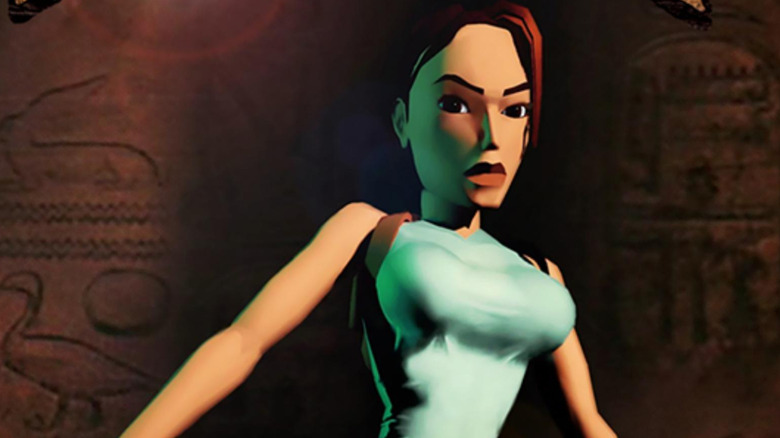
While 16-bit platforms like the Sega Genesis and Super Nintendo led console gaming into the '90s, more advanced options quickly took shape. This included 32-bit consoles like the Atari Jaguar, Sega Saturn, and the original PlayStation as the industry pushed hardware capabilities forward. Some of the biggest franchises today were initially introduced as 32-bit games before evolving into the experiences we know now. The 32-bit era was made up of early 3D games along with advanced sprite-scaling that far surpassed the 16-bit consoles that came before.
With that in mind, we're looking at the 32-bit games that best represented what this era was all about. These aren't necessarily the best 32-bit games ever, but definitely among the most prominent from its heyday. From fighting games to early 3D platformers, these are the titles that took the industry to its next level and encapsulated the appeal of a whole generation of gamers.
Virtua Fighter 2
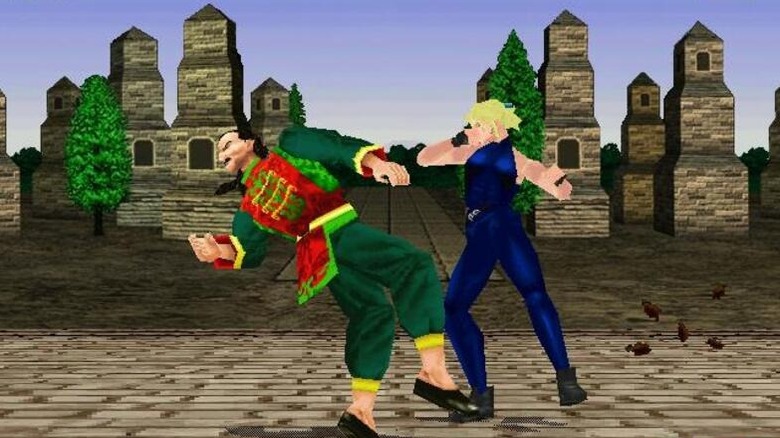
One of the big trends throughout the 32-bit era was the advent of 3D fighting games, with Sega's "Virtua Fighter." Starting in arcades in 1993, the series would improve upon its gameplay and, most noticeably, its in-game physics with 1994's "Virtua Fighter 2." More than just expanding the roster, the sequel improved the visual fidelity and made its characters less floaty in midair. The game was the last title in the series ported to the Sega Saturn and among its most prominent, bundled with its North American release to boost sales.
"Virtua Fighter" makes this list over the subsequent 3D fighting game series "Tekken" because it came first and was a success in its own right. "Virtua Fighter" was incredibly influential, popularizing 3D fighting gameplay, with even established franchises taking note and following in its footsteps. This includes the stunning transformation of "Mortal Kombat" and "Street Fighter," with both releasing their own 32-bit 3D titles in the '90s. While not as fondly remembered as "Tekken" today, "Virtua Fighter 2" proved fighting games could work in the 3D space and were here to stay.
Resident Evil (1996)
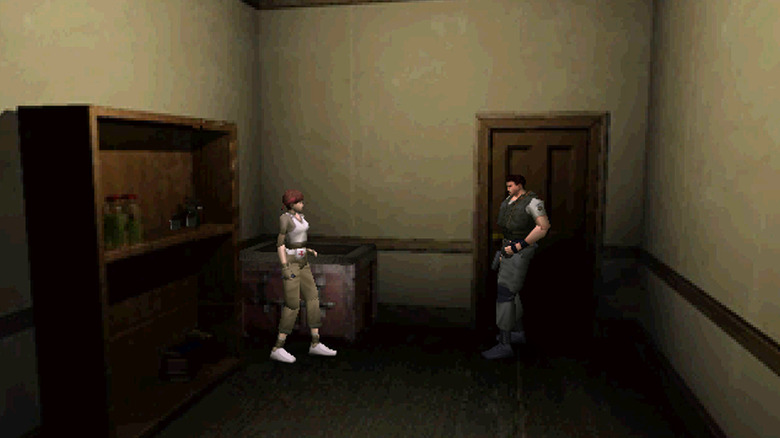
One of the biggest franchises to debut during the 32-bit era was "Resident Evil," which brought the survival horror genre into the gaming mainstream. Released for the PlayStation, Sega Saturn, and PC, the 1996 game has a group of specialized police officers investigate attacks in the mountains. Players choose between protagonists Jill Valentine and Chris Redfield as they explore a remote mansion teeming with zombies and other monsters. Played from a third-person perspective, the game employs fixed camera angles and pre-rendered backgrounds to provide a more cinematic presentation and heighten the suspense.
30 years later, the original 32-bit title is still ranked among the best "Resident Evil" games as a testament to its enduring effectiveness. With its advanced presentation compared to its 16-bit contemporaries, Capcom was able to deliver something that was hauntingly atmospheric and frightening for its time. The original game's success led to several updates, spin-offs, and a sequel in the 32-bit era alone, making up some of the best retro horror games of all time. The original "Resident Evil" holds up incredibly well and rightfully set a template that the franchise continues to hew towards decades later.
Tomb Raider (1996)
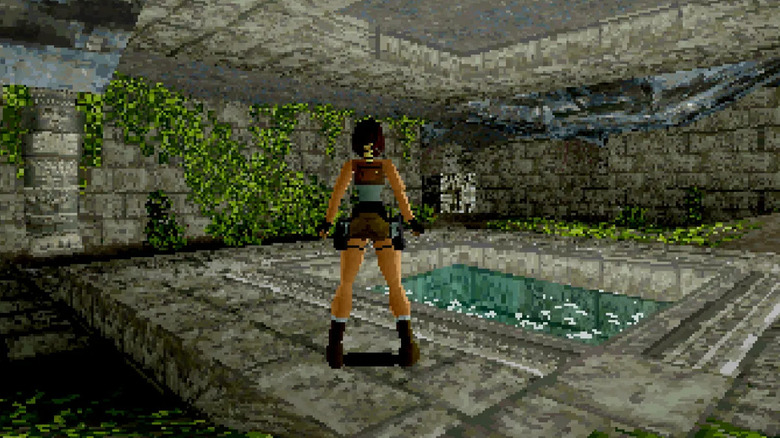
Another franchise launched in the 32-bit era was "Tomb Raider," which began on the Sega Saturn in October 1996 before being ported to the PC and PlayStation the following month. The game introduces Lara Croft, an adventurer who delves into ancient ruins around the globe, seeking segments of a mysterious artifact. Lara is racing to recover all the pieces before a villainous mercenary, battling all sorts of enemies and bestiary along the way. The game features a mix of acrobatic 3D platforming and third-person shooter action across several distinctly labyrinthe environments.
"Tomb Raider" completely revamped what adventure games could be, taking advantage of 32-bit processing to create memorable levels and action set pieces. The handling was precise in a way few 3D platformers had achieved before while the gunplay was incredibly intuitive for its time. Lara Croft quickly became a gaming icon and four additional 32-bit "Tomb Raider" games were released before the franchise made the leap to more advanced platforms. "Tomb Raider" has transformed considerably since 1996, but its 32-bit roots still hold a special place in fans' hearts.
Castlevania: Symphony of the Night
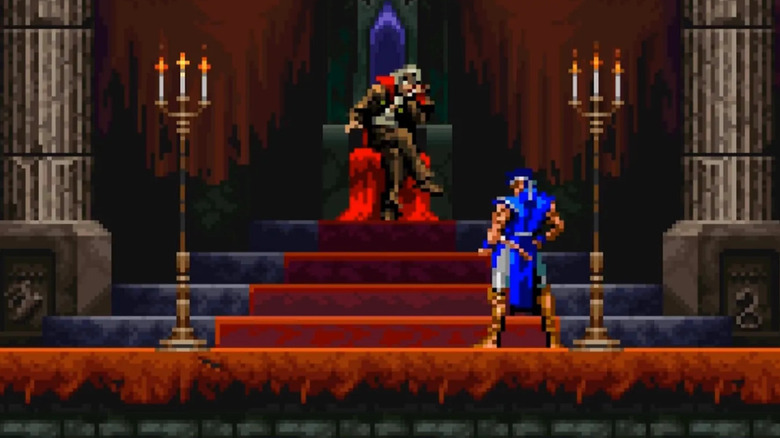
Not all 32-bit games relied on polygonal sprites for their art design and animation, with many titles still using pixelated sprites. That said, sprite-scaling on superior hardware meant characters and backgrounds appeared much more detailed than on 16-bit platforms. A prime example of this is "Castlevania: Symphony of the Night" released for the PlayStation in 1997, with a Sega Saturn port released the following year. A sequel to "Castlevania: Rondo of the Blood," the game has Dracula's dhampir son Alucard revive and investigate his father's castle after it reappears despite Dracula's recent defeat.
Still ranked as one of the best "Castlevania" games, "Symphony of the Night" offers a much more ambitious adventure than its predecessors. A big part of that is the gameplay shifting to a Metroidvania-style progression, with more sections of Dracula's castle unlocked as players advance. But even beyond moving away from a linear progression format, "Symphony of the Night" boasts an operatic tone and an incorporation of action RPG mechanics. One of the best games of its generation, no matter the hardware, "Castlevania: Symphony of the Night" is an enduring masterpiece.
Metal Gear Solid
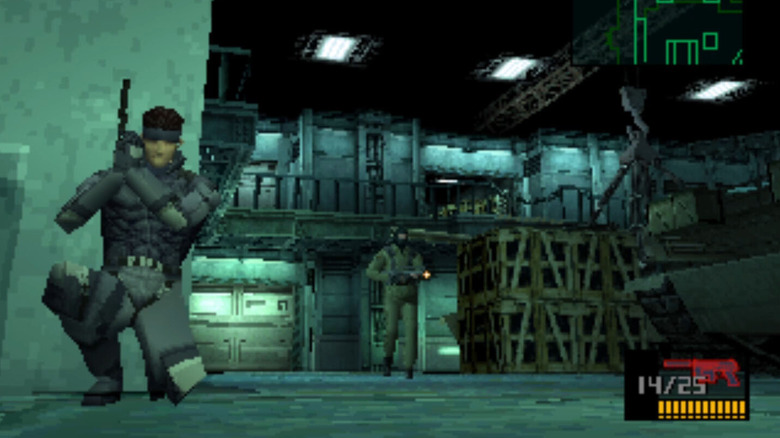
The top-down tactical espionage action series "Metal Gear" was revamped for 3D with the franchise's 1998 revival title "Metal Gear Solid." The game has elite covert operative Solid Snake sent to infiltrate a remote island off the coast of Alaska that's been taken over by terrorists. The gameplay draws heavily from environmental cues and enemy behavior, encouraging players to sneak around and hide rather than always confronting enemies outright. Taking advantage of the PlayStation hardware, the game offers a much more cinematic presentation than prior installments.
"Metal Gear Solid" feels like a complete rebirth for the franchise and a testament to what was possible on 32-bit platforms. With this advanced hardware, the emphasis on stealth gameplay could be better realized while still packing a punch with its action sequences. Every boss battle felt like its own pulse-pounding set piece with an overarching narrative containing all the intensity and intrigue of a Hollywood action movie. If there was ever a game that marked the rise of "Metal Gear Solid," it was the 1998 classic that rethought what the series could be.