
5 Hit PS2 Games No One Remembers Today
Sony was an absolute juggernaut in the early to mid-2000s, with its PlayStation 2 still the best-selling console to date. Decades after the console's 2000 launch, some of the best PS2 games of all time still stand as the best in the history of the medium overall. Established franchises, like "Grand Theft Auto" and "Gran Turismo," were completely revamped through the console's hardware capabilities. The PS2 era also saw the debut of major franchises that still thrive today, including "God of War" and "Devil May Cry."
But not every title that struck a chord with gamers upon its launch has the same staying power as their more enduringly recognizable counterparts. With that in mind, we've rounded up several successful PS2 games that nobody seems to talk about anymore. For the purposes of this list, we're looking at games that sold at least one million copies during the PS2's lifetime. Here are five hit PS2 games no one remembers today, despite their commercial success at the time.
Dark Cloud
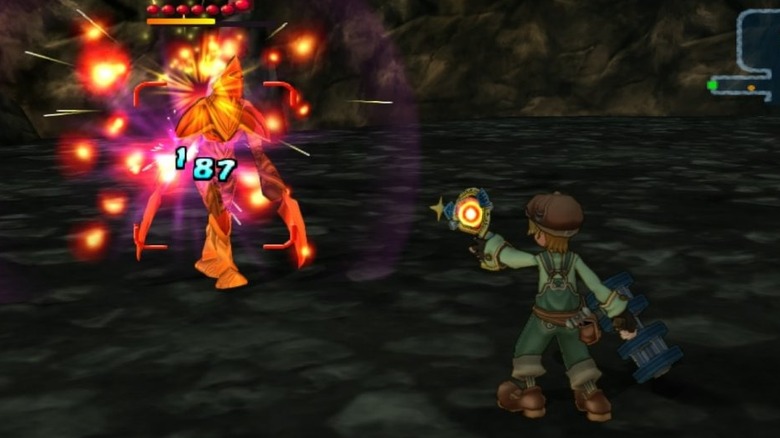
One of the earliest PlayStation 2 exclusives was "Dark Cloud," a third-person action RPG in the vein of Nintendo's "The Legend of Zelda." The game follows fantasy hero Toan, whose kingdom is ravaged by a dark genie unleashed upon the world. Delving into dungeons around the realm, Toan recovers elements known as Atla to gradually restore the kingdom and prevent the devastation caused by the genie. In an innovation for its time, the dungeons are procedurally generated while duels against certain enemies involve quick-time events.
Upon its initial release in 2000, "Dark Cloud" was an amazing video game that no one bought, overshadowed by the PS2's more prominent early titles. But more than just a "Zelda" imitator, the game brought its own unique gameplay and innovations to the table while looking great for a first-year PS2 title. Since its overlooked PS2 launch, "Dark Cloud" is now available to play on the PlayStation 4 and 5 as part of their digital classics library. That means now is the perfect time to revisit this under-appreciated action RPG if you missed it the first time around.
Yu-Gi-Oh! The Duelists of the Roses
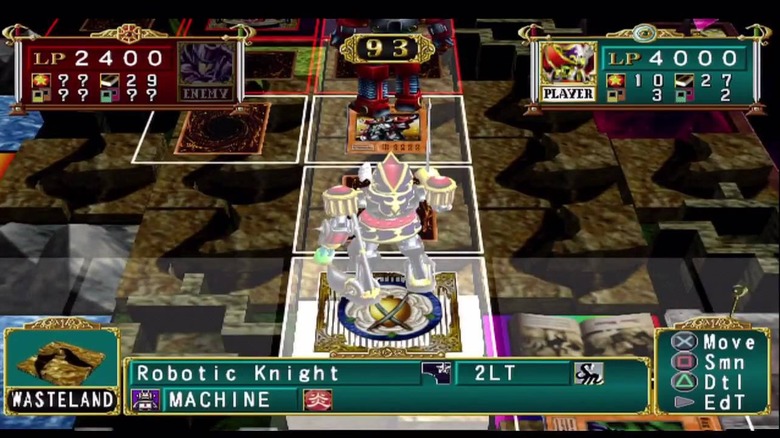
For anyone who wasn't around in the late '90s and early 2000s, "Yu-Gi-Oh!" was a huge deal and one of the biggest rivals to "Pokémon" at the time. The first game in the franchise released for the PlayStation 2 is "Yu-Gi-Oh! The Duelists of the Roses," which debuted in 2001. Drawing inspiration from the English War of the Roses, the game has longtime rivals Yugi Mutou and Seto Kaiba face off in a card-driven showdown. Drawing from their respective decks, players battle for supremacy on a grid map with differing terrain to add variety to the gameplay.
"The Duelists of the Roses" is best enjoyed by "Yu-Gi-Oh!" fans but it does bring some interesting features to the table. The mix of card-oriented combat and grid-based battlefields, like "Fire Emblem" or "Final Fantasy Tactics," is a nice change from contemporaries like "Dragon Ball Z: Legendary Super Warriors." The franchise subsequently released several other games, but oddly, no other titles on the PS2. That gives "Yu-Gi-Oh! The Duelists of the Roses" a unique distinction, though it has yet to be re-released on modern platforms unlike the franchise's handheld titles.
Scooby-Doo! Night of 100 Frights
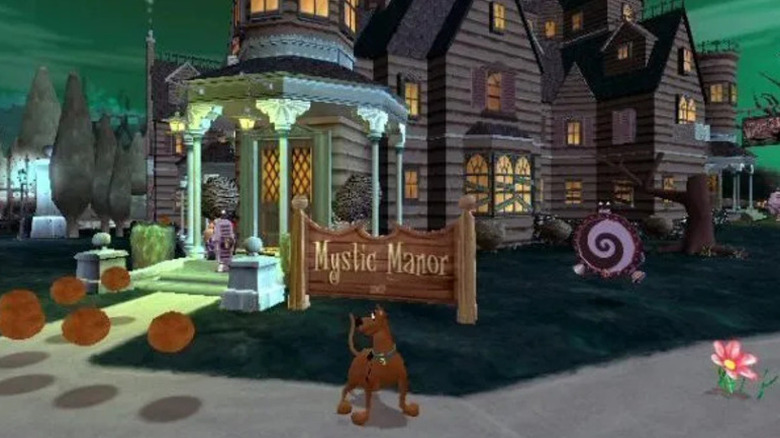
Whereas the GameCube had "Luigi's Mansion" and the original Xbox had "Grabbed by the Ghoulies," the PlayStation 2's ghost-busting game was "Scooby-Doo! Night of 100 Frights." The 2002 game follows Scooby-Doo as he searches for his friends in a haunted mansion after they go missing. Investigating the spooky setting, Scooby battles familiar enemies from the animated series while collecting Scooby Snacks to unlock other portions of the property. The game is chock full of other Easter eggs and allusions to various Scooby-Doo cartoons from throughout the franchise's history, many as unlockable rewards.
Even with a franchise as popular as Scooby-Doo, it feels like "Night of 100 Frights" has fallen by the wayside more than 20 years later. The game takes a more conventional action-adventure approach to its gameplay, rather than the slightly more puzzle-solving direction for "Luigi's Mansion," despite Scooby's usual cowardly personality. The game was later ported to both the GameCube and Xbox, while also spawning a number of direct follow-ups, including "Scooby-Doo! Mystery Mayhem" and "Scooby-Doo! Unmasked." One of the better animated series tie-ins of its era, "Scooby-Doo! Night of 100 Frights" deserves a modern remaster.
The Getaway
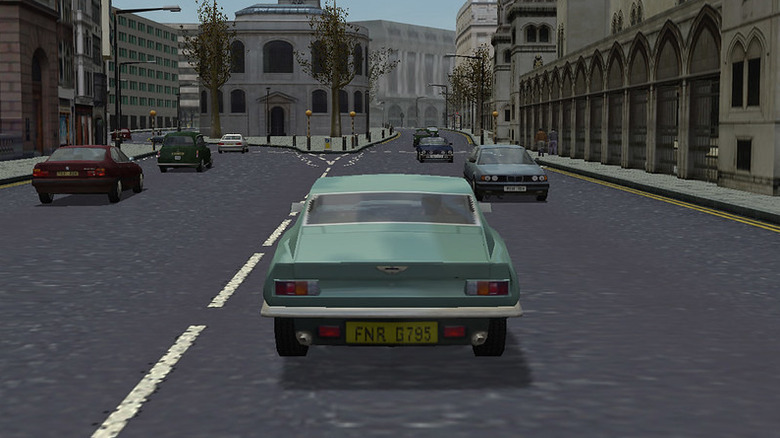
One of the video games from 2001 that changed gaming forever was "Grand Theft Auto III," a launch title for the PS2's North American debut. This led to countless imitators trying their own hand at third-person crime action in open-world settings, balancing gunplay with automotive skills. Among the more prominent games published for the PS2 during the rise of "GTA" was "The Getaway," released for the console in 2002. The game follows the dual narratives of hardened crook Mark Hammond and police detective Frank Carter as they each delve into London's criminal underworld.
"The Getaway" is one of the PlayStation 2's hidden gems, offering its own open-world twist on the "Grand Theft Auto" formula. The game was successful enough to spawn a direct sequel in 2004 and a spin-off, "Gangs of London," in 2006 for the PlayStation Portable. Since then, however, apart from adaptations in other media, the video game series has remained largely dormant for 20 years. With a greater emphasis on cinematic presentation and its narratives, "The Getaway" is one of the better games of its era to follow in the footsteps of "GTA."
EyeToy: Play
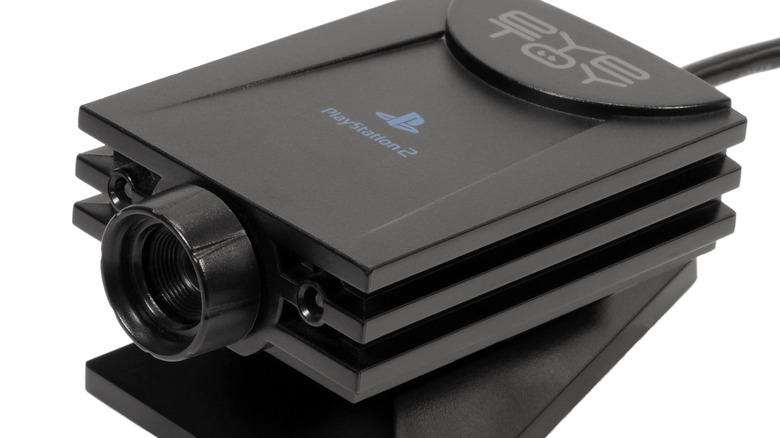
Among the oddest peripherals for the PlayStation 2 was the EyeToy, essentially a webcam that used motion-tracking inputs for several games and applications. The peripheral was initially packaged with the game "EyeToy: Play" when it was launched in 2003, complete with its own set of minigames. These activities include rhythm games touching on-screen discs, bouncing a soccer ball off the player's head, and the obligatory boxing game for these sorts of experiences. "Play" was successful enough to receive two direct sequels on the PS2 and a number of spin-offs also using the EyeToy peripheral.
Predating the Wii and its own best-selling library of motion-controlled games by three years, "EyeToy: Play" definitely is a product of its time. Many of the minigames included here are just variations of one another, including multiple twists on the "Whack-a-Mole" gameplay mechanic. As Sony moved into the subsequent PlayStation 3 era, it continued to experiment with motion-controlled experiences, most notably with the PlayStation Move peripheral. But as the EyeToy died with the PS2 era, the games tied to the peripheral have similarly since fallen into obscurity.