
5 Best Soulslike Games Of All Time, Ranked

Back when "Demon's Souls" debuted on the PlayStation 3 in 2009, creator Hidetaka Miyazaki could have had no idea that he was about to lay the foundation for a whole new subgenre of action adventure RPGs. Sometimes called the soulsborne genre as many games in this bracket mix elements of "Demon's Souls" with 2015's "Bloodborne," soulslike games are combat-heavy adventures that are notoriously unforgiving. Players typically lose some of their progression when they die, and usually the only way to regain their resources is to get back to the spot where they perished before they die again. Most soulslike games also push players to explore open environments and battle giant bosses. The main thing they all have in common is that they force you to die a lot so you learn what not to do.
Like so many modern gamers, we simply can't get enough of soulslike games and the incredible feeling of accomplishment they deliver when you eventually manage to progress. There have been dozens of solid soulslike games made over the years, so narrowing them down to the best of the best isn't an easy task. We've ranked all the core "Souls" games separately because, frankly, they belong in a league of their own. Here, we're looking at games that are clearly inspired by "Demon's Souls" and the "Dark Souls" trilogy. In order to come up with a fair ranking, we compared our own experiences with these titles to what other gamers and critics have said about them. Here are the five best soulslike games ever made.
Lies of P
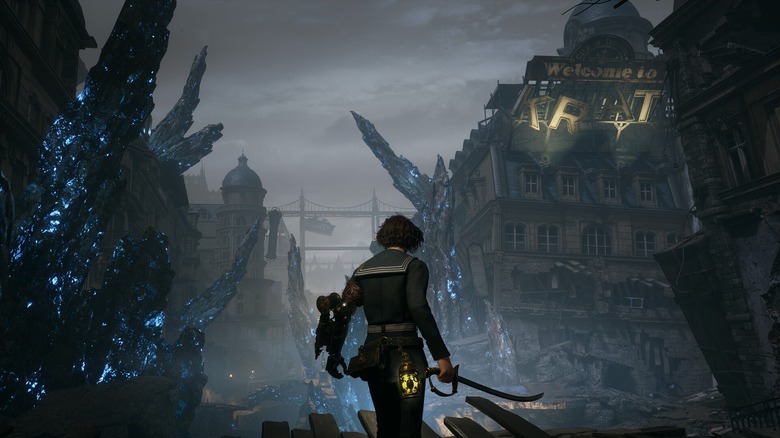
When gamers talk about the hallmarks of the soulslike genre, they tend to focus on combat, loss of resources on death, and open-ended exploration. 2023's "Lies of P" has all of those core elements, but it also leans into another aspect of the "Dark Souls" series that doesn't come up in the conversation quite as often. The game takes a soulslike storytelling approach by packing the majority of its dense lore into item descriptions, environmental details, and opaque dialogue from the bizarre NPCs that populate its world.
Understanding what's actually happening in "Lies of P" takes some work from players, and on that front the game feels more like a core "Dark Souls" entry than any other soulslike title on this list. Piecing together the fascinating story, which is set in a Belle Époque-inspired fictional city named Krat and loosely based on Carlo Collodi's classic novel "The Adventures of Pinocchio," is part of the fun. Yes, you can find breakdowns of the story online, but doing so prior to playing would be to deny yourself the sense of achievement you feel whenever Pinocchio adds another little piece to the overall puzzle.
But it's not all about lore. Once you get into the guts of the game's mechanics, you realize that its combat system is just as deep as any FromSoftware game. When it debuted, we praised "Lies of P" for its customizable weapons and unique puppet-arm equipment. Today those same systems help make "Lies of P" one of the best soulslike games on the market. This is Pinocchio as you've never seen him — while his kind are referred to as Puppets, they're more like automatons, created to keep Krat running. The difference between Pinocchio and the rest is that he has free will, which goes against Krat's laws.
Star Wars Jedi: Survivor
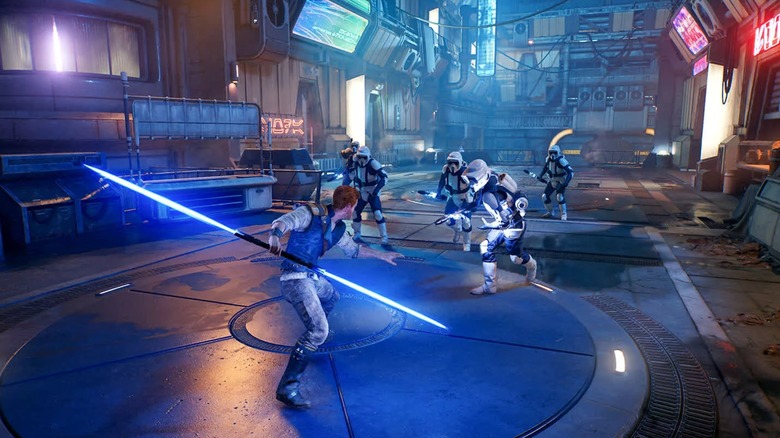
On paper, the world of "Dark Souls" feels about as far from the "Star Wars" universe as you could possibly get, but it turns out that soulslike mechanics work perfectly in a galaxy far, far away. The critically acclaimed "Star Wars Jedi: Fallen Order" proved that the combination of soulslike and space opera works in 2019, but the game's 2023 sequel, "Star Wars Jedi: Survivor," raised the bar. If you're a soulslike fan who hasn't gotten into the "Jedi" series yet, let this be your wake up call – they boast plenty of soulslike hallmarks such as respawning enemies, meditation checkpoints, and a punishing XP loss system.
"Survivor" picks up the story of Cal Kestis five years after the events of "Fallen Order." The game follows Cal, now a Jedi Knight, as he ramps up his fight against the Empire and his attempt to save the Jedi Order. Much like the first game, "Jedi: Survivor" sends players to different locations throughout the galaxy and lets them explore sprawling levels filled with enemies and secrets. In SVG's review of "Star Wars Jedi: Survivor," we said that the level design was the game's weakest point, but ultimately the game's combat system put all our other concerns to rest.
Soulslike fans will be more than ready for the challenge in "Survivor," but they'll likely be surprised by just how deep the combat gets. Parrying and dodge mechanics are central, and when players go on the offensive, they can choose from five different stances: single lightsaber, double-bladed lightsaber, dual sabers, crossguard saber, or blaster. Those different stances, paired with Cal's ever-growing list of Force powers, makes fighting Stormtroopers, robots, and alien creatures unbelievably satisfying, even after dozens of hours.
Stellar Blade
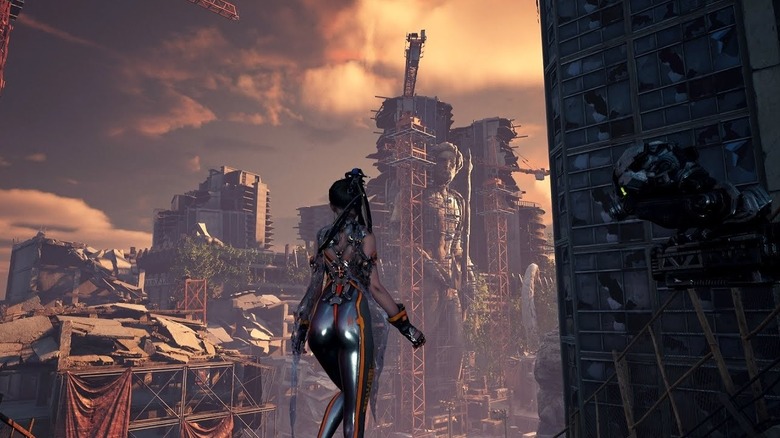
The critically acclaimed 2024 game "Stellar Blade" is another great option for soulslike fans who have a strong desire for a sci-fi setting. The story is set in a post-apocalyptic future where humanity has evacuated Earth and now lives in a space colony. Players take on the role of Eve, a fighter who's sent to Earth to kill the Naytibas, the alien race that took over the planet. It may not have the strongest story of the games on this list, but "Stellar Blade" boasts incredible art direction that brings the unique world to life even when the plot beats fall a little flat.
In terms of combat, players start with a light attack and a heavy attack, plus their Beta Skills, which need to be charged up by dealing damage to enemies. As the game progresses, players unlock new Beta Skills and a suite of Burst Skills that throw fun new wrinkles into combat. In addition to dealing damage, players have to master parrying and dodging attacks, which is a tall order when the game has several dozen types of enemies to throw at them.
The enemy variety in "Stellar Blade" really is, well, stellar, and it helps keep the experience engaging throughout the entire story. The combat is a bit more flashy than a lot of soulslike games and there's no death penalty, but, other than that, "Stellar Blade" is full of the usual soulslike trademarks, such as difficult boss battles that require you to learn the enemy's attack patterns, campsite checkpoints, and an emphasis on resource management. As a whole, the game is a visually stunning soulslike experience wrapped up in an entirely original sci-fi setting.
Nioh 3
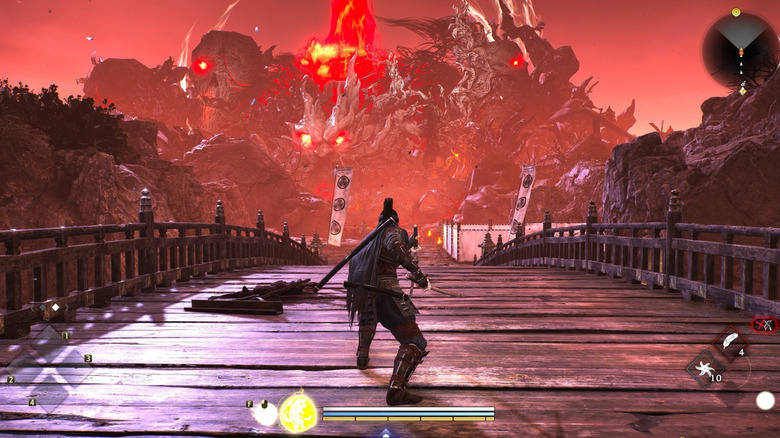
When it comes to soulslike games, the "Nioh" series has stood out for a long time. The first game arrived on the scene in 2017 and introduced fans to a samurai-era world filled with dangerous supernatural creatures. 2021's "Nioh 2" expanded on that approach, and "Nioh 3," which dropped to generally glowing reviews in 2026, just might have perfected the formula. "Nioh 3" pulls in successful elements from previous titles, like the Ki system that allows players to refill stamina with a well-timed button press, but adds so much more to make the combat system incredibly deep.
Players can choose to be a samurai or a ninja, and each comes with different stances, tools, and weapons. In addition to choosing their class and preferred weapons, players can level up their characters and fully customize their build in a system that will feel very familiar to experienced soulslike players. And, unlike the first two games, which have mission-based structures, the third entry utilizes seamlessly connected open fields to give the game a much bigger feel.
There's one place where "Nioh 3" even manages to outshine the FromSoftware games that inspired it: The co-op system. You can either summon someone to help you with a specific fight in classic soulslike fashion, or you can use what's called Expedition mode, which lets friends play through the entire game together instead of being locked into specific areas. Gamers are loving what "Nioh 3" has brought to the soulslike space, with one player going as far as calling it "the absolute gold standard" of the genre in a popular Reddit post.
Black Myth: Wukong
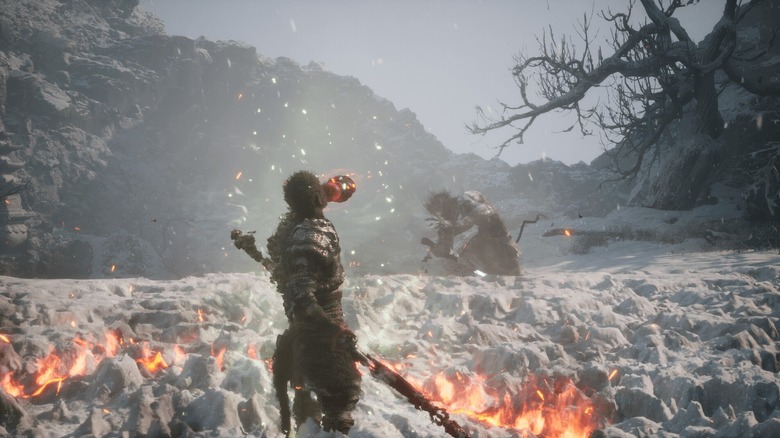
At this point, it's a well-known fact among gamers that the developers of the mind-blowing 2024 hit "Black Myth: Wukong" have tried to distance the game from the soulslike label, claiming that it wasn't their intention to make something that appealed to fans of the genre. However, while it eschews some popular soulslike elements such as stat-driven character progression and corpse runs to recover dropped loot, the fact that it includes a flask system for healing, unforgiving boss battles, and checkpoints (known as Keeper's Shrines) has been enough for many to classify it as a soulslike game.
"Black Myth: Wukong" is based on the classic Chinese novel "Journey to the West." On the surface, it's a joy to take in. Everything from the in-game action to the cutscenes is rendered in eye-popping graphics that make excellent use of modern console and PC hardware. The story itself is structured like a cross between "Demon's Souls" and "Dark Souls," taking players through interlinked stages set in some truly breathtaking locales. Absorbing the story and exploring the various levels would be a great experience alone, but the combat is where "Black Myth: Wukong" really starts to shine.
As players progress, they unlock different stances which can be more effective in specific situations and which all come with their own attack combos. Aside from stances, players have potions and equipment to use, and they can unlock spells and spirit summons that are both powerful and visually stunning. "Black Myth: Wukong" perfects everything that soulslike fans love about the genre while also throwing in new mechanics and new storytelling techniques that truly feel additive.