
5 Video Games From 1998 That Changed Gaming Forever
With so many marquee titles, 1998 was one of the best years in gaming. It marked a huge leap forward for the industry as new consoles were launched, existing platforms received more sophisticated titles, and iconic franchises took shape. Several video games from the 1990s that have aged flawlessly were released in 1998. More than just individual game and hardware releases, though, the year saw technological advances and corporate entities formed that are still thriving.
With that in mind, we're looking at games from 1998 that quietly shaped the future of the entire gaming industry. The games we're including here aren't necessarily the best titles released in 1998 overall but the ones whose impact has been shown to be the most profound on gaming as a whole That said, these titles are each timelessly entertaining in their own way while also providing a glimpse at the state of gaming in the late '90s. These are five video games from 1998 that changed gaming forever, and whose impact is still felt today.
StarCraft
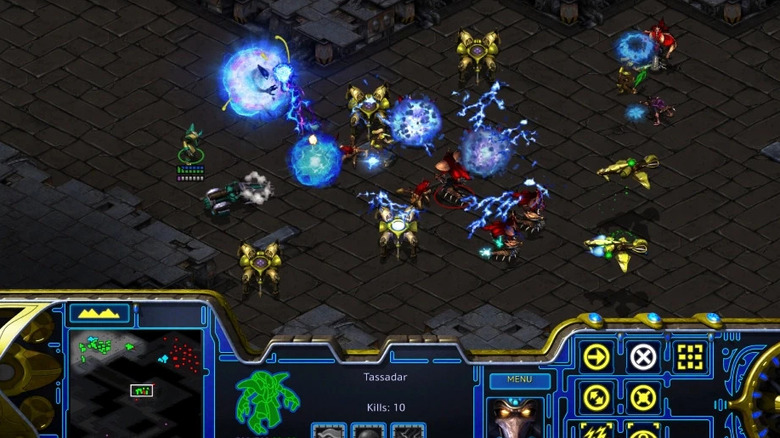
Through series like "Warcraft" and "Age of Empires," real-time strategy games grew immensely popular in the '90s. Blizzard Entertainment refined the genre considerably with its sci-fi RTS game "StarCraft," kicking off an enduring franchise with millions of fans worldwide. The entire "StarCraft" story revolves around the conflict between three different factions, the Terrans, the Zerg, and the Protoss as they battle across the cosmos. While the game features single-player campaigns for each of its factions, the real appeal lies in its online multiplayer modes through its digital platform BattleNet.
"StarCraft" remains a pillar franchise for Blizzard's catalog, and one that's been largely untampered with for years. Instead, the company has refined its handling of the property and its fan-favorite gameplay, both for the original game and its 2010 sequel. That extends to the multiplayer component, which helped form the backbone of the burgeoning esports scene. Some of the youngest professional esports players specialize in "StarCraft," underscoring its continued influence decades later.
Unreal
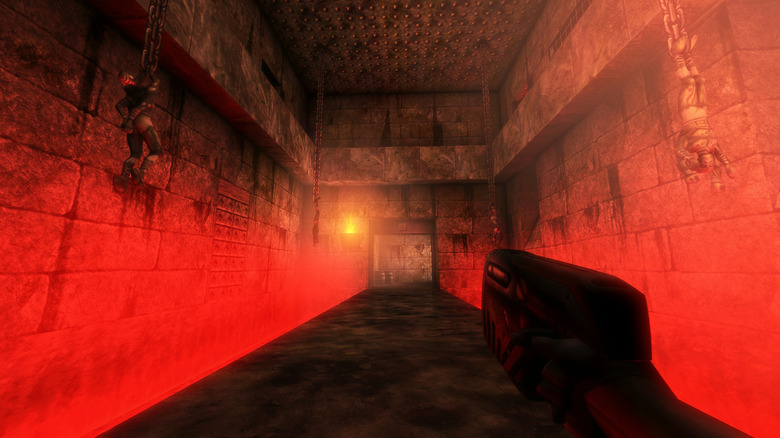
1998 was a particularly good year for first-person shooters, including the release of "Unreal," developed by Epic Games. The game's story follows a prisoner who crashes on a faraway planet and is caught up in a war between its native civilizations. "Unreal" also features an extensive multiplayer component, allowing for co-op campaigns and competitive deathmatch with up to 16 players. Through use of the proprietary Unreal graphical engine, the game allows for detailed texturing and rendering at a much higher level than most of its contemporaries.
More than just launching a video game series, "Unreal" is the title that essentially put Epic Games on the map. The most revolutionary element was the Unreal engine itself, and Epic continues to license its latest versions of the engine to outside companies. Epic would later become a household institution through its subsequent game "Fortnite," while also launching its own digital storefront. "Unreal" launched a gaming juggernaut and also marked a huge step forward in gaming technology. And Epic wasn't the only company to do both of those things in 1998.
Half-Life
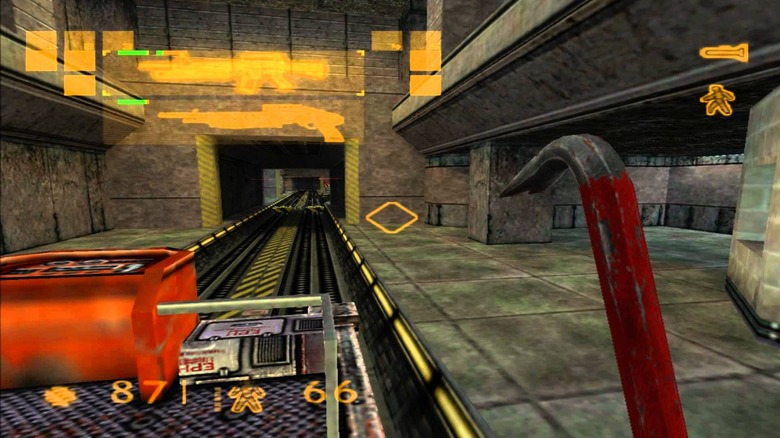
1998 also witnessed the origins of the Valve Corporation through its debut title "Half-Life," another sci-fi first-person shooter. The game takes place at a remote research facility that's been experimenting in extradimensional technology, accidentally triggering an invasion of our world. Protagonist Gordon Freeman finds himself in the midst of the chaos, trying to survive both the invading monsters and soldiers trying to cover up the incident. Whereas "Unreal" was powered by Epic's proprietary engine, "Half-Life" was powered by Valve's GoldSrc engine for its own technical presentation.
Just by bringing Valve to the forefront of the gaming industry, "Half-Life" would have earned a spot on this list. But from a technological standpoint, the GoldSrc engine was later used for "Counter-Strike" and formed the basis for Valve's subsequent Source engine. These breakthroughs helped establish Valve further, leading to the company also creating its own digital storefront with Steam. More than just a landmark sci-fi game, "Half-Life" heralded the arrival of a new power player to the gaming industry.
The Legend of Zelda: Ocarina of Time
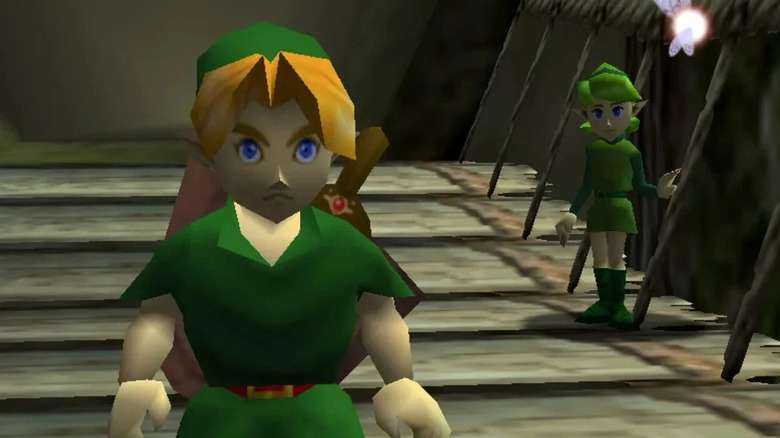
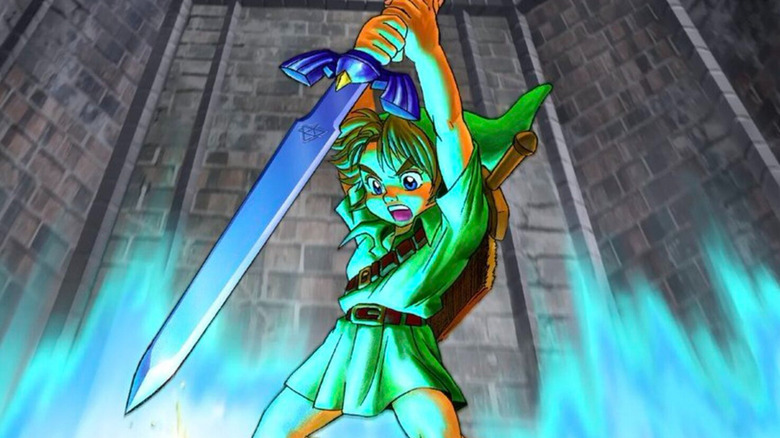
Though "Super Mario 64" brought Nintendo into full-fledged 3D gaming and showcased what the Nintendo 64 could do in 1996, "The Legend of Zelda" cemented the company's future. "Ocarina of Time" is the first 3D title in Nintendo's fantasy franchise, featuring an expansive iteration of Link's battle against the evil Ganondorf for the fate of Hyrule. Taking a cue from "A Link to the Past," the game offered two different versions of Hyrule for players to explore via a time travel mechanic. The N64 game has everything: a more intuitive camera system, a mix of prerendered and 3D animation, and a smooth targeting system.
"Ocarina of Time" took 3D gameplay to new heights while providing the N64 with its most cinematic adventure produced directly by Nintendo. Interestingly, "Ocarina of Time" was almost even more revolutionary, with Nintendo ditching other concepts it had planned for it, including real-time teleportation. Other games took note of its third-person gameplay mechanics, and Nintendo made its mainline home console "Zelda" games from the mold of its 1998 installment. "The Legend of Zelda: Ocarina of Time" is a retro game that everyone needs to play, and with a remake coming for the Switch 2, it seems Nintendo is still inspired to new heights by it.
Sonic Adventure
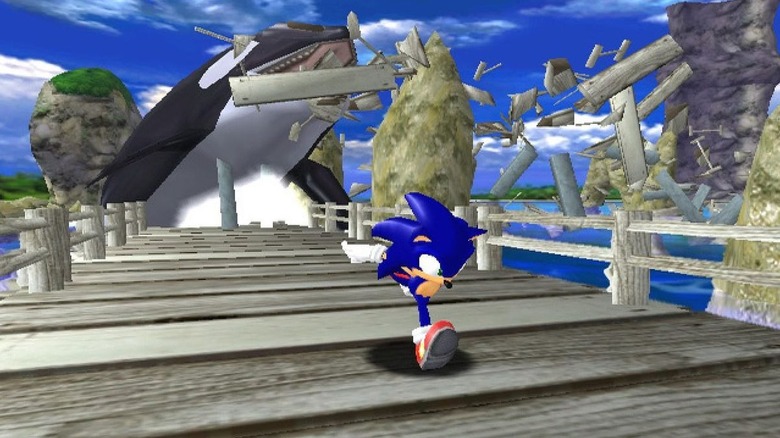
After the Sega Saturn completely failed, the company quickly pivoted to a follow-up console: the Dreamcast. One of the first titles for the console was "Sonic Adventure," bringing Sega's flagship character into a fully 3D environment after experimenting with the format in games like "Sonic 3D Blast." While much more linear than other 3D platformers at the time, such as "Super Mario 64" and "Banjo-Kazooie," the levels and characters in "Sonic Adventure" were gorgeously rendered. The game ended up becoming the best-selling title for the Dreamcast, with 2.5 million copies sold during the console's lifespan.
"Sonic Adventure" makes this list because it heralded the arrival of a new generation in gaming and, inadvertently, the beginning of the end for Sega in the console market. Like its preceding console, the Sega Dreamcast was ultimately a failure in the face of competing platforms like the PlayStation 2. Still, "Sonic Adventure" started this new era out in style and gave other companies a technical bar to live up to in the subsequent years. Providing the Dreamcast and its technical capabilities with a solid introduction, "Sonic Adventure" reminded fans that Sega was very much still a contender — at least at the time.