
5 Best Strategy Games That Aren't Civilization
There are some experiences that only video games can give you. Strategy games can transform players into military commanders, emperors, or even gods overseeing the rise and fall of multiple civilizations. Strategy games have a tendency to be dense, complex, and occasionally unwelcoming to newcomers, but anyone who's taken the plunge can tell you that the best strategy games of all time are well worth the effort it takes to learn them.
The "Sid Meier's Civilization" series is synonymous with the strategy game genre. "Civilization" is one of the '90s games that inspired the strategy franchises of today, and depending on who you ask, the series is still the best in its class. "Civilization" lets gamers experience small pieces of real-world history, while infusing the experience with their own creativity and enough mechanical depth to keep people playing for hundreds of hours. Games like "Civilization IV" are among the best PC games of the 2000s, but the genre doesn't begin and end with Sid Meier.
Strategy games can have more fun playing with alternate histories, and they can also project different futures for humanity. The best strategy games ever made put players in control of entire planets, whole alien armies, and even individual squads of soldiers fighting to save lives. The strategy game genre can be so much more than what "Civilization" supposes, and these five games prove it.
Stellaris
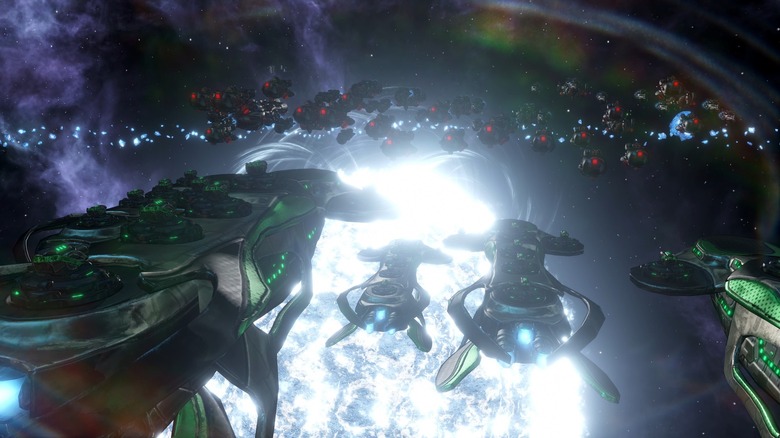
"Stellaris" takes the 4X formula pioneered by the "Civilization" series and blows it up to an intergalactic scale. The game places players in control of a starfaring empire and asks them to guide their space age civilization through several hundred years of conflicts. Players can choose one of the game's pre-designed alien races, or they create a species of their own. Species have their own physical needs as well as their own approaches to governing and managing militaries that will affect a player's experience throughout the dozens of hours a single game can take to complete.
In the early stages of the game, "Stellaris" asks players to explore the cosmos, establishing new colonies and bases of operation as they go. Along the way, players will discover new aliens, ancient artifacts, and different branches of scientific research that all have the potential to expand their empire's capabilities. As the game progresses and other species begin crawling through the stars, players need to use a mix of diplomacy and military action to ensure that they're the ones who get to call the shots in the galaxy.
If you wish the "Civilization" games had even more depth, then "Stellaris" is perfect for you. Between managing planetary industries, designing ships for a fleet, organizing trade routes, and planning research development, there are moments when "Stellaris" feels like playing with an Excel spreadsheet in the best possible way. Toss in the near-infinite amount of DLCs that developer Paradox has released for the game, and you have a strategy experience that can keep you engaged until the end of time.
Age of Empires II
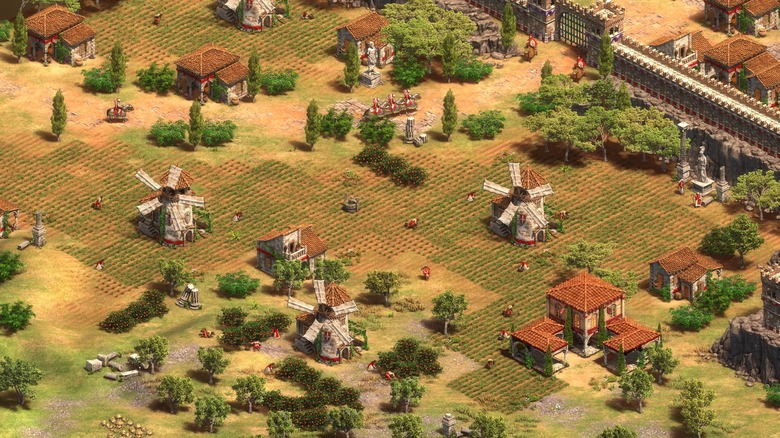
Of all the games on this list "Age of Empires II" has the most in common with the "Civilization" series. Depending on who you ask, it's also better than any "Civilization" game ever made. "Age of Empires II" is a historically-based real-time strategy game that's a frequent flier on lists of the greatest video games of all time, and anyone who's played it will back those assessments up.
Players choose from a list of thirteen different empires, and they start their glorious expansion with just a scant handful of villagers. The goal of the game is to create a vast empire capable of surviving through 1,000 and four different historical ages. Players start by directing their villagers to gather resources like food, gold, wood, and stone. With a healthy supply of resources, players can start constructing more useful buildings, investigating technological research paths, and investing in armies to defend their territory. Like all the best strategy games, "Age of Empires II" weaves together simple mechanics and systems into a complex network that allows players to approach the game in nearly infinite ways.
Like many of the other games we've discussed, "Age of Empires II" has a multiplayer component for competitive gamers, but the game also has a more elaborate campaign system than most other titles in the strategy genre. There are five different campaigns that players can tackle, and each approximates a major historical event like the Holy Crusades or Genghis Khan's rise to power. There are also three additional single-player modes designed to give experienced "Age of Empires" commanders new and engaging challenges to last them dozens more hours.
Starcraft 2
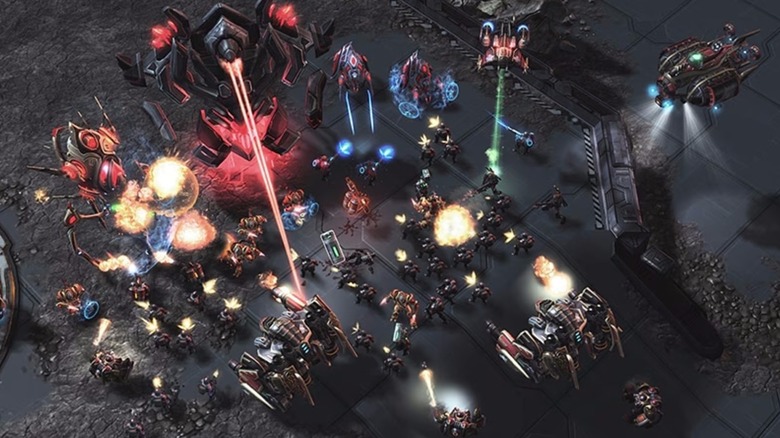
Gamers in the 2020s have no shortage of fantastic strategy game options, but 2010's "Starcraft II" is easily one of the best. Continuing on from the legacy of Blizzard's celebrated real-time strategy game, "Starcraft II" brings phenomenal graphics, a completely new story, and a highly refined set of mechanics to the table.
"Starcraft 2" is a real-time strategy game that moves at a much faster pace than any "Civilization" game. The game features a campaign where players move through carefully designed missions introducing the three playable armies and exploring their intergalactic war. The real meat of the game, however, happens in the multiplayer mode. A typical "Starcraft 2" match lasts roughly twenty minutes and pits two or more players against each other in a frenetic race for resources and combat dominance.
Players can control human Terran, buglike Zerg, or robotic Protoss armies. Each player starts with a single base and a smattering of resource-gathering units. Players need to gather resources to upgrade their base, construct new buildings, and ultimately build armies capable of crushing opponents. Carefully managing resources and timing, in addition to memorizing all the various abilities that different army units have access to, is the key to success. "Starcraft 2" offers a welcome change of pace to "Civilization" players. Its rapid fire gameplay is incredibly addicting and has cemented the game's place as RTS all-timer – at least until Blizzard finally releases "Starcraft 3."
XCOM II
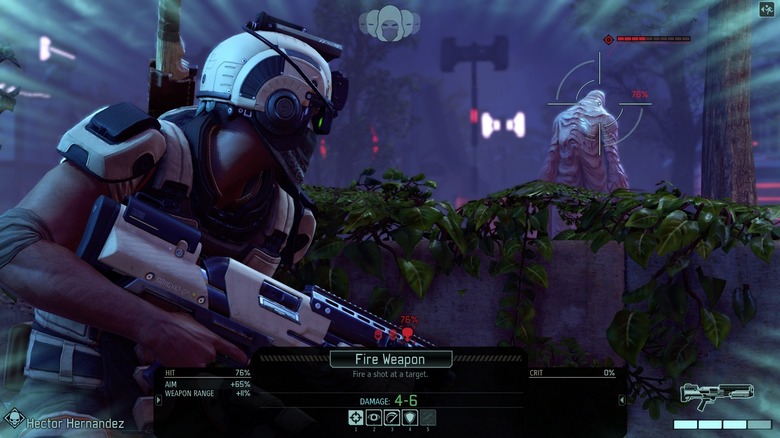
Semantics-minded gamers can argue about the true difference between "strategy" and "tactics" games, but for most of us, either type of game scratches a similar strategic thinking itch. Regardless of where it lies along the line, everyone can agree that "XCOM II" is a phenomenal experience for fans of turn-based strategy games. The 2016 entry in the beloved sci-fi series is sure to appeal to fans of "Civilization" even while offering them a completely different kind of gameplay experience.
Unlike the other games on this list, "XCOM II" puts players in control of a single squad of characters and asks them to control their moves in and out of combat in minute detail. Instead of managing an entire empire, players will be slugging their way through skirmishes and battles, feeling every twist and turn in humanity's war against an invading alien force. Characters in "XCOM II" belong to one of five classes that focus on dealing damage, controlling the battlefield, nerfing enemy units, or providing support and healing to other player-controlled characters. Players have to carefully construct their squads and then lead them through a series of missions composed of procedurally generated maps, which ensures that even after multiple playthroughs "XCOM II" always feels fresh. If you've ever played a "Civilization" game and wished that you could zoom in and micromanage the wars you launch, then "XCOM II" might open you up to a whole new world of games you'll definitely want to play.
Terra Invicta
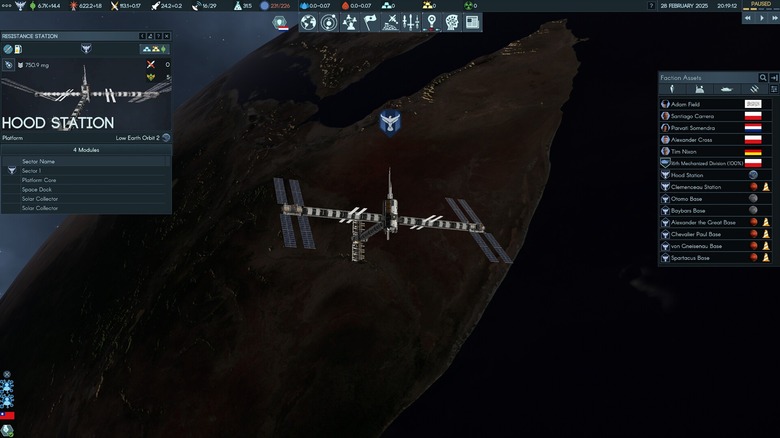
The "Civilization" games put players in control of historical empires, but "Terra Invicta" takes grand strategy to a whole new level. Players are tasked with commanding the entirety of the planet Earth as humanity struggles to deal with an invading alien force. The game begins shortly after an alien ship crashes onto the planet, and the alien species begins abducting and manipulating humans for its own purposes.
"Terra Invicta" has a multi-stage approach with its gameplay that makes it one of the deepest strategy games available today. In the first phase of the game, players control just a single faction on Earth, but their goal is to achieve worldwide dominance through diplomacy and military action. Taking control of the entire planet is only the first step to victory. After securing enough terrestrial power, players need to turn their eyes toward the stars.
In the second phase of the game, players focus on pushing humanity out into the solar system. Space has a wealth of resources to offer, but players need to carefully balance the needs of the people back home with the drive for expansion. After getting a foothold in the stars, players have to construct a spaceship armada capable of defending Earth and guaranteeing humanity's independence. One part first contact story and one part space opera, "Terra Invicta" is a perfect strategy game for fans of hard sci-fi.