
5 Indie Games Everyone Needs To Play At Least Once
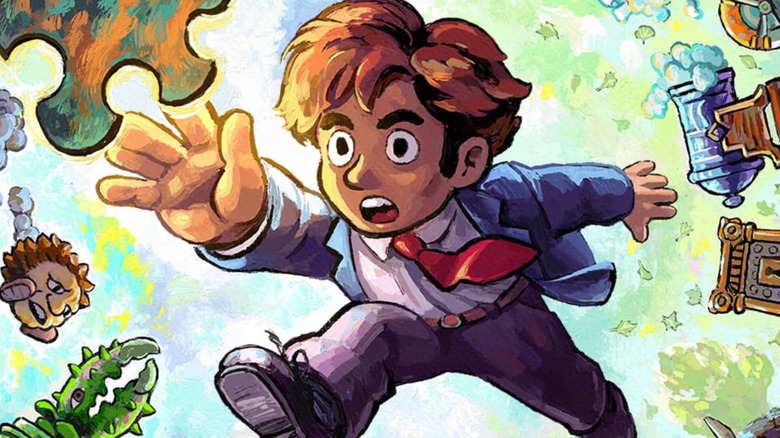
Indie games were once at the forefront of the video game industry, but today there's some confusion over what an indie game really is. People think of indies as games that are developed by small teams with relatively little money, and that definition seems reasonable enough. But in 2026, The Game Awards nominated "Dave the Diver," a game published by the successful and well-established company Nexon, for Indie Game of the Year, calling the whole definition into question.
Maybe in the 2020s indie gaming is having an identity crisis, but it's still amazing that the category exists at all. Arcade games in the golden era were essentially all created with the backing of an established company, and the most perfect games of the '90s were all unambiguously not indie. Independent developers didn't start coming to the forefront of the industry until the 2000s, but they quickly became the go-to source for truly creative and groundbreaking gaming experiences.
As fun as litigating the definition of "indie game" would be, that's not what we're here to do. While the industry and gamers themselves sort out the messy details, we're looking back at the history of the indie game movement and highlighting some of the incredible titles that helped make gaming more widespread and representative than it had ever been before. These are the indie game superstars that every gamer, even dedicated AAA fans, needs to play at least once.
Super Meat Boy
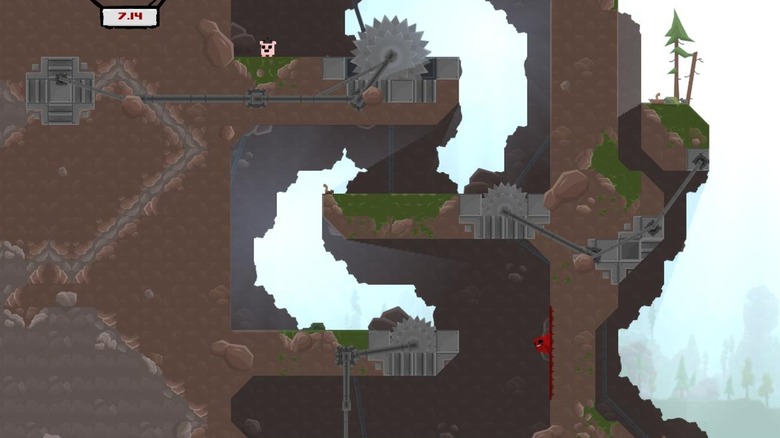
"Super Meat Boy" is a pitch-perfect platformer developed by a tiny indie development group called Team Meat. The game is technically a sequel to "Meat Boy," one of the best flash games of the 2000s and an ever-popular title on the gaming website Newgrounds. After the success of "Meat Boy," the team began working on the follow up, and "Super Meat Boy" landed on the Xbox 360 in 2010. Since then, the game has been ported to just about every platform imaginable. It helped launch the indie game craze that gamers still feel today, and it was one of the three subjects of the 2012 documentary "Indie Game: The Movie."
"Super Meat Boy" is a lightning fast platformer where players guide the titular main character through an elaborate series of dangers set up by the evil Dr. Fetus. Meat Boy needs to navigate through spike-filled obstacle courses, past dangerous whirring saws, and around deadly blocks of salt in order to save his kidnapped girlfriend, Bandage Girl. In a nod to the "Super Mario" franchise, the game is separated into different worlds, each of which has multiple levels and secret levels for players to unlock. Aside from the game's lengthy main storyline, players can attempt time trials, challenging Warp Zones, and full replays with unlockable characters who have platforming properties that are divergent from Meat Boy himself. "Super Meat Boy" is a deeply charming, lightly disturbing, and endlessly replayable indie game that absolutely everyone should play.
Braid
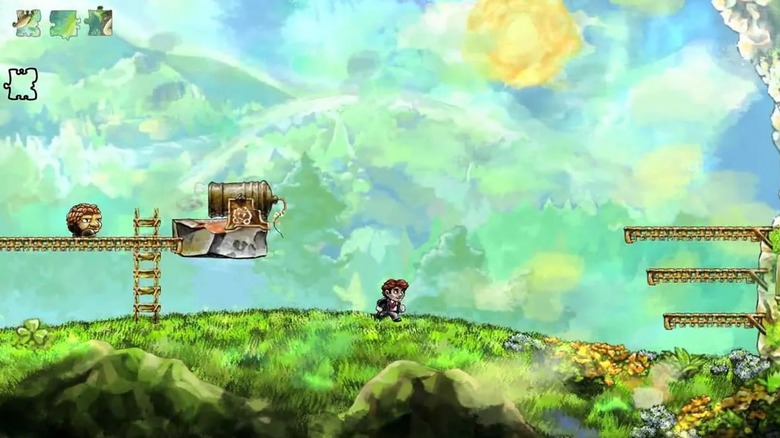
It wouldn't be a proper indie game celebration without shining a spotlight on a puzzle game. Jonathan Blow is the celebrated indie creator behind the "Myth"-inspired game "The Witness," but years before he released that first-person adventure, Blow created an unforgettable puzzle platformer called "Braid." The game follows a man named Tim who's trying to rescue a princess from the clutches of an evil monster. To find the princess, Tim has to navigate through a series of worlds, each filled with distinct levels, and find hidden puzzle pieces along the way.
Each world corresponds to a room in an old house, and they each force Tim to reexamine a piece of his past. The basic gameplay involves straightforward platforming and enemy head-jumping that any gamer will immediately grasp. Whenever players make a mistake or inadvertently cause Tim's death, they can rewind time, but each world introduces a new set of puzzling time travel mechanics. In some worlds, Tim's motion across the screen advances or rewinds time around him. In others, a shadow of Tim's past actions play into the puzzle, and in others, certain objects and key items move through time differently than Tim.
There are just enough different sets of mechanics to keep "Braid" feeling utterly fresh in every single level. The game's satisfying puzzles, combined with a gorgeous art style and show-stopping soundtrack, make for one of the most memorable indie game experiences you can have.
FTL: Faster Than Light
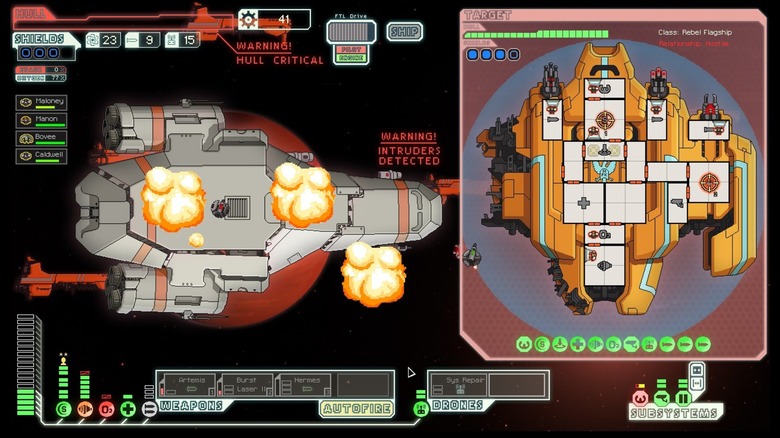
"FTL: Faster Than Light" from Subset Games is a phenomenal — and phenomenally addictive — sci-fi game about navigating the dangers of deep space. Players are tasked with getting their ship through multiple sectors of space in order to deliver important wartime information to the Galactic Federation. The path is full of dangers as well as opportunities for crew expansion and ship improvements, and success is never guaranteed.
"FTL" lets players control their ship from a top-down perspective. Players can direct their various crew members to different control rooms (including the engines, guns, or piloting) in order to activate different parts of the ship. Sectors are filled with multiple stars, and each time players travel to a new star, they encounter a new random event. Asteroid fields can cause damage to the hull, stranded ships can be opportunities to find new crew members, and of course, anti-Federation ships can become dangerous combatants. Battles involve a mix of turn-based and real-time combat mechanics that feel a bit like the Active Time Battle system from "Final Fantasy IV." Players have to balance the need to deal damage with the need to repair integral ship systems like the oxygen supply.
As players progress through "FTL," they can meet new alien crew members with unique abilities, discover incredibly powerful weapons systems, and unlock completely new types of ships. A skilled player might complete a run in under an hour, but newcomers will probably spend dozens of hours mastering the game's intricate systems before achieving their first victory. Like all the best roguelikes, "FTL" is a game that can last you hundreds upon hundreds of hours.
Disco Elysium
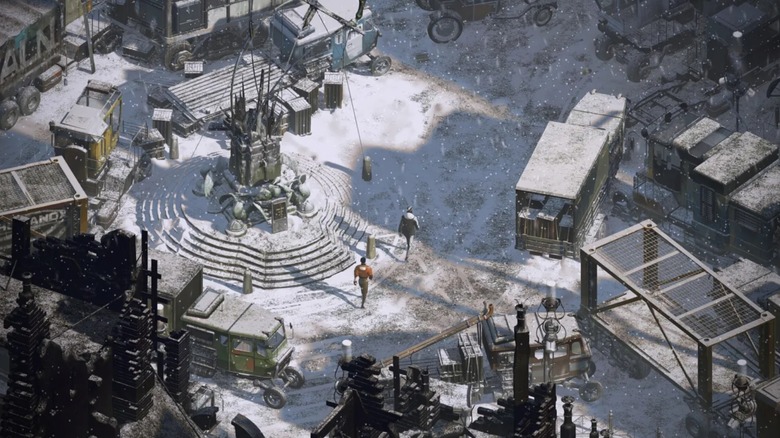
"Disco Elysium" is unlike anything else you've ever played. The 2019 role-playing game owes a lot to its lead designer, novelist Robert Kurvitz, who created one of the deepest and most enthralling narratives in video game history. The story takes place in a relatively poor neighborhood called Martinaise in the country of Revachol. Martinaise is a working-class neighborhood, and with the local union on strike, the place is a political powder keg. When a man is murdered and his body gets strung up on a tree, detectives are sent to investigate. One of them, a deeply problematic alcoholic, is the player character, who's trying to piece together his own fragmented memories and identity even while solving the case.
Players begin by putting points into certain stats, deciding if their detective will be a bruiser, an empathetic good guy, or a hopelessly corrupt loner. There are 24 different skills that can be leveled up throughout the game, and the story changes dramatically based on a player's build and choices. The actual gameplay is largely carried out through dialogue trees and skill checks, and players primarily need to rely on their own wits and observational skills to solve the mystery at the heart of the story. Along the way, they'll unlock different thoughts that can be placed in a "Thought Cabinet" and developed for in-game bonuses. Revealing more about the story would ruin the experience, but suffice it to say that the narrative and characters in "Disco Elysium" are so reactive to players that they nearly put the impeccable "Baldur's Gate 3" to shame.
Hades
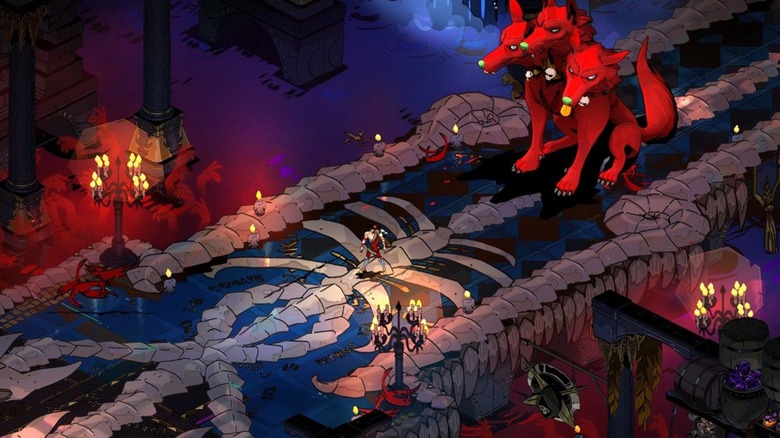
If you enjoy roguelikes and have an interest in Greek mythology, then Supergiant Games created your dream experience. "Hades" is a 2020 isometric action RPG with heavy roguelike elements and some of the best character writing in video game history. The story follows Zagreus, the son of Hades, who had dreams of escaping the Underworld and his father's ever-watchful eyes. Players guide Zagreus through his various escape attempts, using different weapons, abilities, and purchasable upgrades to beat down Underworld baddies and ultimately to defeat Hades himself.
In each run, players have to guide Zagreus through four different regions: Tartarus, Asphodel, Elysium, and the Temple of Styx. Each region has its own set of enemies and environmental dangers, and each offers a chance for Zagreus to encounter other mythological figures like Sisyphus and Charon, who have their own potential boons to offer. In between runs, players can get to know the other denizens of Hades and dive deep into Zagreus's family drama and personal life. Zagreus can develop his relationships with various characters and even pursue romances with some of the Hades citizens. To further his chances of escape, Zagreus unlocks new weapons that have unique moves and powerful magical abilities that can quickly turn the tide of battle. The combat is challenging and unforgiving, but the feeling of overcoming the odds and helping Zagreus reach his goals is a pure dopamine rush that every gamer will appreciate.