
5 Best Horror Video Games That Aren't Resident Evil Or Silent Hill
When it comes to horror video games, two franchises are at the top of the heap: "Resident Evil" and "Silent Hill." But there's no shortage of horror games out there. If you've played all the "Resident Evil" and "Silent Hill" games and want something new, or just want to mix it up with some different vibes, there are plenty of amazing horror video games for you from across the decades.
Old-school purists might recommend the original "Alone in the Dark," which actually predates "Resident Evil" by several years. Others might look to the golden age of FMV titles like "The 7th Guest" and "Night Trap." Still others will sing the praises of "Dead Space," "Amnesia," and "Outlast."
Those are all great games (well, except "Night Trap") and certainly worth discussing, but in narrowing this list down to just five entries, we chose titles that encompass the wide breadth of the horror genre. Here are five fantastic horror games that don't have the words "Resident Evil" or "Silent Hill" in their titles.
Alan Wake 2
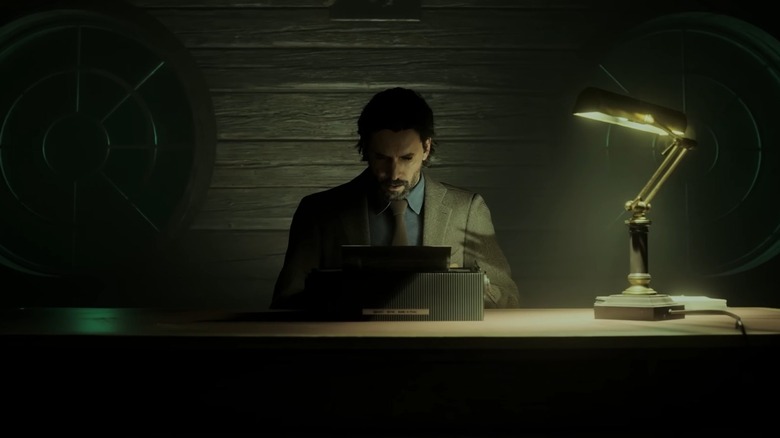
The original "Alan Wake," released in 2010 for Xbox 360, was an action game that featured horror elements. For the sequel, 2023's "Alan Wake 2," Finnish developer Remedy Entertainment went for a more cinematic approach with slower, methodical, survival-horror gameplay. While the original title had its fair share of darkness, it also carried a "T for Teen" rating. For the sequel, Remedy went full "M for Mature" to showcase how the new adventure of Alan Wake (and new hero Saga Anderson) is a lot darker, more violent, and more intense than ever.
As a survival horror experience, ammo conservation and resource management are key, as are bullet-sponge enemies who just keep coming until you finally take them down with a righteous headshot. Even so, Remedy's quirky sense of humor is still present. While the studio has always worn its David Lynch influence on its sleeve, the "Twin Peaks" of it all is on full display in "Alan Wake 2." Honestly, it's to the point where the series is arguably required viewing to fully appreciate "Alan Wake 2's" particular sensibilities.
If you love "Alan Wake," be sure to also try out "Control," Remedy's 2019 game. While a fast-paced third-person shooter with gravity-defying gun combat and Search Action gameplay couldn't be more different than "Alan Wake" at a glance, the two series are actually set in the same continuity, dubbed the "Remedy Connected Universe." The latest entry in this ever-growing franchise is "Control Resonant," released in September 2026.
F.E.A.R.
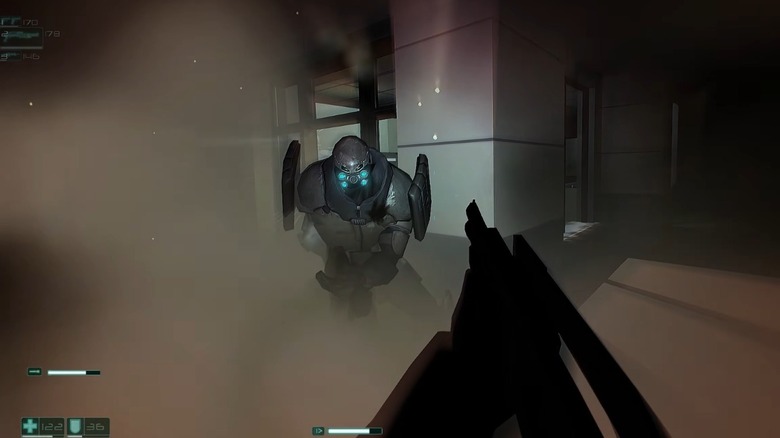
First person games run the gamut from high-octane shooters to deeply claustrophobic intimate horror experiences. Somehow, 2005's "F.E.A.R." managed to do both with spectacular aplomb. Short for First Encounter Assault Recon, "F.E.A.R.," developed by Monolith Productions, puts players in the shoes of the Point Man of the eponymous special forces team as he and his allies are tasked with putting down a revolt of cloned soldiers led by a rogue madman, Paxton Fettel. Point Man pursues this goal with ruthless efficiency, taking out bad guys with a variety of high-powered weaponry and sweet slow-motion abilities that would make Max Payne blush.
On the other hand, the facility also houses Alma, a mysterious little girl who can vaporize people into bloody pulp with her psychic mind powers. Yeah, "F.E.A.R." is one wild ride, a crazy combination of FPS insanity and J-horror influences. One second, the player feels like an empowered superman taking down enemies in a slow-mo barrage of gunfire. The next, you're crying in the corner because Alma is simply that scary.
"F.E.A.R." was followed by a 2009 sequel, "F.E.A.R. 2: Project Origin," which upped the action quotient but dialed back the terror, upsetting the perfect balance of the original. The final chapter of the trilogy, "F.E.A.R. 3," released in 2011, but with a co-op focus and a different development studio, Day 1 Studios, it didn't hit the same way. (But it's still a blast with a buddy in split-screen co-op!)
Alien: Isolation
In 1979, Ridley Scott ushered in a new era of sci-fi terror with "Alien." Essentially a 1950s-style monster movie in space, "Alien" benefitted from the vision of its director and gritty, realistic production design to create something that felt realistic, despite being set in outer space in the distant future.
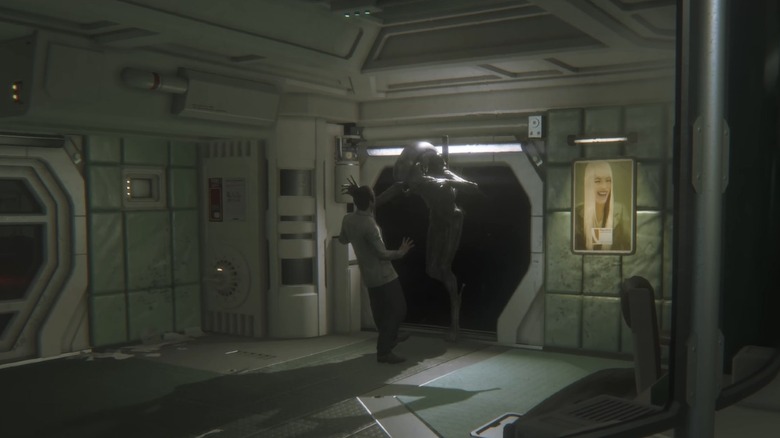
Fast-forward through a few decades, a lot of sequels, and a bunch of video games adaptations of varying quality, and we land on 2014's "Alien: Isolation," developed by Creative Assembly. Set in between the events of "Alien" and "Aliens," "Alien: Isolation" casts players as Amanda Ripley, daughter of series protagonist Ellen Ripley. Amanda heads to the Sevastopol space station, which quickly finds itself attacked by a xenomorph. While Amanda has access to weapons like a revolver and flamethrower, she can't kill the alien; she can only cause it to retreat.
Most of your time in "Alien: Isolation" will be spent hiding from the horrific and fiercely intelligent monster as it stalks Amanda through the Sevastopol station. It's a tense and harrowing experience that you'll never forget. It's the kind of game where, once the end credits begin to roll, you don't feel like you "won," you feel like you "survived" — and I can give no higher praise to any horror experience. Hopefully the same will be said of the upcoming sequel, "Alien: Isolation 2," which is likely still a full year or more away.
The Dark Pictures Anthology
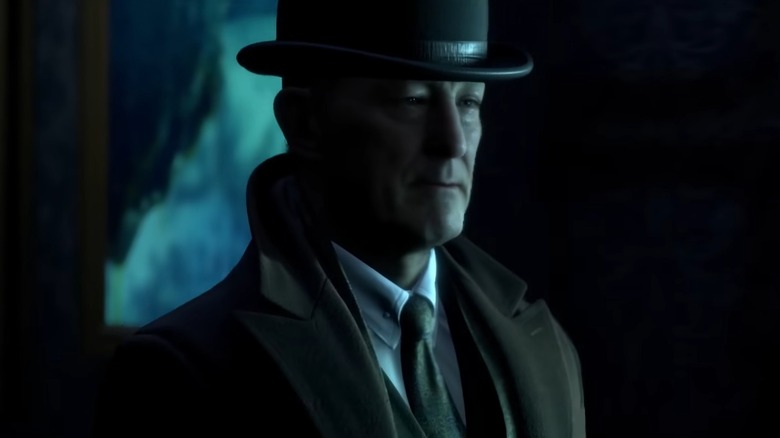
Supermassive Games broke onto the scene with their cinematic horror title, "Until Dawn." Despite being a single-player affair, the game became a hit among streamers and movie night playthroughs with friends. Its sleeper success led to titles like "Hidden Agenda" and "The Inpatient," but we're here to talk specifically about "The Dark Pictures Anthology."
Between 2019 and 2026, five games in the series have been released (plus a PSVR2 spin-off), all of which utilize Supermassive's signature style of cinematic horror with quicktime events and adventure gameplay where anyone in your party can live or die depending on the decisions you make. Each game is hosted by "The Curator," a mysterious storyteller with a macabre sense of humor about the fate of the lives in the players' hands. It's hard to pick a favorite title in the series, so why not play them all? Each game covers a different genre and features a different marquee star in addition to Supermassive's usual roster of models who play different roles across the various games.
You can choose to play them all in release order, or pick and choose based on genre and star power. Love sci-fi horror? Then try the latest entry, "Directive 8020." Loved Jessie Buckley's Oscar-nominated performance in "The Lost Daughter?" Maybe you'll love her in 2022's "The Devil In Me." As an anthology series, you can play them in any order, however you want, and the more you play, the more connections you'll notice between the various titles. Some are mere easter eggs, but others connect the stories in surprising ways.
The Evil Within
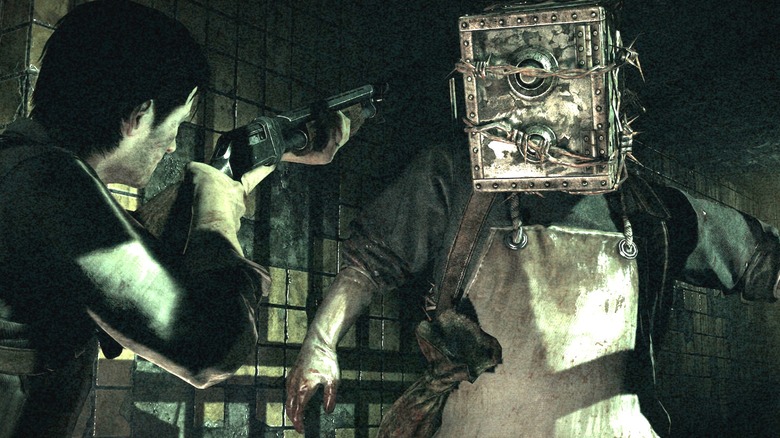
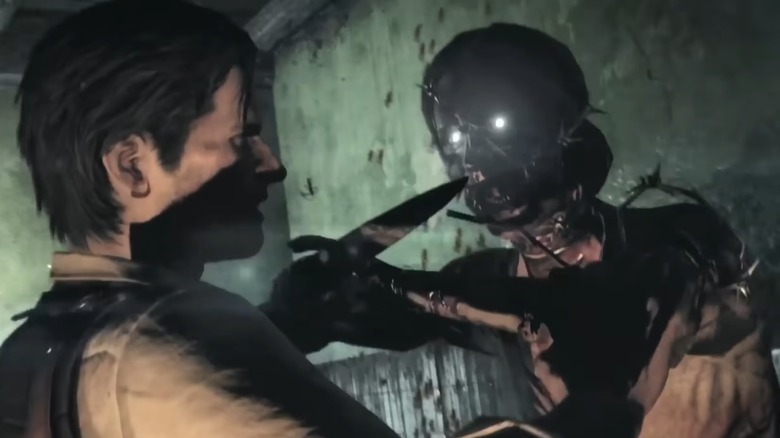
Finally, we arrive at a game that wears its "Resident Evil" influence directly on its sleeve. "The Evil Within," released in 2014 as a cross-gen title across PlayStation, Xbox, and PC, was directed by Shinji Mikami, the same man who called the shots on the original "Resident Evil" and "Resident Evil 4," two of the most revolutionary horror titles in history.
"The Evil Within" combines the sensibilities of "RE1" and "RE4" to create something unique that will nonetheless feel familiar to "Resident Evil" enthusiasts. Players take on the role of Sebastian Castellanos, a police detective investigating a case that turns into a twisted dive into his own shattered psyche. The gameplay looks like "Resident Evil 4," with an over-the-shoulder camera and precision aiming, but the pace is arguably closer to the original "Resident Evil," with a mysterious plot unfolding over time and more sequences of unsettling suspense instead of all-out action.
"The Evil Within" was met with critical acclaim and was generally well-liked by players (especially after the forced letterbox overlay was removed in a patch!), which led to a sequel, 2017's "The Evil Within 2." Rather than rehash the original, the second game ups the ante with an open world to explore and more in-depth survival and stealth mechanics. The result was not an immediate sales success, but some hardcore fans herald it as one of the greatest horror experiences of all time. Sadly, with the closure of developer Tango Gameworks in 2024, it remains to be seen if and when the short-lived franchise will ever return.