
5 Forgotten PS2 Games That Pushed The Console To Its Limits
The Nintendo Switch is hot on its heels but, as of this writing, the PlayStation 2 is still the best-selling video game console of all time, with over 160 million units sold. Since its launch in 2000, the tremendously popular system played host to thousands of different games. Some of them are all-time classics, some of them were bargain bin garbage, and still others are hidden gems.
Compared to the GameCube and the XBOX, the PlayStation 2 was considered to be 'underpowered.' Indeed, multiplatform games generally looked and ran better on GameCube and (especially) Xbox. But that doesn't mean the PS2 didn't have some truly gorgeous games in its roster. "Metal Gear Solid 3" showed what monumental feats the PS2 could achieve in 2004, and "Final Fantasy XII" had groundbreaking visuals in 2006 that obliterated the high water mark set by "Final Fantasy X" back in 2001.
Of course, those were all high-profile, hit games; ones you'd immediately think of when the PS2 came up in casual conversation. But what about the hidden gems? Let's take a look at five forgotten PS2 games with incredible visuals that pushed the console to its limits.
Zone of the Enders
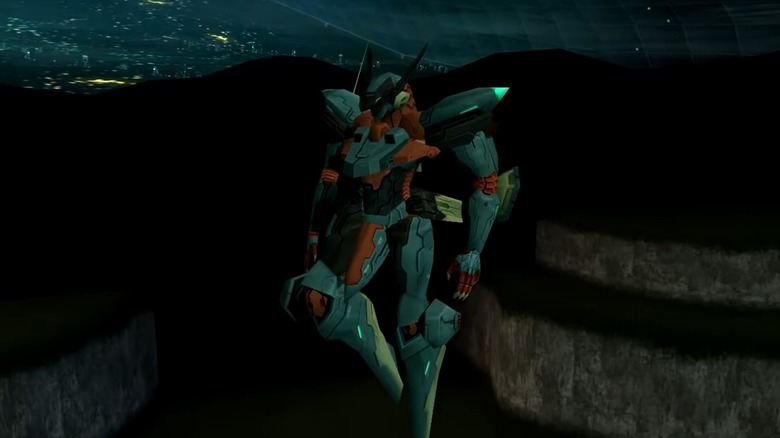
In the lead-up to the release of "Metal Gear Solid 2: Sons of Liberty," that game was shaping up to be one of the most highly-anticipated releases ever, and an early example of the wonders the PlayStation 2 was capable of delivering on a technological level. Meanwhile, a different team at Konami was working on another game using the same graphics engine. That title was "Zone of the Enders," produced by "MGS" mastermind Hideo Kojima. The demo for "MGS2" was even included in "Zone of the Enders," which certainly helped move copies of the latter.
Set in a future where mankind has begun to colonize the planets around Earth, "Zone of the Enders" follows a young boy, Leo, who discovers an experimental Orbital Frame (giant mecha robot) called Jehuty. Thanks to its advanced on-board AI, called A.D.A., Leo becomes a nigh-unstoppable force as he tries to bring Jehuty back to Mars while surviving endless enemy attacks.
"Zone of the Enders" features simple hack-and-slash gameplay that facilitates the cinematic story, but that's not to say the gameplay is forgettable. On the contrary, "Zone of the Enders" has lots of destructible environments, an impressive sense of scale with its giant robots, and some flashy combat effects, all at a steady 60 FPS on PlayStation 2. In fact, the PS2 version performed better than its own PS3/XBOX 360 remaster, which had a dreadful framerate when it launched back in 2012. Thankfully, a massive patch for the PS3 version brought the remaster up to par, so it's a great way to enjoy the classic game, if you still have a PS3 laying around.
Black
When you first boot up "Black," the FPS from "Burnout" creators Criterion Games, you're greeted by a stylish live-action intro cutscene promising a dark and gritty spy tale in the vein of "24." However, once you start playing, you realize the actual game is nothing like what its initial presentation might suggest.
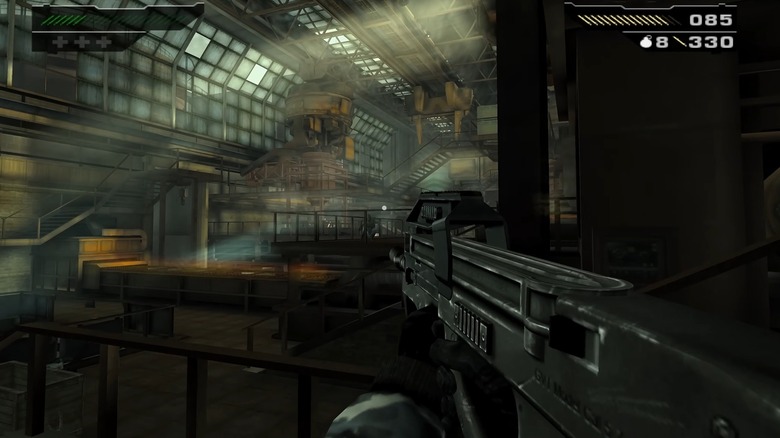
"Black" is a bombastic FPS where every bullet leaves a mark on the environment. Your game surroundings are littered with conspicuously placed explosives, destructible environments, and bad guys to shoot. Think less Tom Clancy's body of work and more Arnold Schwarzenegger in "Commando."
The particle effects and environmental destruction look amazing by PS2 standards. The enemy character models are pretty plain and low-poly, but at least they exhibit decent ragdolls when they're shot or thrown about by explosions, and that's always fun to observe. But the real stars of the show are the guns themselves, which are tremendously detailed and feel appropriately powerful. The icing on the cake is the gorgeous depth of field effect that triggers when you reload out of combat, so you have no choice but to look at the gun as the player character swaps magazines.
Cold Winter
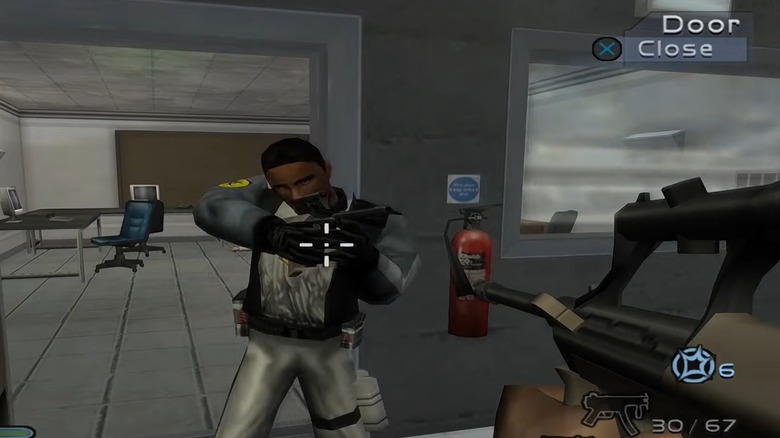
At a glance, "Cold Winter" isn't as immediately visually striking as other games on this list, but this criminally overlooked PS2 FPS has a few tricks up its sleeve. One of these tricks is its incredible use of the Havok physics engine. Of course, dead bodies fall down realistically based on where they're shot, but there's also a ton of environmental interactions. Almost everything that isn't nailed down can be either blown up or pushed around by gunfire. Throwing grenades in busy rooms results in a dazzling display of physics objects, though the framerate takes a significant hit during these moments.
The physics go into ghastly overdrive when you pull out the heavy guns. Pistols and light SMGs will kill enemies, but if you swap to shotguns or heavy assault rifles, you'll literally blow enemies to pieces. Heads will blow up, and arms and legs can be dismembered at multiple points of articulation. It's not for the faint of heart, but it's a dazzling display all the same.
Best of all, "Cold Winter" rocks. It's got a great spy fiction story written by Warren Ellis, excellent voice acting, and unique locales that feel like a mix of "24" and James Bond, and it released a full year before "Casino Royale" ushered in a new, more realistic era for the British super-spy. If you're a fan of either "24" or 007, "Cold Winter" is a must-play.
Ico
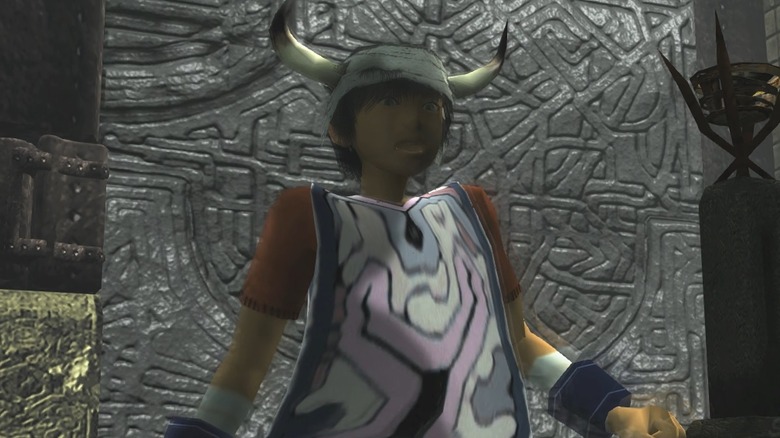
These days, all you ever hear about is "Shadow of the Colossus," though it's for good reason. It's a great game. But is it as great as "Ico," the previous game from legendary game director Fumito Ueda? Maybe, maybe not. But the point is, "Ico" is often overlooked in favor of "Shadow of the Colossus." Why hasn't "Ico" gotten a current-gen 4K remake with unlocked framerate options and next-gen ray-traced lighting?
Perhaps one reason is, while "Shadow of the Colossus" was arguably too big to properly fit on the PS2 (hence the iffy framerate in that original version), "Ico" was pretty much perfect from the start, both as a game and as a showcase of the PS2's technology. Players take on the role of Ico, a young boy born with horns who is locked up in a castle due to his "defect." After escaping his cage, he must find his way out of the castle. He's also aided by the mysterious Princess Yorda, whose subtitled dialogue is indecipherable on the first playthrough.
"Ico" has some of the best water effects ever seen on the PS2 and, thanks to the (mostly) fixed camera perspective, features a palpable sense of scale. Throw in an early version of bloom lighting accentuating the soft-focused presentation and some truly amazing character animations, and you have one of the best-looking PS2 games of all time.
The Bouncer
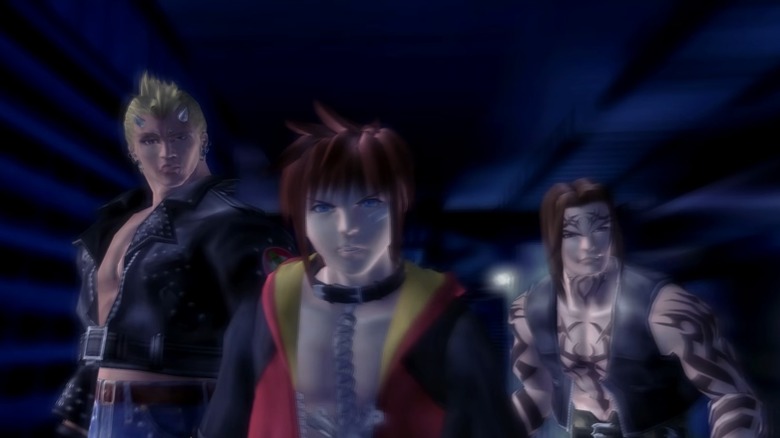
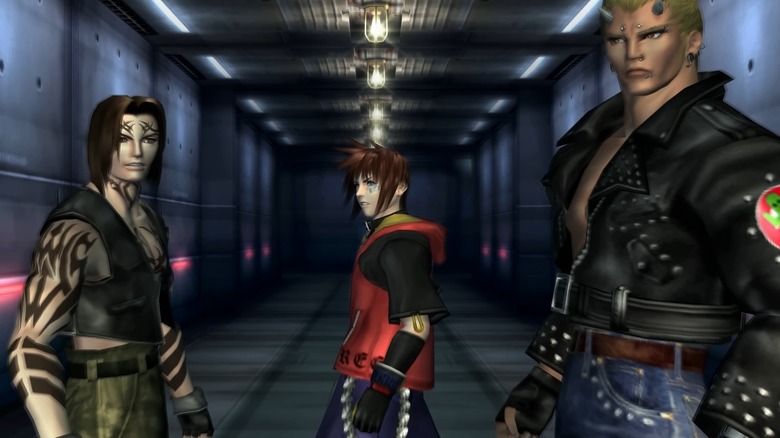
Before "Kingdom Hearts" and before "Final Fantasy X," Squaresoft (not yet Square Enix) released their first high-profile PS2 game, 2000's "The Bouncer," a 3D brawler with unique storytelling and a highly cinematic presentation. During the single-player story mode, players take the role of three bar bouncers in a near-future sci-fi city.
When Dominique, a sweet young girl who hangs out with protagonist Sion, is kidnapped by the private security of a massive corporation with ties to all three heroes, the trio of professional butt-kickers go on a quest to get her back, beating up anyone and everyone who stands in their way. The story is presented in a "fight a little, watch a little" kind of way, with very little gameplay outside of the main brawling, which plays like "Tobal No. 1" or "Ehrgeiz," both from the same development studio, Dream Factory.
While the story and gameplay may or may not hold up depending on who you ask (I love it, but I also have a lot of nostalgia for the game), the visuals of "The Bouncer" cannot be denied. The game made tremendous use of bloom lighting to smooth out the blocky models, and used ragdoll physics to enable juggle combos. Fight moves themselves were achieved via motion capture, though some are reused from "Tobal" and "Ehrgeiz." The game also made great use of the pressure-sensitive face buttons on the PS2 controller to modify attacks. If you were an early adopter of the PS2, "The Bouncer," at the very least, served its purpose as an early tech demo for what the system would achieve over its lifespan.