
5 Most Underrated Arcade Games Of The 1980s

Arcades were the birthplace of video games, and today gamers are still chasing the thrill of plugging quarters into cabinets and wasting away afternoons with friends. The gaming industry has changed in so many ways over the decades, but arcades still hold power over games.
The best '70s arcade games still get played today thanks to ports and the endless nostalgia of gamers, and every generation after that one has added its own hits to the ranks of unforgettable games. But the '80s gave us a new wave of games, and many of them are still household names today. People will be playing "Pac-Man," "Centipede," and "Donkey Kong" as long as video games still exist, and some modern games arguably wouldn't exist without early arcade hits.
Some other retro games vanished without a trace, but there's a middle ground between historic turning point and dustbin fodder where some of our favorite games exist. These underrated '80s arcade games typically aren't the first titles nostalgic gamers remember, but they are phenomenal experiences that helped shape the industry in their own way.
Here are the five most underrated arcade games of the 1980s.
Berzerk
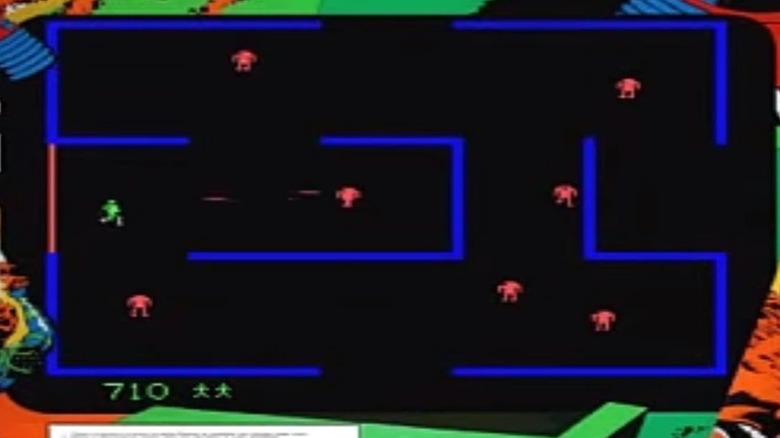
"Berzerk" is a multi-directional shooter developed and published by Stern Electronics in 1980. The game has a lot in common with other hits of the era, but "Berzerk" is a bit more complex, from both a game design and technological perspective, than its arcade cabinet brethren. While other games had players chasing a high score or navigating simple levels, "Berzerk" combines action and exploration to create an experience that deserves more praise and attention than it often gets.
In "Berzerk" players control a stick figure character who finds themselves dropped into the heart of a maze. While searching for an escape, players also need to dodge and shoot wandering robots that are also armed with guns. The robots aren't particularly smart, and they'll often kill themselves by running into walls or directly into each other. They still make progressing through the maze significantly more treacherous, and, unlike most video game characters of the era, they also talk. "Berzerk" has a variety of synthesizer-generated vocal lines that robots use in response to various player actions.
Those voices help to make the silent boss of "Berzerk" even creepier. While navigating the maze and fighting robots, players also need to be on the lookout for Evil Otto. The giant smiley face relentlessly chases players, even moving through walls in an effort to destroy them. The maze, the talking robots, and the eerie Evil Otto make "Berzerk" an utterly unique arcade game that everyone should play.
Star Castle
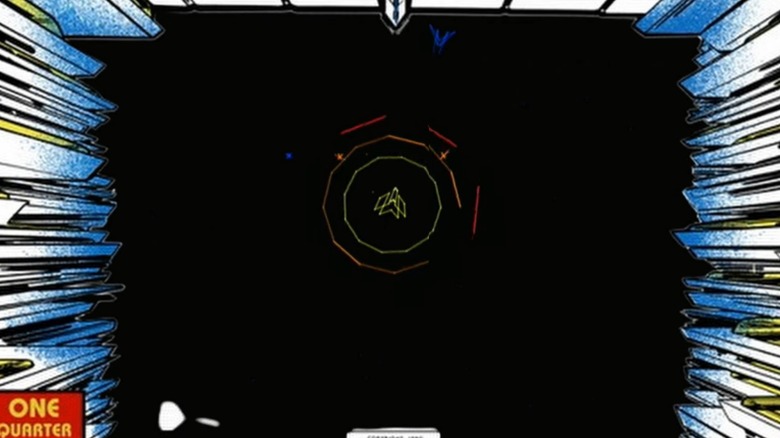
The 1980s were a magical time for gamers because early video game consoles were bringing all the excitement of the arcade to homes everywhere. "Yars' Revenge" is one of the best Atari 2600 games ever made, and countless legions of gamers have played it over the years. Significantly fewer gamers have played the underrated arcade cabinet game "Star Castle," but without it, their beloved "Yars' Revenge" wouldn't even exist.
In "Star Castle" players control a tiny spaceship that can fly around the edges of the screen. An enemy cannon dominates the center of the screen, and enemy mines fly out of it and home in on the player's ship. In order to destroy the cannon, players need to shoot through three defensive rings. When a player finally punches a hole through the rings, the cannon will start shooting larger projectiles until it's destroyed. All in all, "Star Castle" players like an exhilarating cross between "Asteroids" and "Breakout."
Atari commissioned a port of "Berzerk" for the Atari 2600, but it never came to be. During the process, the developers decided that "Berzerk" wouldn't work quite right on the console, so they took many of the game's mechanics and basic ideas and transformed them into a completely new game. "Yars' Revenge," which would become one of the console's best sellers, was born, and "Berzerk" sadly fell by the wayside.
BurgerTime
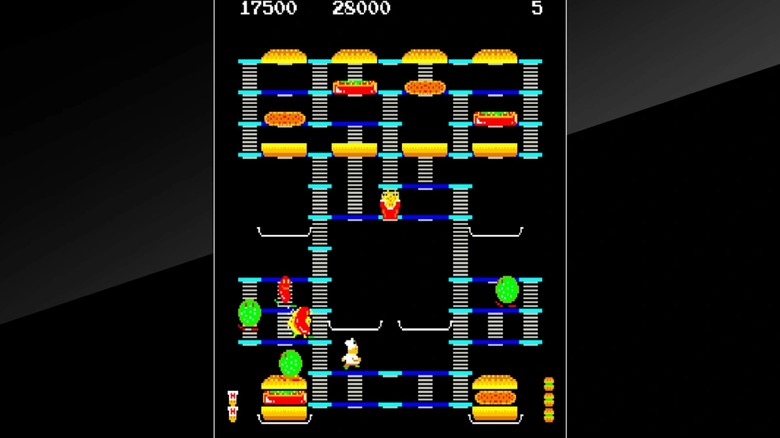
1982's "BurgerTime" is the one arcade game guaranteed to make you hungry. Developed by Bally Midway, the game looks like a platformer, but functions more like a labyrinth or puzzle game. Players control Peter Pepper and help him navigate a series of ladders that connect platforms laden with burger ingredients. Peter gets the ingredients to drop from their platforms by walking across them, and after getting four burgers fully constructed at the bottom of the screen, the level is finished.
Peter isn't the only one navigating the burger maze. The game's three enemies – Mr. Hot Dog, Mr. Pickle, and Mr. Egg – can also drop burger ingredients, sometimes crushing Peter and causing him to lose a life in the process. When crossing paths with an enemy, Peter can stun them by using one of his five pepper chargers, but if he touches an unstunned enemy, he also loses a life.
Despite its utterly charming aesthetics, "BurgerTime" isn't as highly-regarded or as well-remembered as some of its arcade game counterparts. That might have something to do with the game's difficulty, which is punishing, or its limited level variety. Whatever the reason, "BurgerTime" isn't a household name like "Pac-Man," even though it's a fantastic '80s arcade game that almost any gamer would enjoy.
Sinistar
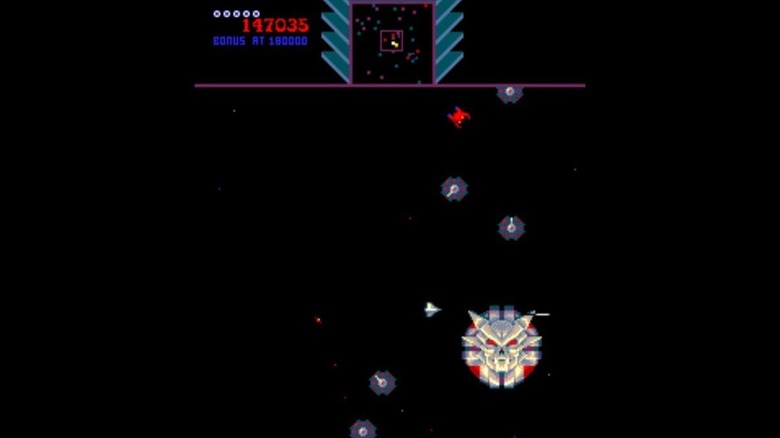
"Sinistar" is a game about exploring the depths of space and fighting for your life against tireless interstellar enemies. Released in the mid-1980s by Williams Electronics, "Sinistar" arcade cabinets used a special 49-position joystick to let players fly their ship through the depths of space and deftly navigate around Worker and Warrior ships that are all faster than players. Coordinated flying and well-aimed blaster shots are the keys to success in "Sinistar." In each level, players need to find and shoot at planetoids in order to gather up white dots called Sinibombs. While that search is going on, Warrior ships are trying to destroy players, and Worker ships are stealing those white dots and using them to construct Sinistar, the boss of every level. Once Sinistar is activated, players need to shoot it with at least 13 Sinibombs to destroy it and advance to the next level.
Thanks to excellent art, a great soundtrack, and impressive digital voice lines for the main boss, "Sinistar" stands out as an especially well constructed arcade game. Unfortunately, the game didn't receive a console port until well into the '90s. Due to that and the fact that "Sinistar" was one of those arcade games seemingly designed to steal your quarters, it became one of the most underrated '80s arcade games ever made.
Dig Dug 2
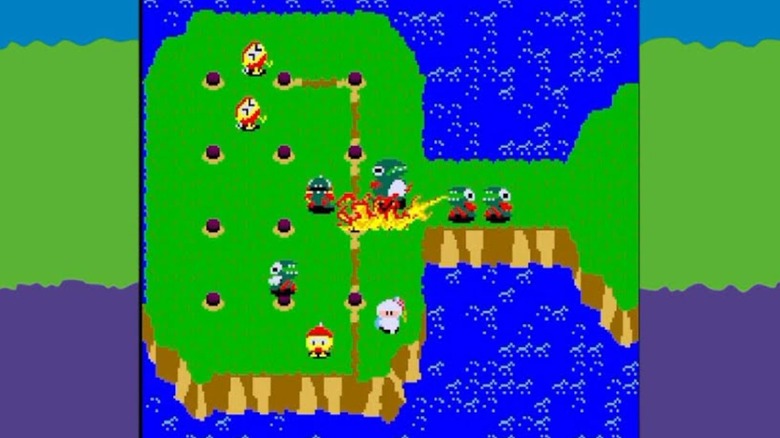
"Dig Dug" is a beloved game that took over arcades in 1982, and gamers have been playing it ever since. "Dig Dug" has been packaged alongside other classic arcade games in combo titles like "Namco Museum," and it's been ported to just about every console and handheld imaginable. The game is so genuinely good that it's difficult to call "Dig Dug" overrated, but the game's much lesser known sequel is easily one of the most underrated arcade games of the '80s.
"Dig Dug 2" made its way to arcades in 1985, and it offered a number of improvements on the original game. The sequel features a top-down perspective and places Dug on an island instead of having him dig straight under the Earth. Just like the first time around, Dug has two tools available to him: a jackhammer and an air pump. With the pump Dug can literally blow up his enemies, and with the jackhammer he can split open fault lines and cause portions of the island to sink. By destroying enemies and chunks of land simultaneously, players can earn extra points and advance through the levels even faster. Players need to kill every enemy on the island to advance to the next level, but while digging out potential traps they need to be careful because Dug can fall into the water too. "Dig Dug 2" scratches the same itch as the original while also offering a deeper gameplay experience, but because the original