
5 Best Video Game Openings Of All Time, Ranked
First impressions are everything, from dating to job interviews. At the same time, they say you sometimes have to stick with books and video games before they truly start to get good. In our opinion, that's nonsense. A game, especially, should have you engaged from the first minute all the way through to the end credits. That doesn't mean a game's pace can't breathe, much less ebb and flow as the story dictates, but if you're not hooked from the start in one way or another, then you and the game got off on the wrong foot.
With that in mind, let's take a look at five games that nailed their first impression. These games have tremendously cool openings that grabbed our attention and never let us go until the adventure was over. Whether they started with a bombastic gameplay sequence or a distinct narrative hook, these five titles began with a bang. Here are our picks for five of the best video game openings of all time.
5. Super Mario 64
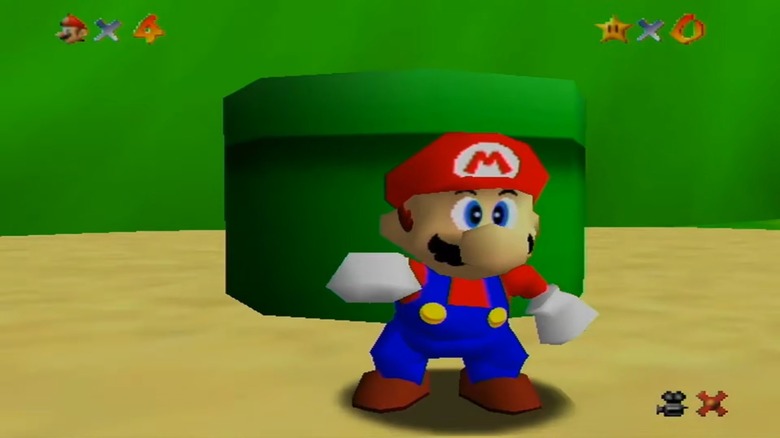
From a narrative standpoint, "Super Mario 64" didn't do anything new. Princess Peach (or Toadstool, if you prefer) has been kidnapped, and Mario has to save her from Bowser. But "Super Mario 64" was the first time the series went into full 3D, with courses that allowed Mario to explore in all directions, rather than simply running from left to right, dodging obstacles and enemies along the way.
After a brief opening cutscene, the player first takes control of Mario in the courtyard of Peach's castle, a location that would become iconic for an entire generation of players. From the outset, the player understands that the adventure will properly begin once they enter the castle, but the game also knows that, in 1996, the player probably hasn't played many 3D games yet. Particularly not on the infamously unique three-handled N64 controller.
Thus, the player is free to experiment and teach themselves how to play in the safety of Peach's garden. There are no enemies here, nor bottomless pits in which to fall. Just calm, tranquil grass, a path leading up to the front door, and a moat in which players can swim, should they choose. You can take as long as you want learning how to navigate using the N64's analog control stick, jump around with the game's innovative physics and momentum, and otherwise learn the basics before properly embarking on a generation-defining N64 adventure.
4. Metroid Prime
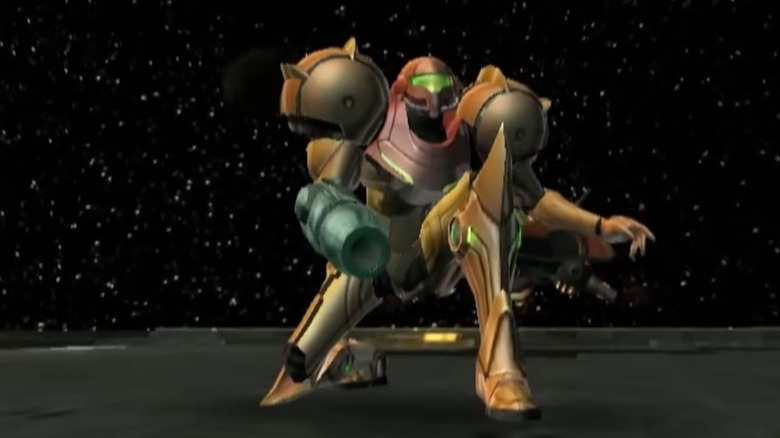
In the lead-up to the release of "Metroid Prime," franchise fans were skeptical about the idea of reimagining the legendary game as a first person shooter. In fact, it seemed like Nintendo was hedging its bets by slating the GameCube exclusive for release on November 18, 2002, the exact same day as "Metroid Fusion" for Game Boy Advance, a game that hewed much closer to the classic formula perfected by 1994's "Super Metroid." That way, even if fans rejected the new direction, they'd still have a classic-style entry to enjoy.
Fortunately, "Metroid Prime" won over even the most hardcore old-school enthusiasts thanks to its perfect translation of the classic Metroidvania formula to first person gameplay. This was evident from the intro, which borrowed heavily from "Super Metroid." If you recall, that game opened with Samus losing her high-tech gadgets and being forced to rebuild her arsenal over the course of the adventure. "Metroid Prime" begins nigh-identically, with a bombastic attack against a group of Space Pirates, culminating in a thrilling boss battle before Samus inevitably loses her gear and has to start again in order to survive the harsh conditions of Tallon IV.
Against all odds and despite transitioning to first-person, "Metroid Prime" remained immediately recognizable as a "Metroid" game. For the fans who had their doubts, those fears were assuaged within minutes of starting the game. As for "Metroid Fusion," that game was fantastic as well. Indeed, 2002 was a great year for the "Metroid" faithful.
3. Final Fantasy VII
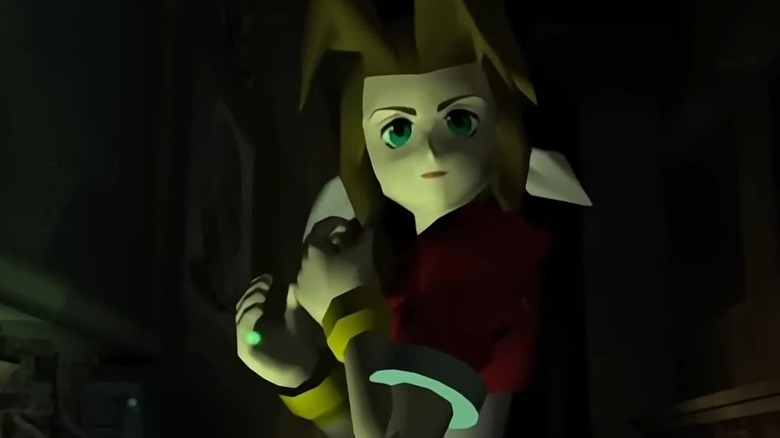
The "Final Fantasy" series had a wonderful run on the NES and especially the SNES, but it was the PS1 era that made the franchise into a mainstream hit. With 1997's "Final Fantasy VII," the series wasn't just for nerds, but for gamers of all stripes. From the outset, "FFVII" wasn't like other titles in the long-running series, either. It was set in a cyberpunk city, and announced itself with a lengthy FMV sequence that set the stage for the adventure to come.
That opening cutscene would be enough to cement its place on this list, but the cutscene segued seamlessly into the legendary "bombing mission" intro, in which Cloud works as a mercenary for Avalanche to destroy a Mako reactor controlled by the evil Shinra corporation. The scene featured a mix of tremendous new imagery for the series, buoyed by the classic Active Time Battle combat system, making for a glorious mix of old and new.
If you really want to stretch things out, you could even say the opening of "Final Fantasy VII" extends to the entire Midgar portion of the game, which is the first couple of hours. That whole section of the game is linear and strikingly cinematic in a time before that become normal for gaming. But then, after the death of President Shinra and the reveal of Sephiroth as the true villain of the story, Cloud and his allies leave Midgar, at which point the player is greeted by that old "Final Fantasy" staple: the world map. Now, the real adventure begins. Everything in Midgar, from the bombing mission to rescuing Aerith from the Turks in Sector 5 and the iconic cross-dressing chapter? That was all just the prologue of one of the best-written games on PS1.
2. Resident Evil
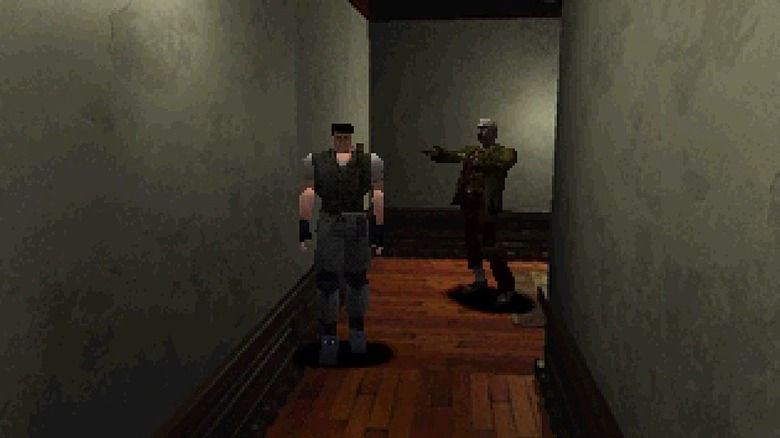
Back in 1996, a legion of players entered the world of survival horror for the first time with "Resident Evil." The game opens with a live-action FMV sequence that sets the stage for the game to come, complete with corny acting, surprisingly gory scary moments, and Wesker wearing sunglasses at night.
However, once you begin playing, things take a turn. Remember how "Super Mario 64" gives you a safe space to learn movement? "Resident Evil" does the same thing with the foyer of the Spencer Mansion. It's devoid of enemies, and it will take a while for first-time players to figure out the series' signature 'tank controls.' Eventually, you'll find the body of STARS member Kenneth Sullivan being eaten by a zombie. The reveal of this flesh-eating monster is one of the most iconic moments in the history of horror, gaming or otherwise. For most players, this moment is followed by the player character getting killed and eaten by the insatiable infected.
Essentially, you're supposed to die early and often in the original "Resident Evil" until you master the controls and learn to dodge and weave in order to avoid enemies. Among players whose first "Resident Evil" was the 1996 original, I can guarantee that every single one of them were killed at least once by that first zombie, and they happily went back for more ... And then probably died again. But eventually, they figured it out and kicked off a lifetime of "Resident Evil" fandom.
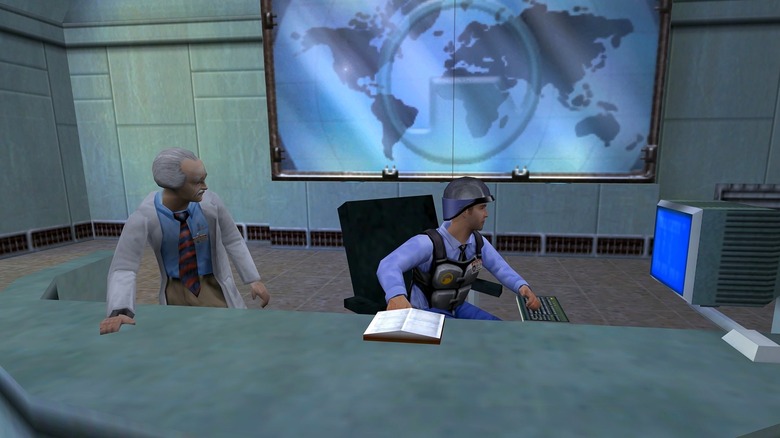
1. Half-Life
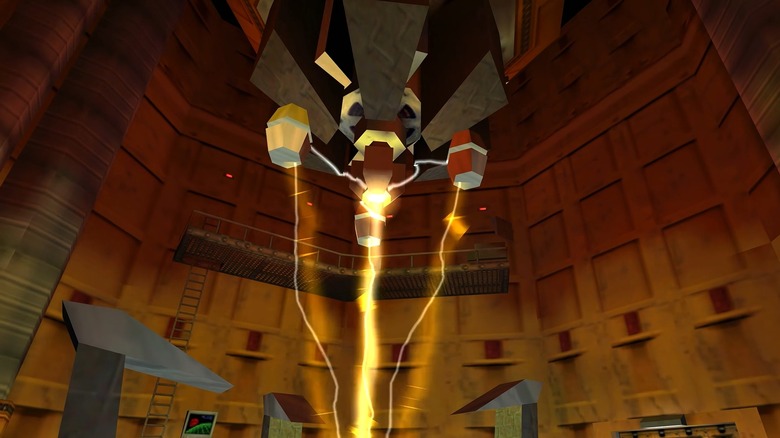
Before "Half-Life" released in 1998, FPS games were arcade shooting galleries like "Doom." Sure, games like "Marathon" and even "Duke Nukem 3D" had varying degrees of storytelling, but none of them revolutionized the way we looked at games as a medium the way "Half-Life" did. The game begins, not with a bang, but with a tram ride. The player character, Gordon Freeman, is reporting to work at the Black Mesa research facility in the middle of the New Mexico desert. There, you can explore the facility, talk to scientists and security guards, blow up Dr. Magnusson's lunch in the microwave, and then work on a science experiment. Of course, everything goes wrong, and the facility is invaded by extra-dimensional aliens.
But even then, "Half-Life" practices restraint, refusing to give the player a gun right away. First, you have to run away from the monsters, at least until you get a crowbar to fight back. It's actually quite a while before you get a proper firearm, at which point you can finally partake in some high-octane gunplay. Even then, though, the game remains focused on its storytelling and pacing. "Half-Life" was simply unlike anything that had come before, and it influenced virtually everything that came after. To this day, "Half-Life's" opening wasn't just a great intro to a classic game; it was a turning point for the entire medium of video games.