
5 Most Disappointing PS4 Games Of All Time, Ranked
There's an argument to be made that an as-yet-unreleased game is more valuable than a game that's actually out in the wild and in the hands of players. A game that hasn't been released hasn't gone through the wringer of YouTube content creators, gaming journalists, and the court of public opinion. It's pure potential energy.
Sometimes, a game is tremendously hyped and has all the marketing buzz in the world, but the end result just doesn't hit the mark. The game is a disappointment. All of the excitement dissipates into a feeling of wasted potential and underwhelming results.
Let's take a look at five games that failed to capitalize on the greatness they could have accomplished. These games had varying degrees of hype and excitement, but failed to resonate with players for one reason or another. Some of these games aimed to be grandiose revivals of forgotten properties that turned out to be little more than nostalgic cash grabs. Others were original ideas that just didn't pan out. Either way, these five games are remembered as disappointments, insofar as they're remembered at all.
Drawn to Death
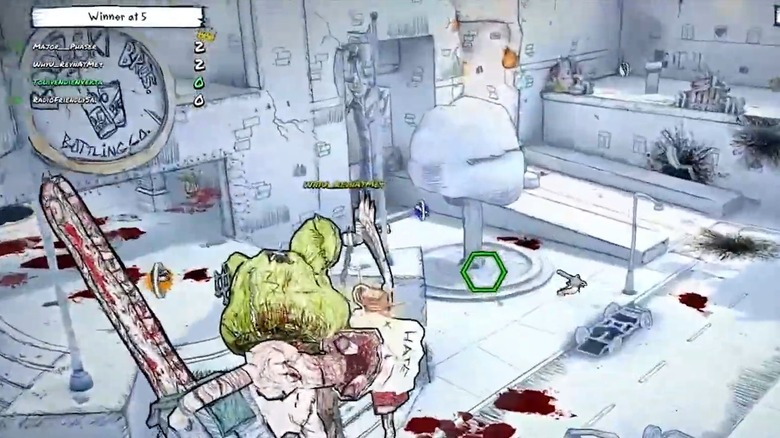
David Jaffe is a legend in the video game industry. He was instrumental in the development of games like "Twisted Metal" and "God of War," among others. To date, his final released game is 2017's "Drawn to Death," which had the potential to be something truly spectacular. Alas, the game just kind of came and went with little fanfare ... Full disclosure: I liked it.
"Drawn to Death" is nothing if not visually unique. Set in the pages of a misanthropic but imaginative teenager, the game pits wild cartoon characters against each other in arena-based online multiplayer matches. Think of it like "Quake" meets "Overwatch" with a tragicomic vibe of teenage angst.
Unfortunately, the game could not live up to its aesthetic and didn't do very much with its genuinely great premise. In another era, "Drawn to Death" would have been a whimsical and well-written journey into the mind of an angry high-schooler. Alas, there isn't much room for nuanced storytelling in an arena-based multiplayer shooter, especially not in 2017. Thus, the game was dismissed as little more than edgelord fluff. It didn't help that the gunplay and combat were somewhat unremarkable compared to other multiplayer games of the era. If you want to play "Drawn to Death" today, I'm afraid you're out of luck: the game's servers went offline way back in 2019, less than two years after its initial launch.
The Quiet Man
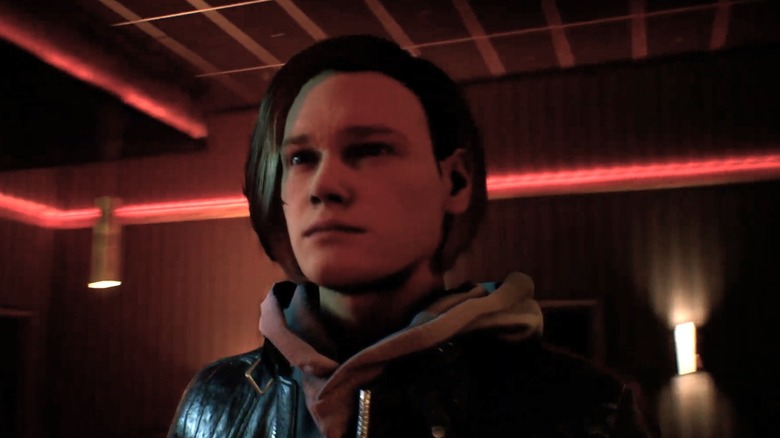
Amidst the retro-revival of 2D side-scrolling brawlers, "The Quiet Man" stood out for a number of reasons. First, it was 3D, which made it look like a successor to classic brawlers like "Fighting Force" and "Dynamite Cop." Then, there was the presentation, which featured seamless blending of gameplay with live-action FMV sequences. Finally, there was the premise, which saw players in the role of a deaf fighter on an odyssey through the dark and violent city in search of a kidnapped woman.
Unfortunately, the game failed on pretty much every level and wound up being one of the worst-rated games of its decade. The gameplay was shallow and unresponsive, with repetitive animations and a lack of pizzazz to the endless punching. The FMV sequences were full of over-acting performances and first draft dialogue that wouldn't fly in a 70-year-old episode of "Dragnet."
There was also the absurdity of the premise. The main character, Dane (played by James Hicks) is deaf, but can still communicate with characters. However, the player isn't privy to these conversations, since there's effectively no sound during cutscenes during the first playthrough. In order to actually understand the story, you have to play the entire game a second time, now with sound and additional scenes that ostensibly serve to allow the story to make sense. Spoiler alert: it makes even less sense the second time, with silly twists that defy logic and credulity and completely break the story. "The Quiet Man" is admirable for its ambition, but it's a shame that, at every step, it trips over its own feet. At least the Imogen Heap theme song is pretty good!
Star Wars Battlefront II
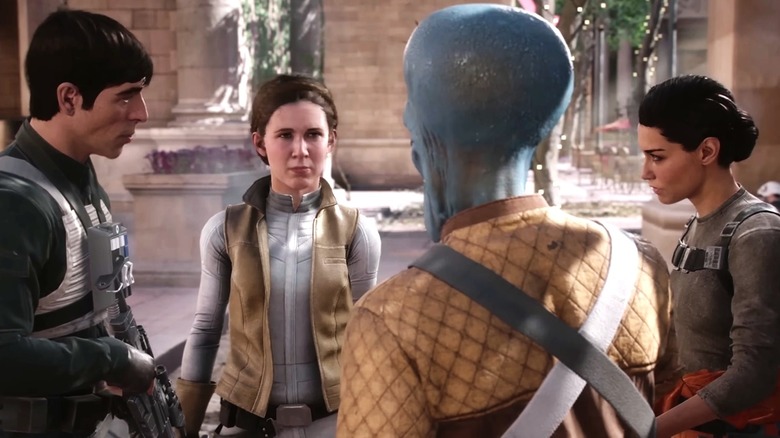
When Star Wars came back in a big way with a sequel trilogy, the return extended to video games. Disney/Lucasfilm signed an exclusive contract with EA to create several Star Wars games, beginning with "Star Wars Battlefront." It was a good start, but exclusively featured levels and characters from the original trilogy era (plus "Rogue One" via DLC). The 2017, sequel, however, was hyped up for featuring content from across all three Star Wars trilogies.
But then, of course, publisher Electronic Arts had to shoehorn in pay-to-win microtransactions and lootbox mechanics that ruined the game. Pay-to-win MTX are unacceptable even in free-to-play mobile phone games, but when applied to a full-priced console game with a competitive multiplayer component, it's simply disappointing.
Following a tidal wave of backlash, EA attempted to course-correct and removed the MTX, but this neutered the progression system of "Battlefront II," making level-ups feel shallow and meaningless. If there's a silver lining, it was that "Battlefront II," at its core, was one heck of a game. After all, it was developed by DICE, the studio behind the "Battlefield" series. Nowadays, you can actually have a lot of fun with "Battlefront II," but it's a shame that it made such a poor first impression. It's probably the reason we haven't had another "Battlefront" game in nearly a decade.
Anthem
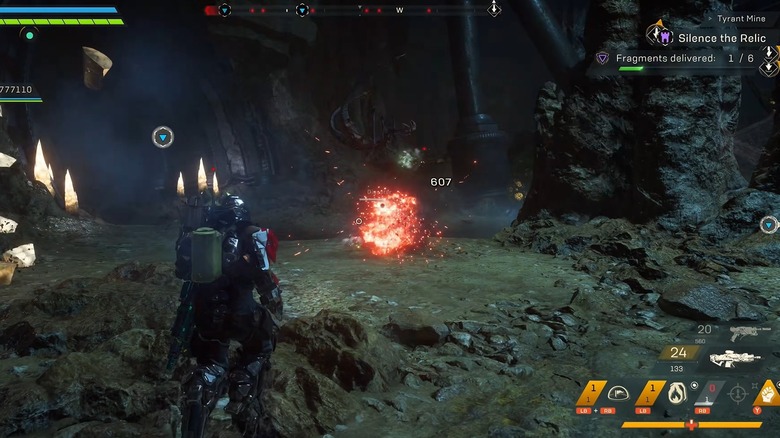
BioWare made some of the greatest RPGs of all time, from "Star Wars: Knights of the Old Republic" and "Jade Empire" to "Dragon Age: Origins" and the "Mass Effect" trilogy. To say they hit a lull after the release of 2014's "Dragon Age: Inquisition" is an understatement, though more sassy players might even say the studio lost their touch after 2010's "Mass Effect 2."
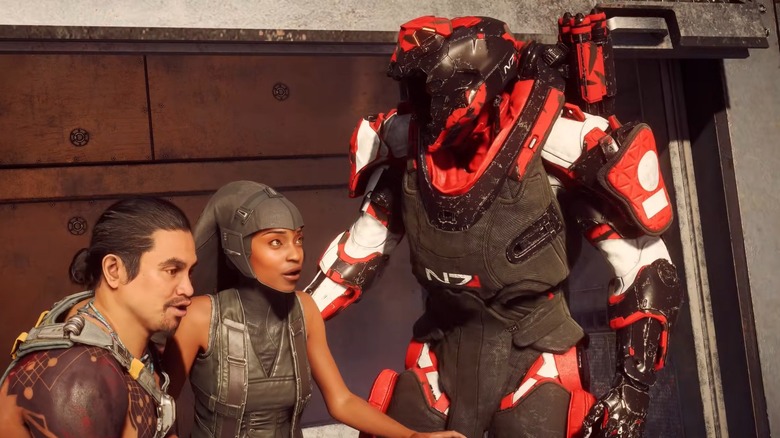
While some of BioWare were busy working on 2017's ill-fated "Mass Effect: Andromeda," the rest of the studio were hard at work on "Anthem," which aimed to combine the MMO sensibilities of "Star Wars: The Old Republic" with the single-player RPG storytelling on which the studio had built its reputation. Sadly, it failed. When "Anthem" released in 2019, it revealed itself to be little more than yet another looter shooter in an ecosystem that was quickly growing tired of "Destiny" derivatives.
At the very least, "Anthem" had a secret weapon, which was its Iron Man-inspired flight mechanics. It wasn't enough to allow the game to stand apart from its contemporaries. Story-wise, "Anthem" had a lot of lore but not a lot of momentum, and its nature as an always-online game meant the story had little in the way of stakes, player choice, or game-changing revelations. It was all very static, and the result was that "Anthem" turned out to be a costly failure. Sadly, between "Andromeda," "Anthem," and the financial failure of 2024's "Dragon Age: The Veilguard," the writing was on the wall. In 2026, publisher EA closed BioWare for good, leaving the future of "Mass Effect" in doubt.
Tony Hawk's Pro Skater 5
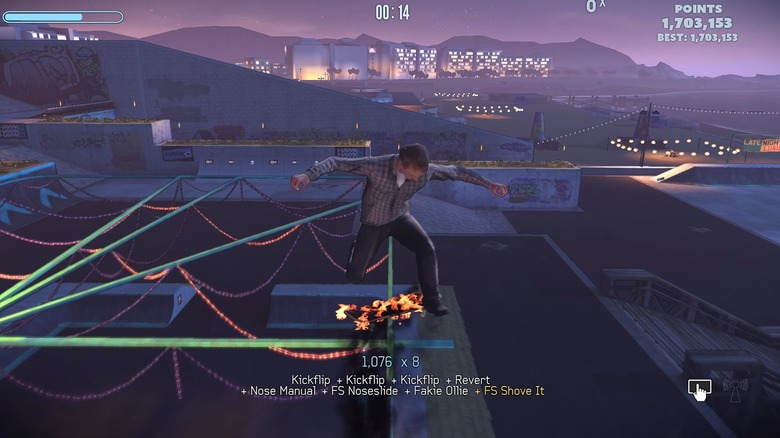
Back in the PS1, PS2, and even early PS3 days, few franchises were as joyous and reliable as "Tony Hawk's Pro Skater." But after nine games in as many years, the formula was wearing thin. Developer Neversoft was put on full-time "Guitar Hero" duty, while Robomodo was brought in to breathe new life into the aging "Tony Hawk" series. Unfortunately, their efforts, "Tony Hawk: Ride" and "Tony Hawk: Shred," failed both critically and commercially, due in part to an awful skateboard peripheral, and the franchise was basically killed off (save for an underwhelming 'remaster' for PS3 in 2012).
In 2015, Robomodo brought the series back for Activision with "Tony Hawk's Pro Skater 5," which was supposed to be a back-to-basics entry, hence the title, since the series had dropped the "Pro Skater" moniker after "THPS4".
Ultimately, a "Tony Hawk's" game lives or dies based on its gameplay, and "THPS5," tragically, died a brutal death. Once it got into the hands of players, "THPS5" revealed itself as nothing but a quick-and-dirty cash grab from publisher Activision. The magic of the old games was completely missing, and the gameplay was a broken mess, a far cry from the glory days of the series' heyday. As a consolation, the franchise would ultimately stage a grand return with "Tony Hawk's Pro Skater 1+2," released in 2020, which proved that the magic wasn't lost. It just went missing during the Robomodo years.