
Creative Ways Games Punish Cheaters
Cheaters never prosper, but that hasn't stopped many a player from trying to pull the wool over the eyes of their favorite video games in order to make them easier. Sometimes, they get away with it and happily get to play as an invincible god or an insanely rich person. But, occasionally, game developers and admins grow wise to such shenanigans and find ways to mess with players who try to cheat the system.
We've put together a list of the most creative ways that video games have punished cheating players. Some of these reprimands scream we're not mad, we're just disappointed, but others don't hold back — in one instance, your entire save will be erased if you decide to cheat. If you're thinking about cheating yourself, you should probably check this list first to make sure you know what you're letting yourself in for.
H1Z1 made cheaters publicly apologize on YouTube
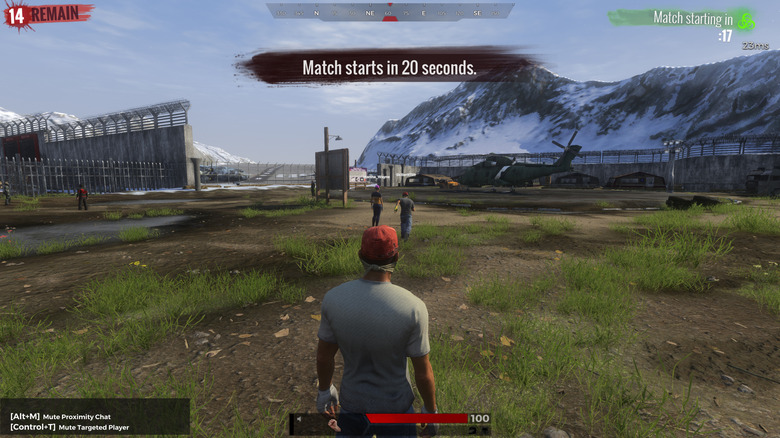
Launched in 2015, "H1Z1" was a zombie apocalypse-set massively multiplayer online game where hundreds of players fought to be the last one standing. It was rebranded as "H1Z1: Just Survive" and then simply "Just Survive" before it was discontinued in 2018. It was good fun, provided everybody played nice. But some users couldn't do that, resorting to various cheats designed to make them stronger, avoid others, and just make the game generally unfair for honest players. This didn't go down well with Daybreak Game Company, the developer and publisher.
In May 2015, Daybreak banned a whopping 23,837 cheaters at once. But simply executing the Red Wedding of banhammers wasn't enough for "H1Z1," which took it one hilarious step further. Daybreak president John Smedley went on X (which was still Twitter at the time) to announce that they were willing to un-ban anyone who apologized, but they had to admit to their cheating and sincerely apologize for it, publicly, on YouTube. Only then might they be reinstated.
Unsurprisingly, very few people took him up on his offer. "So far we've unbanned 3 people out of 30k we've now banned. One of which is probably about to get re-banned for taking his video private," Smedley said in an update on Reddit, adding, "I want to make sure it's clear there are consequences for cheating." He later updated the post to confirm that just five players had been reinstated to the game in total.
Paper Mario: The Thousand-Year Door makes you pay for cheating on the lottery
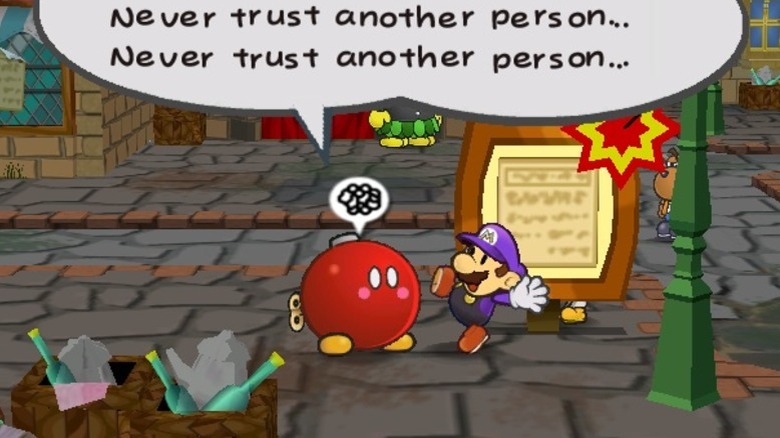
"Paper Mario: The Thousand-Year Door" introduces gambling to the otherwise wholesome "Mario" universe. At one point in the game, you encounter a friendly Bulky Bob-omb named Lucky who runs something it calls the Happy Lucky Lottery. You can buy a ticket for 100 coins, and if a randomly generated winning number matches yours, you win the lottery. If not, then you don't. Finally, something about "Mario" matches real life.
Unlike real life, the game lets you use your number daily until you win. But some players don't want to wait, so they manipulate not just the game, but the GameCube. By setting the system's internal clock to one day in the past, you can use your number again, hoping the new randomly generated numbers match yours. There's just one problem: Lucky knows what you did. It mentions a tampered clock and asks if you had anything to do with it. Deny it, and Lucky badgers you until you confess. Once you do, Lucky loses its temper, explodes, and your screen goes to black.
After a moment, everything returns to normal and a now-calm Lucky makes you swear to never cheat again. If you want to play the lottery again, a new ticket now costs 500 coins, which you could argue is also representative of real life — if people steal, companies have to raise prices to make up for lost revenue. This could well be the most realistic "Mario" game of all time.
Undertale calls you out for being a hacker
If you want the good endings in "Undertale," the award-winning 2015 role-playing game from indie developer Toby Fox, then you have to be nice. Don't kill the monsters you encounter, don't agree to help the Big Bad destroy the universe, and, most of all, don't cheat. Do so, and the game will both scold you for it and end on a brutal anticlimax.
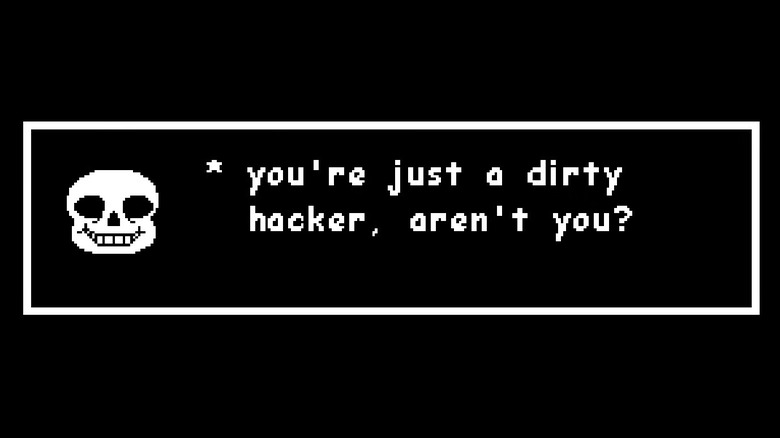
If you hack the game to reach the end without doing anything, you get sent straight to the final scene. You enter the barrier between the human world and the Underground, and the ending credits run. You then get the traditional call from your skeleton "buddy" Sans, who initially appears perplexed that you managed to achieve an impossible ending. He implores you to "tell whoever made the game" just in case there was some kind of glitch. But he knows. He's always known, and he soon drops the "ignorant bag of bones" routine to call you out. His eyes turn coal-black as he says, "Chances are, though... you're just a dirty hacker, aren't you? Yeah, get outta here." Considering the trolling "Dogsong" music that plays the whole time, you should've seen this coming.
Sans then hangs up, forever abandoning you to Ending Limbo. You don't learn what happens to your friends, you don't learn the Underground's fate, and you win absolutely nothing except the shame of being exposed as someone who can't (or won't) complete a game on their own.
The god of death comes for cheaters in Guild Wars
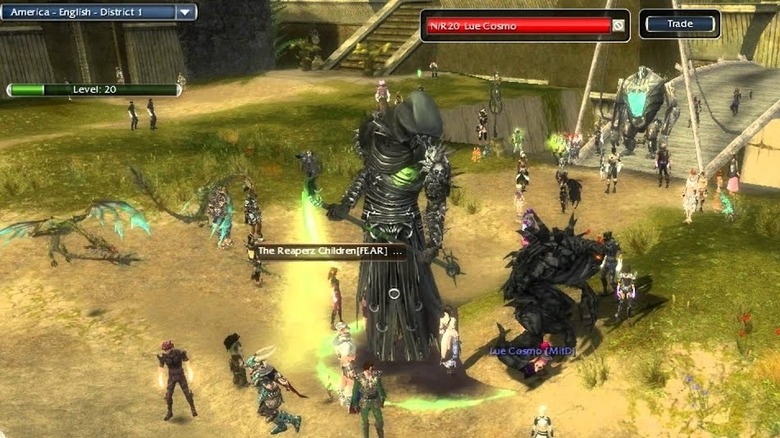
"Guild Wars" is a fantasy, guild-and-raid-based MMORPG. If you're a "World of Warcraft" fan you'll no doubt love it. Be warned, though — the people behind "Guild Wars" don't take cheating lightly and will make them publicly suffer before booting them entirely.
Starting in 2010, Guild Wars creators ArenaNet began banning players who used bots and other hacks to make matches and raids easier. But they didn't just ban them — they murdered them. Not literally, of course, because that's both illegal and messy. But they did send a giant death god called Dhuum (basically the game's Grim Reaper) to slice up the offending players with its scythe, taking them out of the match and then out of the game, permanently.
This only happens to cheating players, so everyone around them knows exactly why Dhuum has suddenly popped up and what his victims did to deserve their fates. Despite being a punishment, some players actually want to get killed by Dhuum, even if it means a ban. Some do it because they get bored, and others are simply finished with the game and want to go out in a blaze of glory.
Metal Gear Solid knows if you use autofire
Hideo Kojima's beloved "Metal Gear" series is known for predicting the future of military stealth, but it's also famous for the way it breaks the fourth wall. Whether it's Psycho Mantis reading your memory card or Big Boss commanding you to turn off the game, Snake's universe knows full well you're there. It also knows when you try to take advantage of it, and won't tolerate such chicanery.
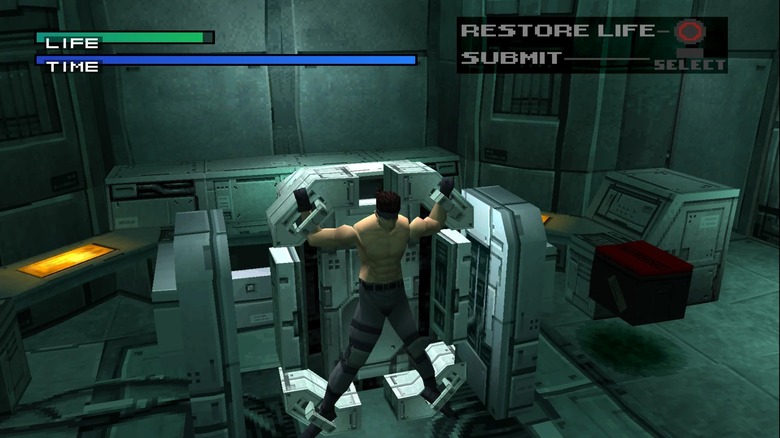
In the "Metal Gear Solid" scene where Revolver Ocelot tortures Snake, your goal is to preserve Snake's strength throughout the ordeal. Perhaps you'll be tempted to use a controller with autofire, making it easier to button-mash enough to keep Snake alive. But Konami figured you'd do that, and they apparently told Ocelot. That's why, after informing Snake of his predicament, he turns to the camera, points right at the player, and warns, "Don't even think about using autofire, or I'll know."
And he's not bluffing. If you try using autofire, the time limit bar immediately drains, and you can't stop it. Seconds later, you're out of time, forced to watch helplessly as Snake's life rapidly seeps from his body. Watching Snake die helplessly is bad enough, but it's even worse if you didn't save anywhere near this scene — just before this sequence, Ocelot tells Snake, "there are no continues, my friend." As such, you can't continue if you die here, and have to start wherever you saved last. If that was ten hours ago, too bad. You shouldn't have cheated, because Ocelot knows.
Max Payne 3 introduced a Cheaters Pool
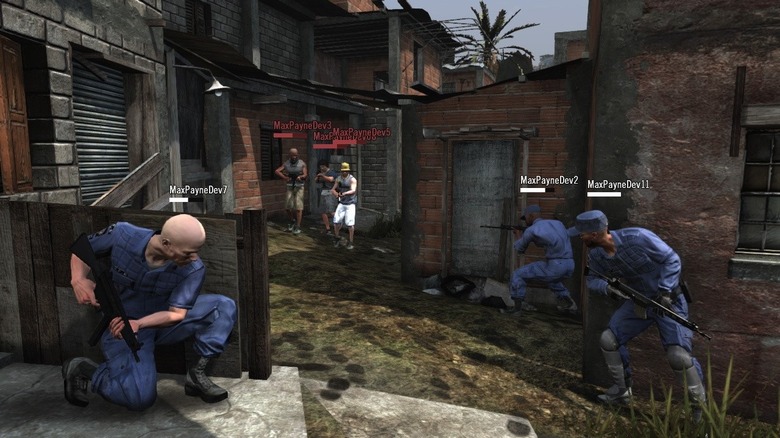
"Max Payne 3" has a multiplayer mode, which doesn't see much activity today. However, back when the game dropped in 2012, it was very popular. Of course, online multiplayer games will inevitably attract cheaters. To combat this, Rockstar — the game's developer — thought up a novel way to stop the rotten eggs from ruining it for honest players: let them cheat, but far away from everyone else.
In a June 2012 statement, Rockstar acknowledged that a "small minority" of players had been using hacks, bots, and mods to tilt matches in their favor. Rather than banning them, it declared any player caught cheating would be reassigned to a "Cheaters Pool," which was essentially a separate playing space away from other gamers. In the pool would be nobody but other cheaters, so they could only ever play against one another.
Rockstar did open up the possibility of allowing former cheaters back into the main-game fold if they seemed repentant enough. But, if they reoffended, they would be booted completely. No special room, no extra chances, just a perma-ban for anyone unwilling to learn their lesson. It's at least better (and less violent) than the fate Max would lay down on them if he found out.
Using Doom cheats in Heretic is a bad idea
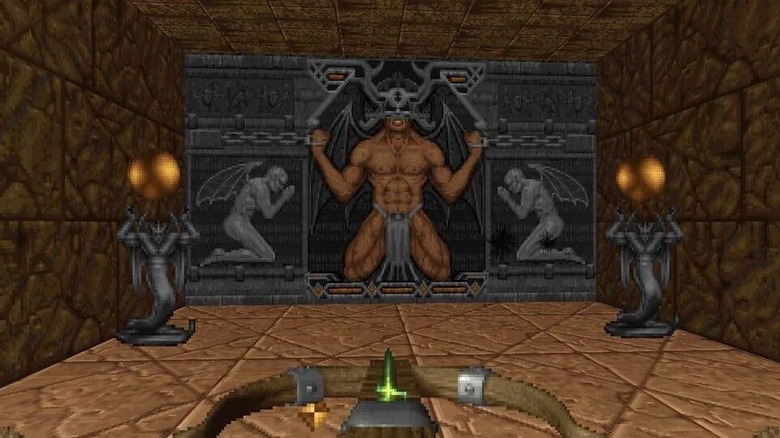
"Heretic" is basically "Doom" with wizards and magic instead of demons and hellfire- – quite literally, since "Heretic" runs on the "Doom" engine. As such, it makes sense that cheaters would try to hack the game using "Doom" codes. This is, to put it mildly, a big mistake. If you enter the code IDDQD in "Doom," it activates God Mode, making you invulnerable. In "Heretic," it simply lets you meet God — by killing you. What's more, it gives you guff for what you did, mocking you with: "Trying to cheat, eh? Now you die!"
It doesn't get much better if you input IDKFA. In "Doom," that cheat grants you all possible weapons and keys. In "Heretic," it takes away all your weapons, replacing them with a single wooden staff. It then scolds you with "Cheater — you don't deserve weapons." Then, whatever demon arrives next promptly eats you alive while you poke at it in vain.
However, it's important to note that "Heretic" does have its own cheat codes. If you attempt the IDKFA cheat from "Doom" and lose all your weapons, all you need to do is use "rambo," which will give you all the weapons and maximum armor. It seems like the issue isn't cheating, it's trying to cheat using codes from "Doom" instead of the ones made specifically for "Heretic." One thing's for sure — game developers have a wicked sense of humor.
The Stanley Parable leaves you to rot in the Serious Room
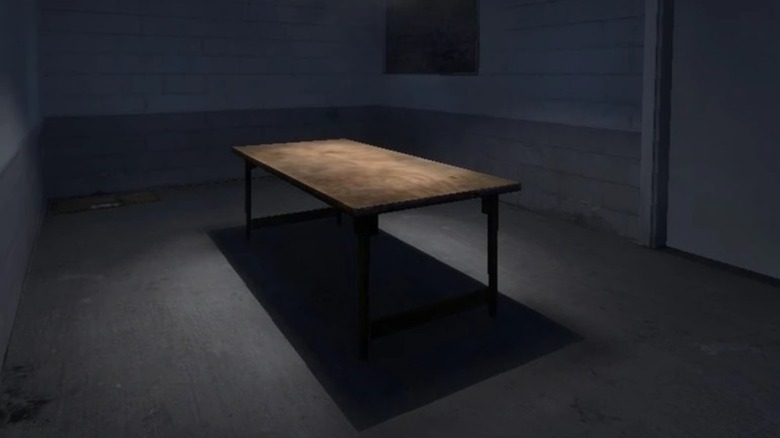
In "The Stanley Parable," the player controls a silent protagonist named Stanley as he explores an empty office building trying to figure out where everyone went. Throughout, a narrator badgers you about how the story should go, but you can easily ignore him and go wherever you want. Well, to a point, anyway.
You're free to explore Stanley's world, but if you try using server cheats via Steam's developer console, the game sends you to the Serious Room, an empty room with a single, wooden table and a door you can't open. There, the narrator drones on and on about his search for a properly serious table, before lecturing you on how you've got "no respect for the strict order of narrative events." As punishment for your attempts to cheat, he sentences you to "one hundred billion trillion years" inside the Serious Room. And you thought "Skyrim" was a long game.
If you pause the game and try using server cheats again, the narrator returns to scold you for not having learned your lesson. He then extends your punishment to "infinity years" in the Serious Room. Enter it yet again and the narrator returns to scold you again, warning that he's going to the store to purchase an even more serious table, hoping it'll help you understand how naughty you've been. At that point, you're stuck in the Serious Room forever, or until you start a new game. Hopefully you'll take it more seriously next time.
The Witcher 3: Wild Hunt sends Chort after serial cow killers
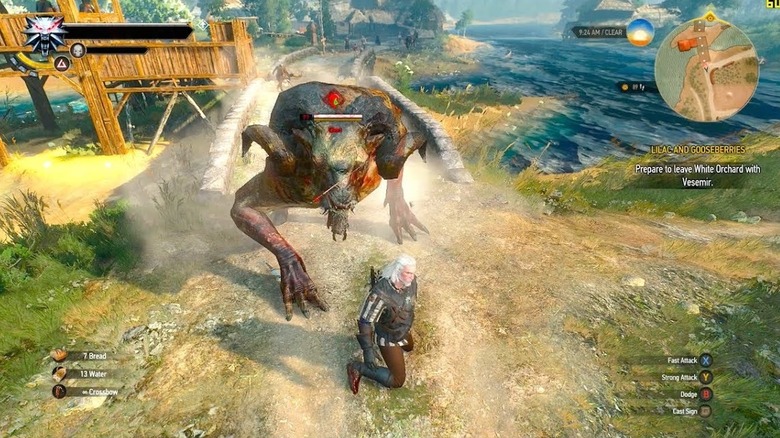
"The Witcher 3: Wild Hunt" has so much to do, and so many ways for players to earn money, that cheating to do so seems unnecessary. And yet, gamers did it anyway, once they found an exploit in an early part of the game that allowed them to make tons of cash.
In an early section of the game, White Orchard, there's a farm riddled with cows, and you can murder them and sell their hides for money. Unlike puny mortal Earth cows, these cows would respawn after an in-game hour. So players would simply meditate (the game's way of making time go faster) for an hour, wake up to living cows, and quickly turn them into more hides. The player could then sell their massive hide-pile for tons of dough, making it easy to afford way stronger items than they should've had at that point in the game.
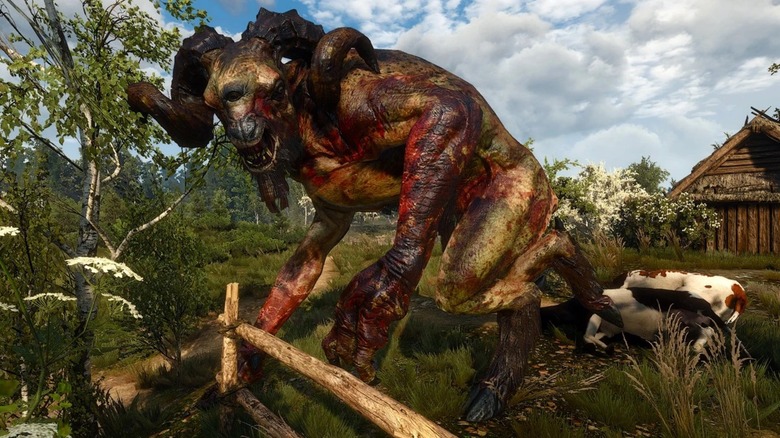
Developer CD Projekt RED learned of the exploit and released an update that made you pay for that serial heifercide. Casually called the Bovine Defense Force Initiative, it would send a vicious cow monster called Chort to tear you to ribbons. You had virtually no shot at surviving, as you were a low-level Witcher and Chort was a level 27 nightmare. What's more, if you somehow managed to kill Chort, you'd be greeted with...another Chort. Then another. Then another. This kept going until you died, got Projekt Red's point, and played the game like an honest monster murderer.
RuneScape put botters on trial
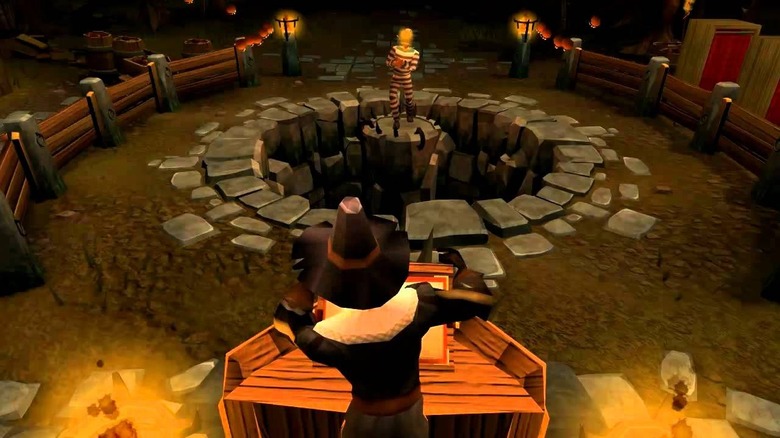
The massively multiplayer online role-playing game "RuneScape" has been around for a long time and has taken several different approaches to dealing with cheating, something that's taken very seriously — in 2011, developers Jagex banned a whopping 1.5 million bot accounts in a single day. In 2012, it rolled out a new system for dealing with players who got caught using bots to grind for them while they were offline.
"From today, any player caught botting will be given two warnings to allow them to change their ways, after which they will be permanently banned from the game — with no appeals," Jagex wrote in an update to the community (via PC Gamer). "At each warning stage the botter's avatar will change to signify to the rest of the community that they have been caught botting. After receiving their second and final warning should they break the rules again, the bot avatar will be transferred to a new area called Botany Bay to await the judgment of the community."
What was great about this was that non-cheaters could opt to become jury members at Botany Bay, a job that came with a special pitch fork item. The jury would pass judgement, and, more often than not, the botters would get permanently booted from the game. Those found guilty could be executed in a number of creative ways, including being stomped on by a dragon. Botany Bay was removed from "RuneScape" in 2018, but it stands out as one of the most fun ways an MMORPG has dealt with cheaters.
Pokemon punishes its bad eggs
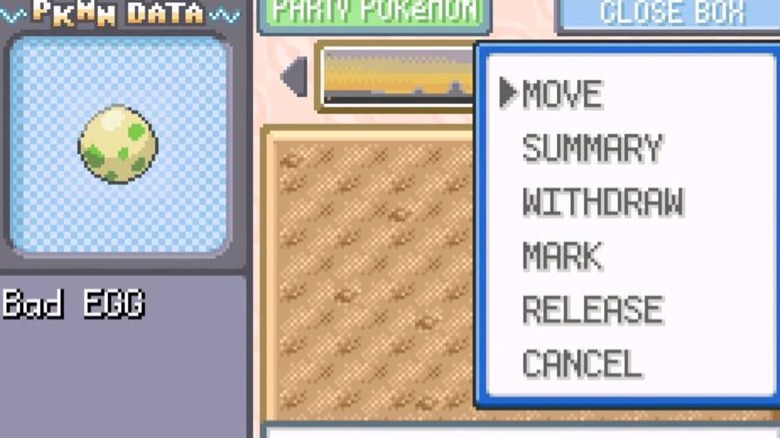
There are some bizarre "Pokémon" myths that lots of people have fallen for, but Bad Eggs are very real. In the early 2000s, the creators of the "Pokémon" series came up with a clever way to punish people using glitches and cheat codes to get through "Pokémon Ruby" and "Pokémon Sapphire." The games stored a block of data called a checksum in each Pokémon's file, so when players tried to load up a Pokémon that was glitched or somehow modified, the game could detect it. Instead of getting the glitched Pokémon, players would find a Bad Egg in their inventory. Bad Eggs are permanent and they take up valuable space that could otherwise be used to store Pokémon.
The Bad Egg system returned in later generations of Pokémon games to stop cheating. What's amazing is that, 20 years after its creation, the Bad Egg system was still catching and confusing players who tried to cheat. Gamers using emulators to play "Ruby" and "Sapphire" have easy access to cheat codes, and some of them have been sent running to the internet asking for help when Bad Eggs start filling up their inventory. "I used a cheat to get master balls for every legendary. Rayquaza was the first legendary I caught. Days later I realize he has turned into a bad egg. Thanks for teaching me a tough lesson, Nintendo God," wrote one player on Reddit.
Grunty's Code Vengeance in Banjo-Kazooie was absolutely brutal
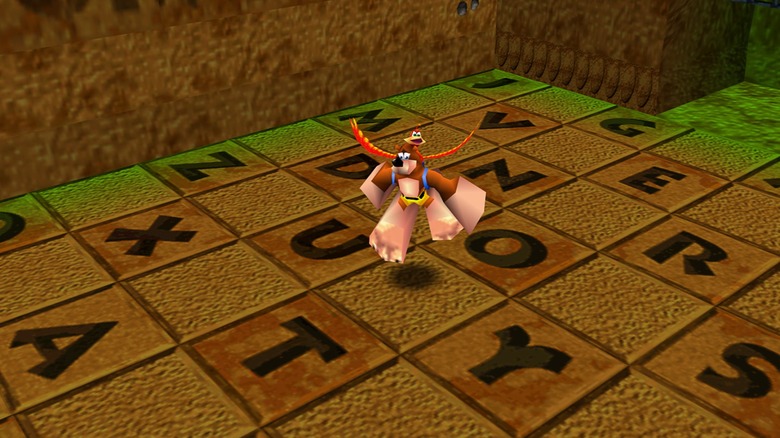
"Banjo-Kazooie" is one of the best Nintendo 64 games of all time. It's also a game that sent mixed messages to video game cheaters. To a certain extent, the game encourages cheating. Throughout the game players can discover different cheat codes that can be activated at a secret sand castle location in Treasure Trove Cove. Some of the cheats change Banjo's appearance or offer bonuses for players, but certain "illegal" cheat codes let players skip past in-game obstacles. These illegal cheat codes are where "Banjo-Kazooie" lays down the law in what's known as "Grunty's Code Vengeance."
Players get a warning that they can only activate two illegal cheat codes at the sand castle. Cheaters who just can't restrain themselves and enter a third code will get a visit from a witch named Grunty who completely deletes their save file. What makes the punishment even worse is that Grunty doesn't end the game when she visits. Players can keep going as long as they want, but as soon as they turn their console off, their save file will be gone. "Banjo-Kazooie" dishes out a harsh punishment to cheaters, but at least the game gives them some initial slack and a fair warning before hitting them where it really hurts.
GTA Online's exploding Duke O'Death

Cheaters are always a problem in online games, and — just like it did with "Max Payne 3" — Rockstar found a pretty amusing way to deal with one specific kind of cheater in the early days of "Grand Theft Auto Online." Some players figured out how to get an unlockable car from "Grand Theft Auto" into "GTA Online." The Duke O'Death is a souped-up black race car that looks like it just came flying out of the "Death Race" franchise. The car wasn't supposed to be in any online servers, and Rockstar decided to punish "Grand Theft Auto" cheaters who'd added it by making the cars explode.
For a while any Duke O'Death in "GTA Online" would refuse to drive and simply blow up whenever someone tried to get in the driver's seat. The explosive punishment made a real impact on the game's modders. "I cried in my ruined ruiner," wrote one Redditor about their reaction the first time their Duke O'Death went sky high. Eventually, Rockstar made peace with the Duke O'Death in "GTA Online." Today you can officially unlock the car and drive it risk-free wherever you want. Only players who were around when the car was a cheat still flinch when they get into it.
Call of Duty: Warzone's Team Ricochet disables the parachutes of cheaters
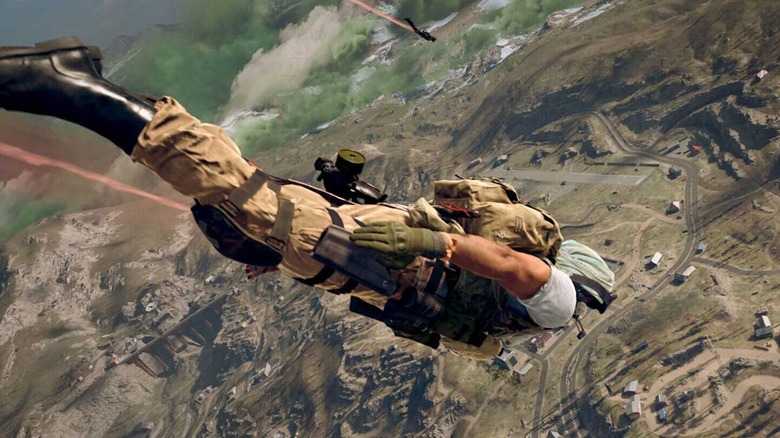
"Call of Duty" is no stranger to cheating scandals. People have been finding ways to glitch and exploit the games since the series first started. "Call of Duty: Warzone" was particularly notorious for being overrun with cheaters who were drawn to the game's free-to-play format. Activision, the publisher behind "Call of Duty," has a whole group of people called Team Ricochet dedicated to coming up with anti-cheat systems. In 2023 they found a way to take "Warzone" cheaters out of the game before a match ever started.
Like other popular shooters, "Warzone" has players drop into the map from the sky. Team Ricochet came up with a system that made sure cheaters hit the ground hard. The Splat system was designed to detect cheaters and disable their parachutes while they were falling to the ground. A cheater would load into a game, fall to their death, and repeat the process over and over until they got so frustrated they quit entirely.
The Splat system also had a workaround for cheaters who avoided detection until they hit the ground. The system could manipulate the velocity of a player-character's movement, making it so their next jump launched them 10,000 feet into the sky and ensured their swift death. Instead of simply banning cheaters, the Splat system was made to ruin their experience. It definitely ranks among the most creative ways that games have punished cheaters.
Persona 3 shames cheaters instead of punishing them
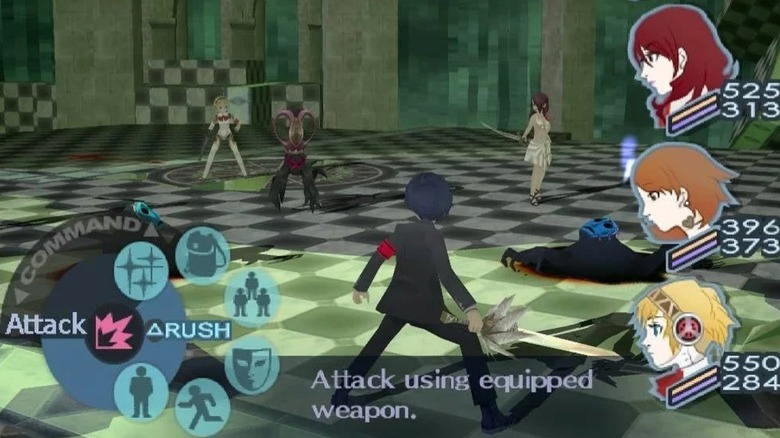
We've seen all sorts of games use cheat detection software to stop cheaters in their tracks. Japanese developer Atlus took a different approach with its 2006 PlayStation 2 game "Persona 3," which follows a group of high school students fighting monsters to save the world. Instead of forcing cheaters to play by the rules, the devs made it so the game shamed them into changing their ways.
Back in the 2000s, gamers had to purchase a device like a GameShark to cheat in PS2 games like "Persona 3." Anyone who went to all that effort, however, encountered some recorded voice lines that only activate if the game detects cheating: Certain characters will take a moment in the middle of combat to call out the player for cheating and express their disappointment.
However, while the characters threaten to punish you for cheating, in the end they don't actually do anything to stop you from doing so. Maybe that's because the fate of the world is at stake, or maybe the developers at Atlus thought that anyone willing to buy a whole extra device just for cheating in a single-player game deserved some kind of payoff.
Crusader: No Regret taunts cheaters before sending them to a hidden level
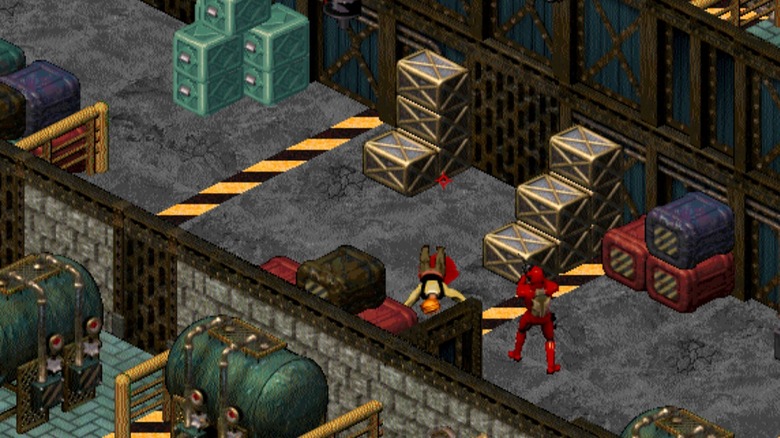
"Crusader: No Remorse" is a 1995 isometric action game that takes players to the 22nd century and sends them charging into tense sci-fi battles. The game has plenty of difficult challenges for players to tackle, and it also has a handful of different cheat codes that players can use to make things a bit easier. When the 1996 sequel "Crusader: No Regret" debuted, fans who'd burned the first game's cheat codes into their memories thought they were prepared. Anyone who launched "No Regret" and tried to use one of the cheat codes from the first game was met by a nasty surprise. When a recycled cheat code gets entered, the game displays this message: "Of course we changed the cheats...duh."
To add injury to insult, the game also teleports players into a room filled with multiple copies of the game's final boss — eight in total. It is possible to kill all eight by running and shooting everywhere while also letting the mechs shoot themselves down. It's not easy — and, more importantly, victory is worthless. Should you down all eight bosses, you promptly explode. So, even though you avoided death, you are now dead. The moral: don't cheat, but if you are going to, at least make sure you're using the right codes.
The Sims 2 had time travel detection
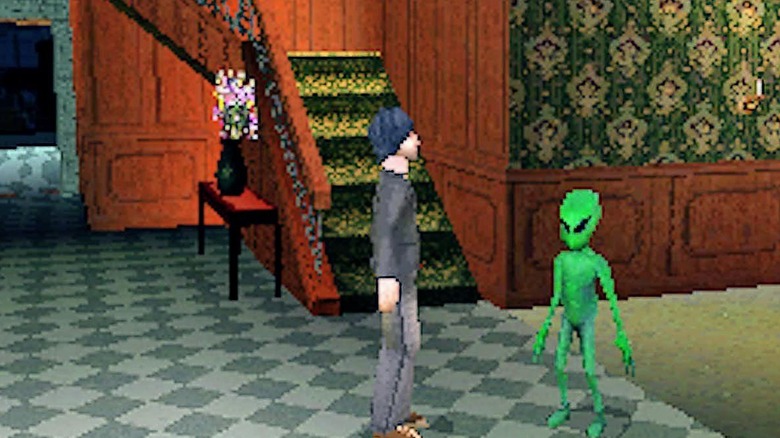
"The Sims 2" exists in many incarnations, and the Nintendo DS version of the game has players managing a hotel and interacting with the offbeat inhabitants of Strangetown. Everything in the game plays out in real time, and the game world's clock is synced to the Nintendo DS system settings. That gave crafty players in 2005 an idea. What if they could fix their in-game mistakes by resetting the clock on their DS? Unfortunately for those pioneering time travelers, the developers behind "The Sims 2" had seen that particular cheat coming and planned a dramatic punishment.
Throughout the game, players can encounter aliens, and anyone who tries to travel backward in time triggers a full scale invasion: Players who load back into their save after reversing time in their DS system settings will find Strangetown overrun by alien beings. The aliens spawn across the entire game map, and, to make dealing with them even more difficult, the game locks the player character into their walking speed. By altering the course of time, players create a problem that can never really be fixed. The aliens will keep respawing, making the invasion an ongoing conflict that would-be cheaters have to manage through the rest of their game.
EVE Online once held a public execution
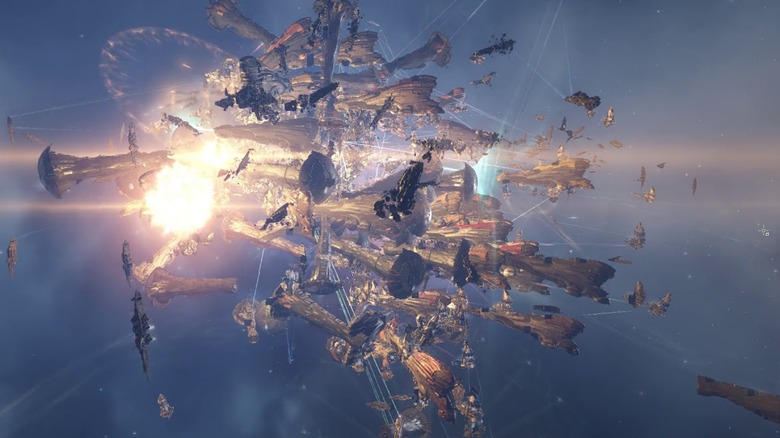
"EVE Online" is a galaxy-sized space simulator where players spend dozens of hours roaming the stars and gathering the funds to trick out their ships. At least some of them do. Cheaters use bots to automate the process, like they do in so many other MMORPGs. Rule-following players can't stand cheaters, and in 2018 "EVE" came up with a fiendish way to give law abiders a sense of catharsis.
Like other games, "EVE" typically gives first-time botters a stern warning, but it bans people who continue using bots anyway. During the GM Week event (in which the Game Masters of CCP Games celebrate the EVE community), instead of just issuing a standard ban, they decided to set up an in-game execution for soon-to-be-banned cheaters.
Multiple carriers and super carrier ships belonging to cheaters were sent to a specified location displaying "suspect" flags. This basically made them fair game to attack and players were encouraged to show up and get in on the fun. Almost 150 gamers showed up to participate in the execution, which remains a memorable part of "EVE" history — and a daunting warning to other would-be botters.
SimCity's FUND punishments
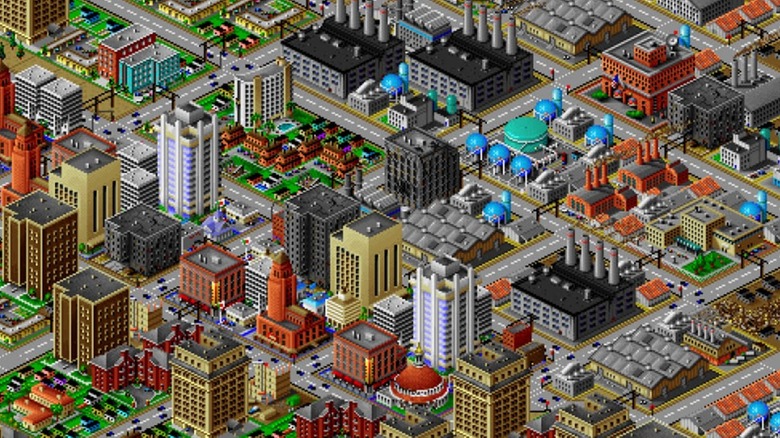
1989's "SimCity" and its 1993 sequel "SimCity 2000" are classic city management games. Some people will argue that they're also games that are only fun if you cheat. To be fair, the games themselves enable cheating: It's easy for players to enter different cheat codes, with one of the most useful being the FUND code that adds $10,000 to a player's account. The original "SimCity" punishes players who overuse the code. Cheating more than three times in a year summons a devastating earthquake that does way more than $10,000 worth of damage to a player's city.
"SimCity 2000" plays a bit of a prank on players who fondly remembered the FUND code from the original game. Anyone who tries to use the cheat in the sequel will have a 25% bond added to their account, which in layman's terms means they get money taken away from their city. Ironically, players found an exploit that allowed them to use the bond "punishment" to glitch the game into giving them $1,000,000. It seems that, in the world of gaming, cheaters do sometimes prosper.