
'80s Video Games With Endless Replay Value
The '80s marked an interesting intersection for gaming, with the arcade scene in full swing while home consoles saw significant advances. This was reflected in games featuring looping gameplay and level progression, encouraging players to continue for a high score rather than the experience having a clear ending. Throughout the decade, there were also plenty of games that encouraged deep exploration and secrets that rewarded repeat playthroughs. Both gaming formats keep players coming back for more, whether they're chasing scores or just looking for an endearing revisit.
Even decades later, with more modern games available, there are tons of '80s titles that we're still pouring hours into. These games prove that technological advances don't always equate to enduringly enjoyable games, so much as the sheer fun factor involved. At the end of the day, there's just something about games from that era that hit different compared to later decades. Here are '80s video games with endless replay values, perfect to just plug in and play for hours.
Galaga
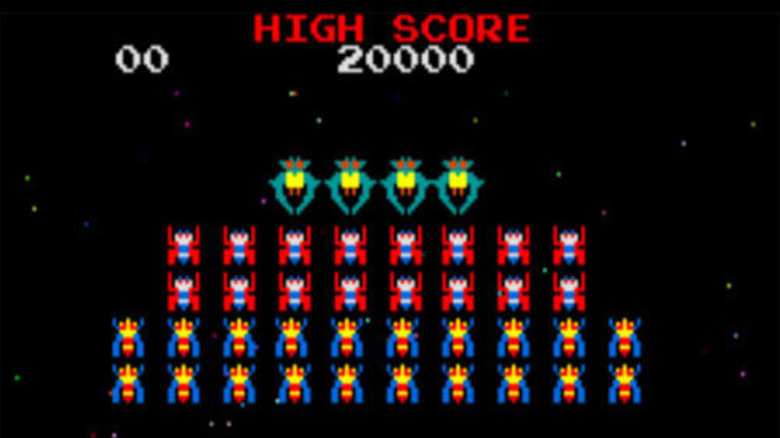
Space shooters like "Asteroids" and "Space Invaders" helped the nascent video game industry gain traction, with players controlling spaceships and blasting incoming targets for a high score. Rising above all the subsequent space shooter titles crowding the market was 1981's "Galaga," initially released as an arcade game before being ported to home consoles. Similar to "Space Invaders," players control a spaceship and destroy waves of incoming alien enemies, albeit with a more vibrant presentation. There is also a greater variety of enemy types, including a bee-shaped attacker with a tractor beam that can be manipulated to double the player's firepower.
With its more vibrant color scheme, beautifully lo-fi sound effects, and faster pace, "Galaga" did laps around any space shooter that came before it and many of its immediate successors. The game is hard but never quite feels unfair and, compared to many of its arcade contemporaries, its home console ports maintained much of its appeal. Even as mobile games and indie titles put their own modern spin on space shooters, "Galaga" is still the influential bedrock of the genre. One of the best video games of all time, "Galaga" is unparalleled as an '80s arcade space shooter.
Ms. Pac-Man
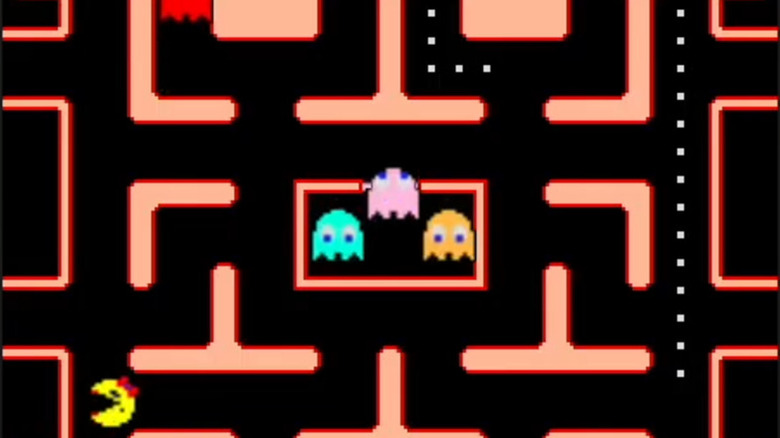
While Namco set the arcade scene on fire with the original "Pac-Man," its 1982 sequel, "Ms. Pac-Man," completely outdoes it. Though the game doesn't reinvent the wheel, only visibly adding a pink bow to Pac-Man's usual yellow form, it handles everything better. Gameplay-wise, the goal is still the same: to eat pellets around the map and avoid ghosts, unless Ms. Pac-Man is temporarily empowered by a Power Pellet. This ranges from more subtly enjoyable maze layouts to an overall faster game speed that better maintains the action.
"Pac-Man" has always been one of those arcade classics that has stood the test of time, no matter which of its '80s iterations you're playing. That said, "Ms. Pac-Man" does rise above the 1980 original game and the numerous follow-ups that flooded arcades afterwards. The variation in maze layouts, improved enemy AI, and faster speed do wonders in improving the experience, while wisely retaining the core gameplay. One of the last big arcade hits before the video game crash of 1983, "Ms. Pac-Man" subtly improves upon its predecessor in every way.
Tetris (1989)
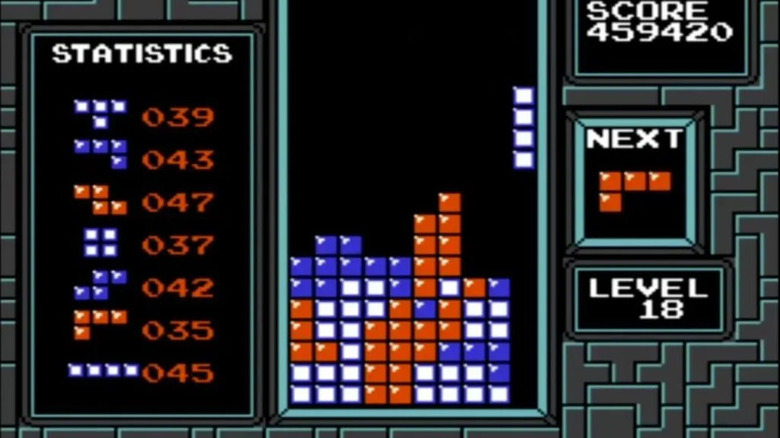
If there was ever an '80s game that could be played ad infinitum, it's "Tetris," created in 1985 by Alexey Pajitnov. The quintessential block-building game, players need to complete full rows to increase their scores and avoid being overwhelmed by falling blocks. There are several distinct patterns of blocks that cascade down from the top of the screen, requiring a degree of planning and strategy in completing rows. As the player's score rises, the game's overall speed noticeably increases to amp up the difficulty.
Whether playing alone or with friends, "Tetris" is a fantastic way to pass the time and its beauty has always been in its simplicity. The further the franchise has strayed away from those straightforward roots, the less enjoyable the experience has usually become. While there have been plenty of ways to play the game, we're still fond of the 1989 Nintendo Entertainment System port. Whether it's through new iterations of the gameplay, like "Tetris Effect" on PC, or similar follow-ups, the underlying appeal of "Tetris" remains eternal.
The Legend of Zelda
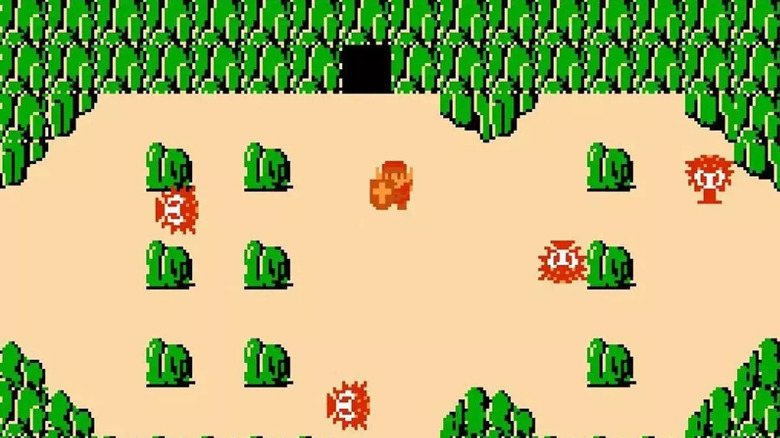
The video game that started it all, 1986's "The Legend of Zelda" introduced gamers to Nintendo's iconic fantasy hero Link and the kingdom of Hyrule. Arming himself with a sword and shield, Link sets out to recover pieces of the Triforce and battle the evil Ganon for the fate of the kingdom. The Triforce shards are located in dungeons strewn around Hyrule, each filled with deadly monsters to vanquish. Link also acquires items and weapons that allow him to explore more of Hyrule as the game progresses.
While it may not rank as highly as its modern counterparts, the original "Legend of Zelda" still holds up decades later. There is a joy in exploring Hyrule beyond just locating each of the game's main dungeons. The developers hid tons of secrets in the game, in collapsible boulders or flammable bushes, offering a deceptive amount of depth. And though its successors may have surpassed its rudimentary gameplay, "The Legend of Zelda" maintains an 8-bit charm that has aged well.
Super Mario Bros. 3
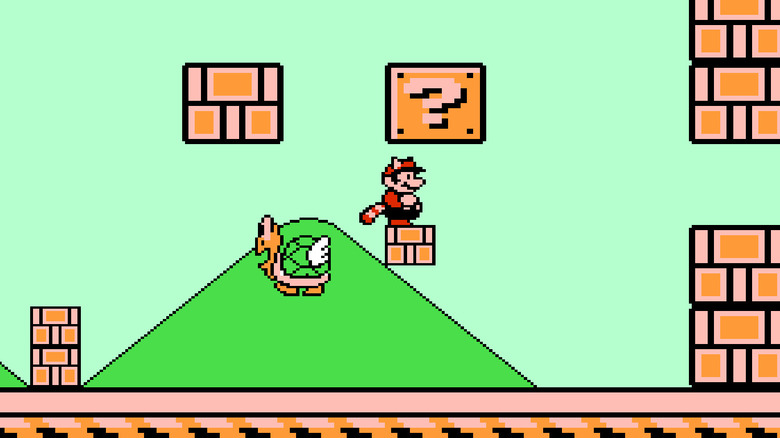
Though American gamers wouldn't get "Super Mario Bros. 3" until February 1990, Nintendo's fan-favorite platforming title made its debut in Japan in October 1988. A complete revamp of the preceding games in the trilogy, players still control Mario or Luigi as they side-scroll through environments, but everything feels more expansive and immersive this time around. There are eight worlds in all, each with their own set of levels and Koopa Kid to defeat, with a greater variety of power-ups for players to take advantage of. This leads to a final showdown in Bowser's fiery realm, with Mario and Luigi navigating through the Koopa King's armies before a memorable confrontation.
Not only presenting the NES with its best side-scrolling platformer, "Super Mario Bros. 3" has a rewarding amount of depth. All of the secrets, even just in the first world alone, are enough to keep players revisiting their favorite levels to discover new things. Secrets aside, the game is just a joy to handle, with more intuitive controls than preceding games in the series and an overall warmth in its presentation. Though the game's director, producer, and designer Shigeru Miyamoto doesn't feel "Super Mario Bros. 3" has aged well, we're inclined to disagree and continue playing it all these years later.