
5 Best Video Games Like The Legend Of Zelda
As hyperbolic as it may sound, "The Legend of Zelda" is one of the greatest video game franchises of all time. A perennial gem among Nintendo's beloved properties, the mainline "Zelda" games have provided action RPG excitement to fans since the '80s. Set in different eras of the fantasy realm of Hyrule, the games have Link and Princess Zelda try to prevent their kingdom from being plunged into darkness. Whether it's the isometric classics, the revolutionary "Ocarina of Time," or its recent open-world entries, the franchise is an enduring cornerstone of the gaming industry.
Of course, given the extensive impact of "Zelda," there are plenty of games that are influenced by or similar to Nintendo's fantasy property. This includes other games featuring an isometric perspective and ones favoring exploration over standard hack-and-slash thrills. These games are available to play on virtually every major modern gaming platform, not isolated to Nintendo consoles like "Zelda." With that in mind, here are the five best video games like "The Legend of Zelda" to keep the action RPG fun going.
Ōkami
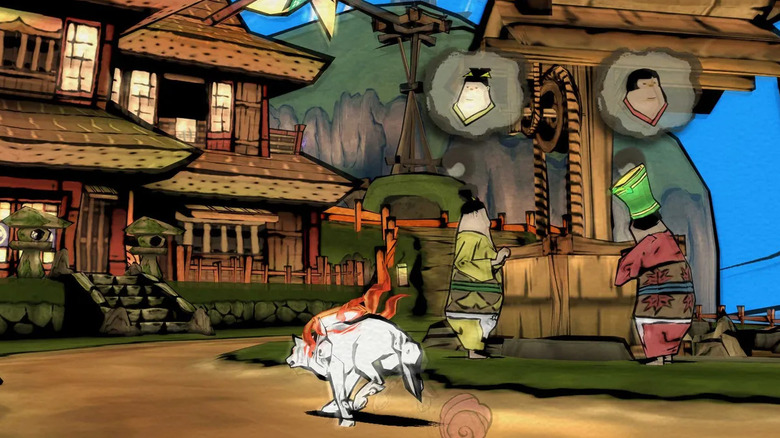
One of the most beautiful games that Capcom has ever put out is 2006's "Ōkami," combining classic Japanese folklore and artwork. Players control the Japanese sun goddess Amaterasu, who takes on the form of a white wolf and is accompanied by the diminutive artist Issun. Armed with the Celestial Brush, the duo move to vanquish the demonic Orochi and his army and restore the surrounding countryside. As the land is revived and the Celestial Gods are reawakened, Amaterasu and the Celestial Brush gradually grow more powerful.
With its mix of puzzle-solving, combat, and light platforming, "Ōkami" definitely feels influenced by 3D "Zelda" titles. The game presents players with a similar overworld hub, encouraging them to complete side quests to further upgrade Amaterasu and her brush. Comparisons to "Zelda" aside, the game's cel-shaded presentation, ink wash-evoking art style, and calligraphy-based mechanics makes the experience feel wholly unique. Initially a commercial flop despite its widespread critical acclaim, "Ōkami" has since found its audience with Capcom's HD remaster of the game and its ports on virtually every modern platform.
Ittle Dew 2
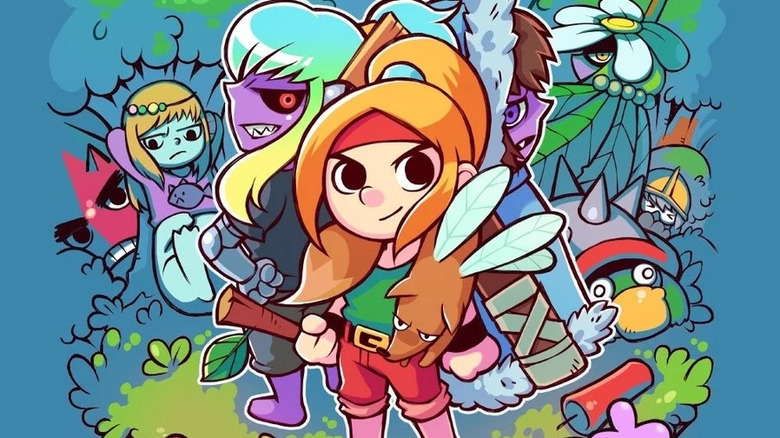
The 2016 sequel to "Ittle Dew," "Ittle Dew 2" is completely accessible for those who missed the 2013 original game. The story opens with protagonist Ittle and her friend Tippsie crashing their raft on a remote island. Exploring their new surroundings, Ittle tries to recover eight raft pieces to rebuild her vessel so she and Tippsie can return to the high seas. These pieces are stored in dungeons around the island, each guarded by a formidable monster for Ittle to vanquish.
Ittle has always clearly been inspired by Link from "The Legend of Zelda" and that distinction remains in "Ittle Dew 2." Compared to those classic "Zelda" games, "Ittle Dew 2" provides players the opportunity to clear dungeons in any order, though there is a recommended progression like "Breath of the Wild." The game was released in 2017 with updated, additional content under the revised title "Ittle Dew 2+" and has been ported to several modern platforms. A fun-filled nod to classic adventure games, "Ittle Dew 2" thrills longtime genre fans while tailored to modern sensibilities.
Hyper Light Drifter
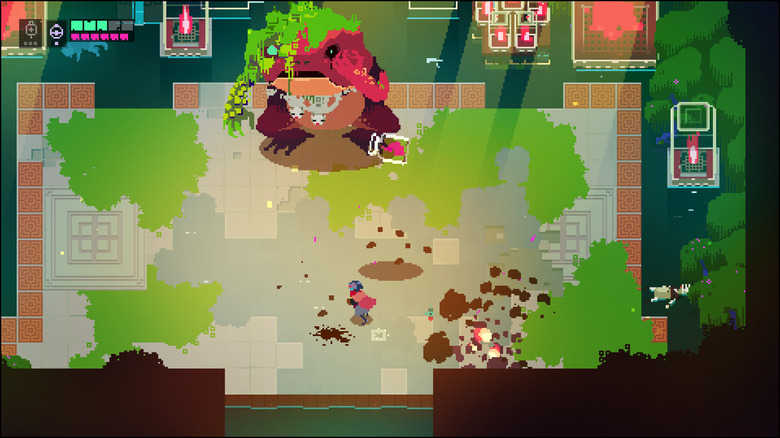
The 2016 action RPG "Hyper Light Drifter" is a love letter to similar games from the 16-bit Super Nintendo era, including "The Legend of Zelda: A Link to the Past." The game has a protagonist, known simply as the Drifter, who moves to defend a world afflicted by a mysterious illness. The Drifter uses long-forgotten technology, including a hard light energy sword that they recharge throughout their quest. Through the activation of abandoned modules around the world, the Drifter can upgrade their abilities and explore more of the overworld.
With its vibrant art design and evocative soundtrack, "Hyper Light Drifter" is one the most memorable indie action RPGs ever made. The entire game feels like it comes from an intensely personal place, even with its blend of fantasy and science fiction elements. The "Zelda" aesthetics are most visibly alluded to in the game's dungeon-crawling sequences, as the Drifter combats imaginative enemies with an expanded arsenal. Remastered after its launch for mobile platforms and to include multiplayer gameplay, "Hyper Light Drifter" is the perfect "Zelda"-esque game to experience with a friend.
Blossom Tales: The Sleeping King
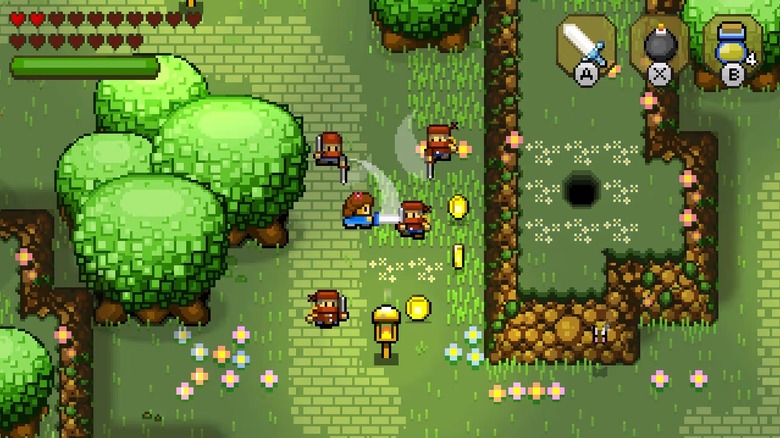
With its clearly eight-bit evocative art style, 2017's "Blossom Tales: The Sleeping King" is a sumptuously rendered indie game. The game is framed as a bedtime story recounted by a grandfather to his grandchildren, detailing the exploits of medieval fantasy hero Lily. After the kingdom's wizard casts a sleeping spell on the king, Lily ventures to recover items to lift the curse. This involves Lily not only upgrading her arsenal but solving a series of puzzles in each dungeon in order to advance.
The "Zelda" title that "Blossom Tales: The Sleeping King" most clearly references is 1991's "A Link to the Past," particularly with its opening. From there, the game expands into a full-on fantasy adventure, complete with dungeon-crawling and enemies to defeat in defense of the kingdom. The narrative framing device works well too, with the story cheekily modified as players progress with a self-awareness that doesn't wear out its welcome. If you enjoy "Blossom Tales: The Sleeping King," be sure to check out its 2022 sequel "Blossom Tales 2," continuing Lily's adventures.
Tunic
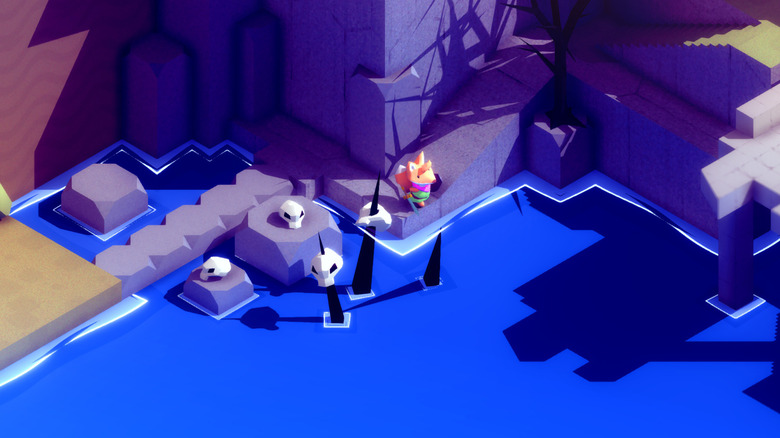
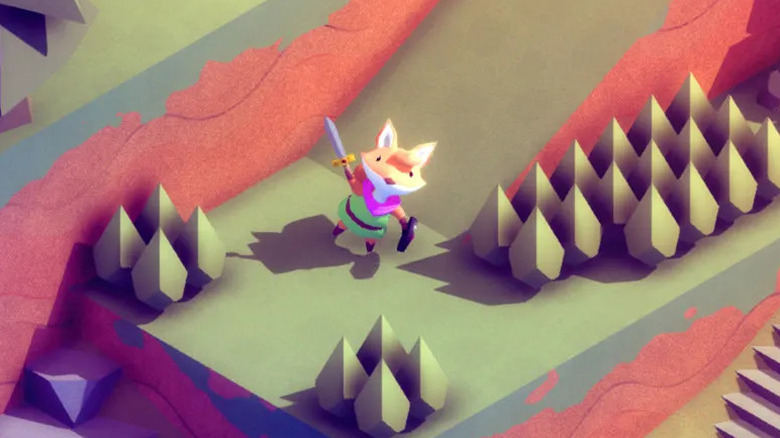
One of the most adorably enjoyable indie games of 2022 was "Tunic," with the project led by designer Andrew Shouldice. Visibly inspired by classic "Zelda" games, the indie title has players control an anthropomorphic fox navigating a post-apocalyptic fantasy world. Echoing the story of "The Legend of Zelda: Link's Awakening," the fox awakens on a shore, recovering a sword and shield to defend themselves. After encountering an imprisoned fox spirit, known as the Heir, the player character embarks on a quest to free them.
With its isometric perspective and exploration-heavy gameplay, "Tunic" is a clear heir apparent to classic "Zelda" games. The difficulty is noticeably higher than Nintendo's franchise, but with accessibility mechanics to make it more accessible. Where the game really excels is in its gorgeous art design, feeling almost like one is playing an elaborately constructed diorama. An engrossing fantasy adventure game, "Tunic" is a must-play for fans of '90s "Zelda" games.