
5 Video Games From The '90s That Tried To Copy Mario And Failed
Nintendo's "Super Mario" franchise has been a cultural and industry touchstone ever since its debut in 1985. This distinction carried over into the '90s, even as the series began to expand its gameplay reach from just being primarily confined to side-scrolling platforming. By the end of the decade, Mario was starring in well-received racing games and RPGs, and had effectively made the leap to 3D. Mario has always been the prime example of the malleability of video games and, more specifically, what can be possible with individual gaming properties.
Other game developers took their cues from the trails Mario blazed, but sometimes just copied what Nintendo was doing with their flagship character at the time. In a lot of cases, these instances were tepidly received, even if the games themselves were actually quite good. In other cases, these efforts at imitation fell flat on their faces upon arrival, immediately relegated to the bargain bin. Here are five video games from the '90s that tried to copy Mario, yet failed to replicate the Nintendo franchise's success.
Wacky Worlds Creativity Studio

After 1992's successful "Mario Paint" provided Super Nintendo players with an outlet for their visual and musical creativity, Sega followed in its footsteps two years later. "Wacky Worlds Creativity Studio" for the Sega Genesis offered its own set of creative activities for players to indulge in, rather than conventional console-based gameplay. Though not mentioned in the game's title, Sonic and his associated supporting characters are on the game's cover and appear within the various activities themselves. Players primarily interact with various worlds through use of stickers to play with environments, but also have access to a musical composition mode, much like "Mario Paint."
Just looking at the presentation of "Wacky Worlds Creativity Studio" and "Mario Paint," it's pretty clear that Sega was aping the Nintendo spin-off. This includes the game's primary inputs being through the Mega Mouse, a controller peripheral for the Genesis, just as Nintendo provided its own mouse for the SNES. To Sega's credit, the game offers deeper ties to the company's wider library of properties, including connections to "Ecco the Dolphin" and "Toejam and Earl." An odd late-generation Genesis title featuring some of its popular brands, "Wacky Worlds Creativity Studio" was an offbeat use of the Sonic IP.
Ristar
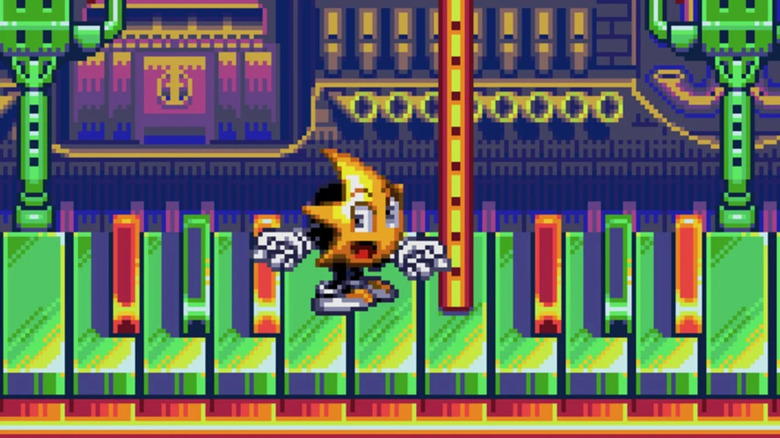
Sega had developed multiple side-scrolling platformers in the wake of "Super Mario," like "Alex Kidd" and "Dynamite Headdy." One title that hewed especially close to Nintendo's franchise was "Ristar," which yielded games for the Sega Genesis and Game Gear in 1995. The story's title character is a sentient shooting star who steps up to defend a galaxy oppressed by an evil space pirate. Ristar notably features stretchy arms that help him navigate stages and attack enemies, grabbing them before pulling them in for a headbutt.
In all fairness, "Ristar" is actually a pretty great game released late in the Genesis' lifecycle, with a vibrant visual palette and fun platforming gameplay. The game is just as much of a "Super Mario"-inspired platformer as "Dynamite Headdy" or "Alex Kidd," but unfortunately wasn't as successful. As Sega and its fans shifted their attention to the Sega Saturn, "Ristar" died with the Sega Genesis rather than launching a line of sequels like "Alex Kidd." At the end of the day, "Ristar" is a good game but just came at the wrong time.
Sonic R
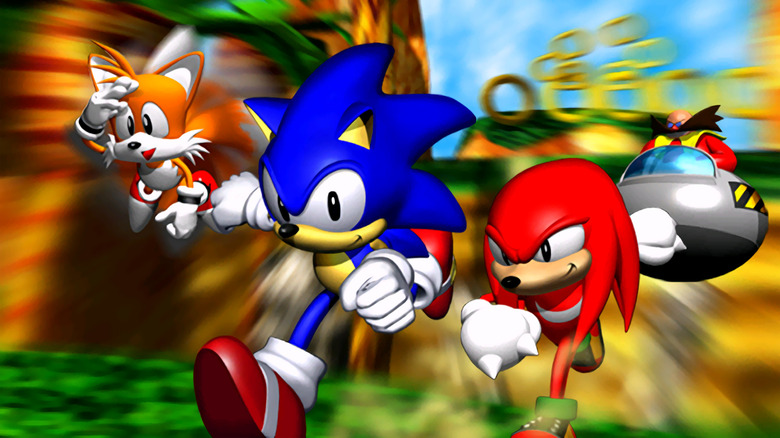
One last Sega title to include here is 1997's "Sonic R," the big Sonic game for the Sega Saturn. In the wake of Nintendo's successful "Mario Kart" series, Sega gave its own flagship character his own racing game with "Sonic Drift." This started a trilogy of Sonic racing games in the '90s, with the nadir being "Sonic R." The title is a 3D racing game that also encourages players to explore the environments as Sonic and his friends take on Dr. Ivo Robotnik once again. Players pick up power-ups during the race, while other modes offer more conventional gameplay in the form of tag and search modes.
"Sonic Drift" is a clearer imitation of "Mario Kart," with its kart-based gameplay and game modes, but it was successful enough to get a sequel on the Game Gear. The sad truth about "Sonic R," however, is that it represents the real deal failure of a Sega-published "Mario Kart" knock-off, as well as one of the worst things Sonic the Hedgehog has ever done. With some of the worst controls and handling that the franchise has ever endured and a presentation that felt dated on arrival, the game just isn't any fun. The only original Sonic game on the Saturn, "Sonic R" at least boasts a strong soundtrack but comes up lacking in every other aspect.
Glover
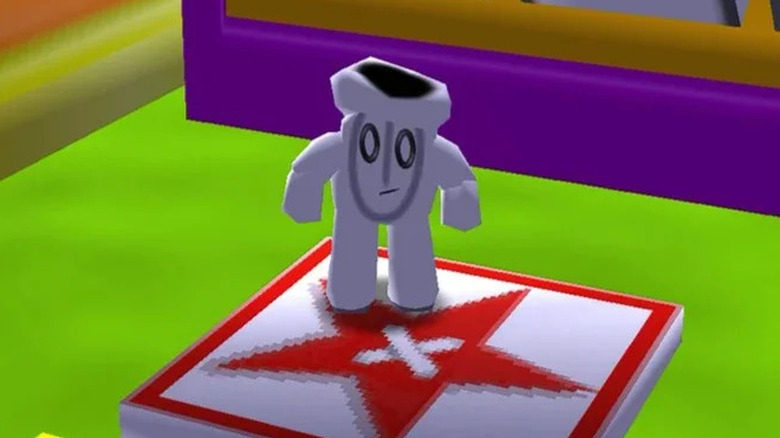
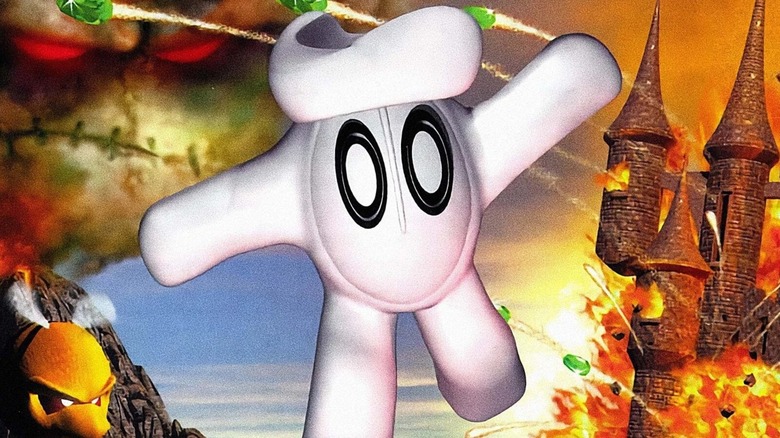
After 1996's "Super Mario 64," it felt like every major gaming company wanted to produce its own 3D platforming title to capitalize on its success. This included the 1998 game "Glover," which was released for the Nintendo 64, PlayStation, and PC. Players control the sentient glove protagonist as he maneuvers a ball to the end of each stage through a variety of gameplay mechanics. This is all part of a magical quest for Glover to restore his fantasy kingdom after its protective crystals are compromised following a mishap with a wizard.
Though a direct sequel was planned, "Glover" ultimately died with the Nintendo 64, leaving the proposed franchise as a one-and-done experience. Other 3D platformers following in the wake of "Super Mario 64" would see greater success, including "Banjo-Kazooie." At a time when the industry was shifting so much of its energies to making the next big 3D platformer, "Glover" just couldn't distinguish itself. Nintendo actually showed interest in publishing "Glover" itself, though it was unable to reach an agreement with Hasbro Interactive.
Earthworm Jim 3D
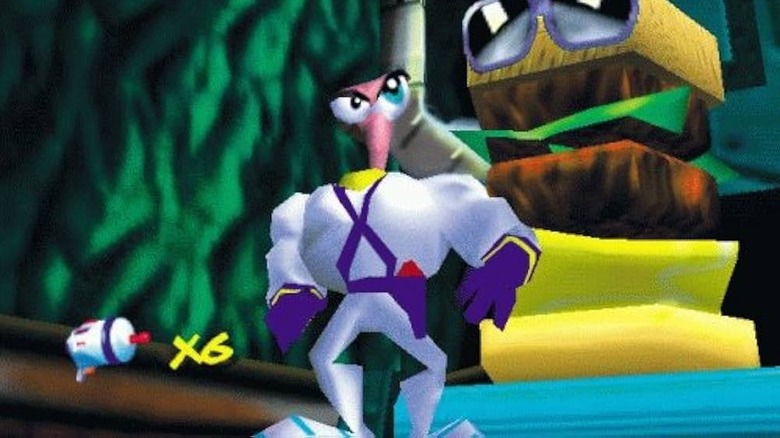
One of the most '90s video game series ever was "Earthworm Jim," which hit its stride with two side-scrolling platforming games on the Super Nintendo and Sega Genesis. Taking cues from "Super Mario 64," the franchise shifted to a 3D perspective for its 1999 installment "Earthworm Jim 3D" on the Nintendo 64. The game opens with Jim being rendered comatose after being hit in the head by a flying cow and trapped inside his own mind. Exploring his subconsciousness, Jim collects Golden Udders and Green Marbles while battling mental projections of his enemies to regain control of his faculties and sanity.
The jump to 3D wasn't a kind one for the franchise, with fans wondering what happened to "Earthworm Jim" in transitioning from its beloved side-scrolling roots. All the atmospheric level design, quirky charm, and generally responsive mechanics were replaced by a clunky mess of a game. "Earthworm Jim 3D" featured simplistic, crudely designed levels, poor controls, and Jim shouting the word "brain" every time that he took damage. "Earthworm Jim 4" was quietly canceled and the wonderfully weird '90s hero has since fallen into obscurity.