
5 Retro Video Games From The '90s That Ended Franchises
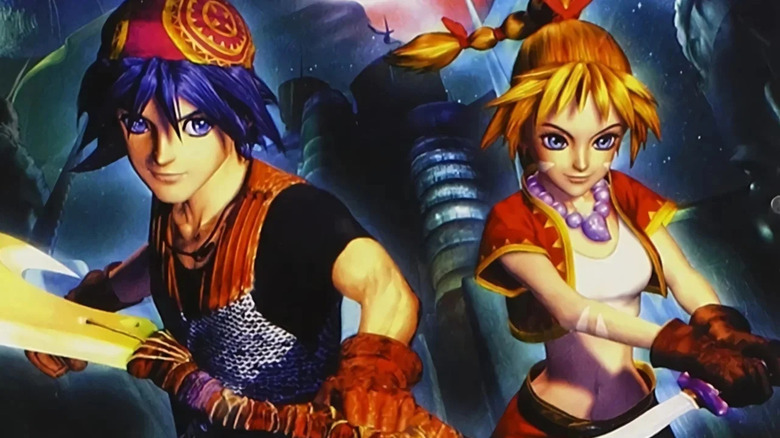
As the video game industry shifted to match the energy of the '90s, not every franchise that released games during that decade would continue thriving into the 21st century. Some series that had been widely successful throughout the '80s just couldn't reach the same levels of acclaim and popularity anymore. In other cases, franchises that launched in the '90s came to a screeching halt before the 2000s despite a promising start. And, whereas some gaming properties adapted and evolved with the times, many others weren't quite so fortunate in staying relevant.
Whether it be once-popular PC point-and-click series or platformers that couldn't keep up with the times, many gaming properties were tabled after trying to maintain their viability in the '90s. In several instances we'll discuss, the franchises have since received remasters or compilation titles but no brand-new games. Other properties were shelved decades by lackluster reception to their '90s releases, effectively ending previously prolific runs. Here are five retro video games from the '90s that ended their respective franchises. In some cases, permanently.
Alex Kidd in Shinobi World
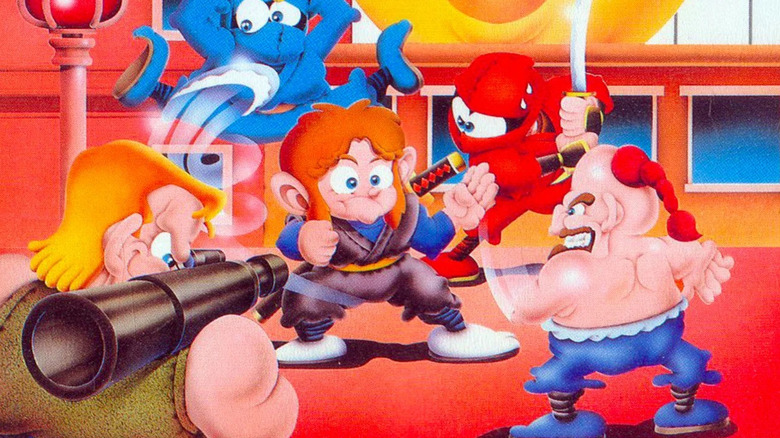
Before his debut in 1991, Sonic wasn't Sega's first official mascot. That distinction went to Alex Kidd. The pint-sized character starred in a string of titles released for Sega's first console, the Master System. The last game in the series was 1990's "Alex Kidd in Shinobi World," a crossover of sorts with Sega's other franchise, "Shinobi." Rather than maintaining the platforming emphasis as with prior titles, Alex essentially recreates the side-scrolling hack-and-slash action of "Shinobi," complete with a line of secondary weapons.
"Alex Kidd in Shinobi World" was critically well-received when it debuted, but Sega had already begun to turn its focus to the Genesis, which had launched in the preceding year. As "Sonic the Hedgehog" became Sega's blockbuster franchise of the '90s, Alex Kidd got left by the wayside. The series' first game, "Alex Kidd in Miracle World," received a remake in 2021 for modern platforms, but nothing completely new starring the character has surfaced.
That said, Sega hasn't forgotten Alex and his foundational history, with the character making guest appearances in titles like "Sonic & All-Stars Racing Transformed."
Double Dragon (1995)
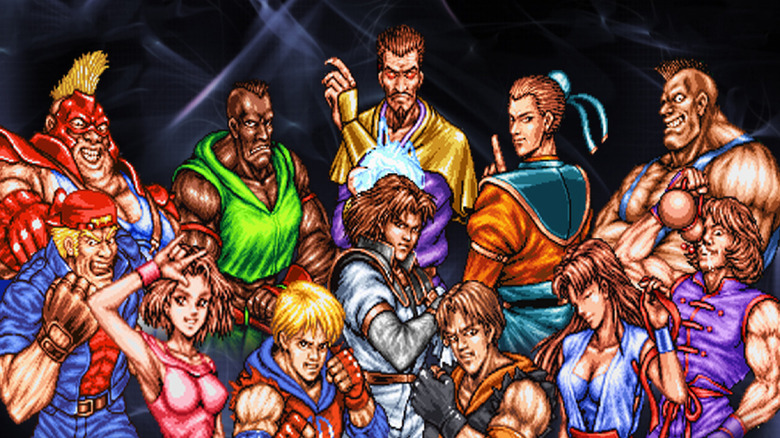
"Double Dragon" helped popularize the side-scrolling beat'em-up genre throughout the '80s in arcades and home platforms. However, after receiving a trilogy of mainline games for the Nintendo Entertainment System, the franchise struggled to stay relevant in the subsequent 16-bit era. Following 1992's "Super Double Dragon" on the Super Nintendo and the 1993 crossover game "Battletoads/Double Dragon," the series moved away from its beat'em-up roots. This led to a pair of tie-in fighting games, 1994's "Double Dragon V: The Shadow Falls" and the following year's "Double Dragon," the latter colloquially known as "Double Dragon '95."
Whereas "The Shadow Falls" was a tie-in for the "Double Dragon" animated series, the later release was based on the 1994 live-action "Double Dragon" movie. Both games were regarded as solid, though unremarkable pivots for the franchise to cater to the growing fighting game scene.
In 1996, developer and publisher Technōs Japan declared bankruptcy and began selling off its assets, including the "Double Dragon" franchise, ending it as fans knew it. In the 21st century, the series would see two separate attempts at a revival. They were released under two different owners and were nowhere near as ubiquitously recognized as the classic series.
Vampire Savior 2: The Lord of Vampire
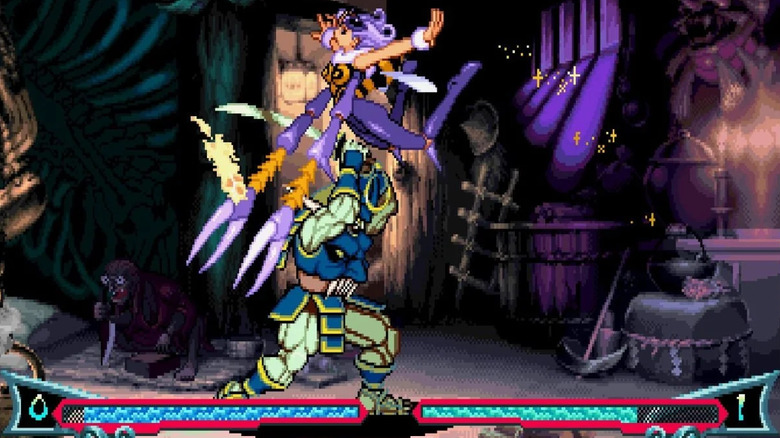
With its "Street Fighter" franchise dominating the industry for much of the '90s and fueling widespread interest in fighting games, Capcom developed and published other fighting properties. Among the most prolific outside of "Street Fighter" was its horror-themed fighting game series "Darkstalkers," pitting various monsters and genre archetypes against each other. Debuting in 1994, the franchise's last original entry was "Vampire Savior 2: The Lord of Vampire," which was initially released exclusively for Japanese arcades in 1997.
Though "Darkstalkers" has a vocally supportive fanbase, it never quite had the substantial commercial success as some of its contemporaries. The series, including "Vampire Savior 2," have been remastered and included in various compilations, such as Capcom's all-in-one arcade pad. But after "Vampire Savior 2," Capcom has never really made a fully new "Darkstalkers" game, with the 2013 enhanced remaster "Darkstalkers Resurrection" not living up to sales expectations. In the meantime, the franchise's legacy lives on beyond the aforementioned compilations with the occasional crossover title like "Marvel vs. Capcom."
King's Quest: Mask of Eternity
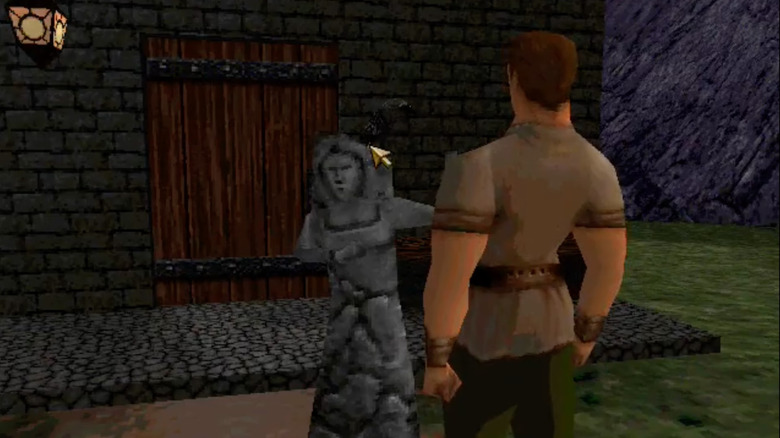
After its 1980 precursor, "Wizard and the Princess," Sierra Entertainment's "King's Quest" series maintained a prolific run that launched in earnest in 1984. A primarily PC point-and-click franchise, these fantasy games followed King Graham and his family as they went on various adventures across the realm.
The series' eighth mainline installment, "King's Quest: Mask of Eternity," marked a radical departure, jumping to a 3D art style with more contemporary action-adventure gameplay mechanics. Rather than Graham or his family members, the game's protagonist is a peasant named Connor who sets out to recover the Mask of Eternity and undo a kingdom-wide petrification spell.
"Mask of Eternity" reviewed moderately well upon its release in 1998, but Sierra began to see extensive problems internally shortly thereafter. In early February 1999, the company underwent major restructuring, marked by significant staff layoffs during this period. Never quite fully recovering, Sierra was eventually acquired by Vivendi Universal and then Activision, bringing the "King's Quest" property with them. A reimagining of the franchise was launched in 2015 but little has been done with "King's Quest" since.
Chrono Cross
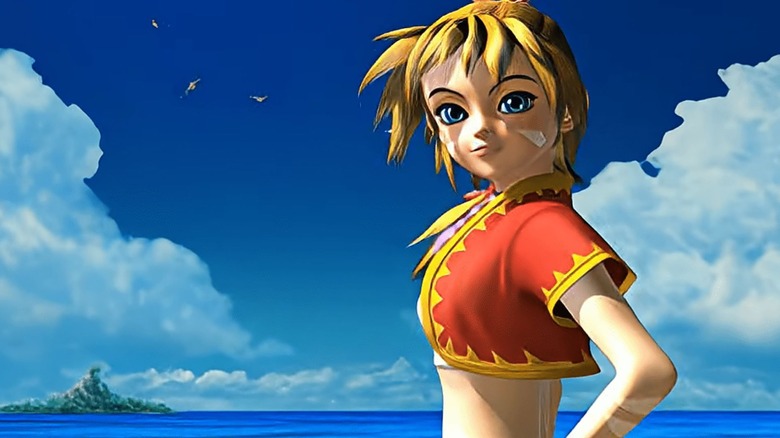
The Super Nintendo game "Chrono Trigger" is one of the best RPGs of all time, and its developer, Squaresoft, attempted to return to its world after they began working with Sony's PlayStation. The 1999 follow-up "Chrono Cross" ventures into the concept of alternate realities, as opposed to the 1995 SNES game's prominent time travel mechanics. The protagonist is a teenager named Serge, who discovers an alternate timeline where he died as a child and sets off to investigate this parallel world. As Serge travels between these universes with a growing set of allies, he is tormented by a villain named Lynx.
Like "Chrono Trigger" before it, "Chrono Cross" features a complex story and a memorable ensemble cast. It incorporated elements from the 1995 game and details from its Japan-only 1996 spin-off game, "Radical Dreamers."
The combat system was also slightly updated, most notably adding a stamina bar for players to be mindful of, while staying within expectations of the genre. Unfortunately, fans never got a third full "Chrono Trigger" game, as development of "Final Fantasy XI" was prioritized. Early plans for a sequel, tentatively titled "Chrono Break," were folded into the mobile game "Final Fantasy Dimensions II."