
9 Weirdest Gaming Controversies Of All Time
Video games are for kids. But are they really? People tend to imagine that video games are aimed at children, but now more than ever, gaming is a hobby that appeals to all ages. Despite that, the fact that video games are often viewed as entertainment for kids helps make sense of the biggest controversies in the medium.
Ever since the very first video game was created, game developers have been trying to find new ways to keep players engaged. For almost just as long, people outside of gaming spaces have tried to clamp down on content they feel is inappropriate. Violence in games has sparked so much controversy that the issue has been discussed in the United States Congress, and sexual content in games has led to bans and all sorts of public outcry. The biggest controversies in gaming have often been led by non-gamers, but there have been times when players got worked up too. We've seen gamers freak out over minor graphical details in games, call out companies for sleazy practices, and create entire political movements based on misplaced outrage.
Big or small, there's one thing most well-known gaming controversies have in common: they're weird. Some have clearly been pushed by people who don't understand gaming at all, and others are so bizarre they make you wonder how much about the real world gamers understand. We're here to break down the strangest gaming conspiracies the world has ever seen.
There was a push to ban Death Race
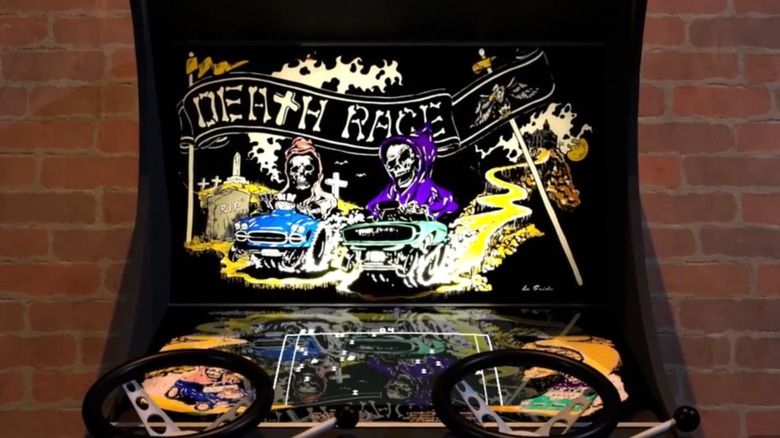
A number of now-forgotten games in the '70s kicked off several gaming trends, and sadly the ongoing pushback against any violence in a video game is one of them. Released in 1976, the arcade cabinet title "Death Race" was a modified racing game that allowed two players to drive souped-up vehicles down a road filled with humanoid figures that the game called gremlins. Dead gremlins left a cross in their wake and awarded players some points. The violence seems particularly tame and cheesy by today's standards, but at the time, "Death Race" caused quite a stir.
People were outraged by what they viewed as the game's attempt to encourage players to commit violence. News stories maligned the game, and petitions called for it to be removed from arcades altogether. Some members of Congress even released public statements condemning the game and its creators. Ultimately, the outrage actually gave "Death Race" more name recognition and helped sell more cabinets. The controversy surrounding the game was similar to the moral panic over the original "Mortal Kombat," which led to the creation of the Entertainment Software Rating Board (ESRB). The biggest difference is that because "Death Race" was hardwired into its cabinet and not run on a CPU, it's almost impossible to play today.
Indianapolis tried to put games behind a curtain
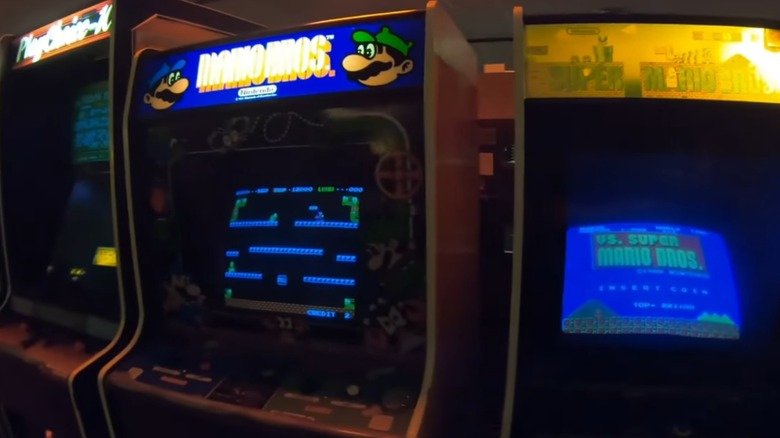
Concerns about violence and other mature content have been the driving force behind attempts to ban some games. There have been a handful of games banned outright in America, but when nationwide bans haven't worked in the past, some municipalities have tried to target problematic games themselves.
In 2000, the city of Indianapolis made a very odd attempt to protect children from games that some thought were psychologically damaging. The city passed an ordinance that required owners of arcades to restrict which games unaccompanied minors were allowed to play. The ordinance also required certain games to be separated from the rest of the arcade by a curtain marked with warning signs. Essentially, the rule wanted arcades to start treating violent games the same way that video rental stores treated pornography.
Naturally, the city ordinance was challenged in court. The rule never had the chance to go into effect because it was immediately pulled into a long-running legal battle. The arguments eventually went to a federal court, which ruled in favor of arcade owners a year after Indianapolis proposed the rule, and the battle became a win for people against video game censorship.
The Oblivion horse armor debacle
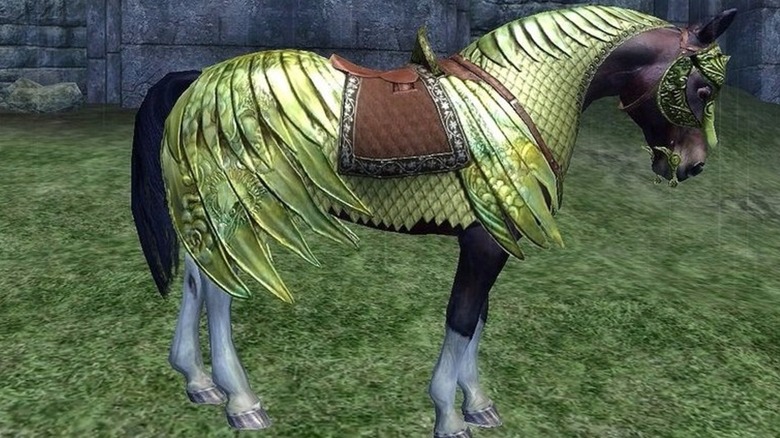
It may seem hard to believe now, but there was a time when a company adding minor DLC to a game was a source of extreme controversy. Bethesda's popularity was at an all-time high in 2006 after the release of "Oblivion," and the company probably had no way to anticipate just how quickly its fans would turn on it. Bethesda announced a golden horse-armor DLC for the game that was priced at 200 Microsoft Points, or roughly $2.50. The gaming community went into a meltdown and attacked Bethesda for offering fans a relatively useless DLC for what they thought was an exorbitant price.
The horse armor caused a ton of outrage and became a meme online for years, but in the end it's hard to say that Bethesda lost anything in the controversy. The horse armor itself didn't necessarily become a best-seller for the company, but it helped lay the groundwork for an industry-wide trend. Today in-game cosmetics and microtransactions are completely normalized in the gaming industry. For better or worse, we're all buying horse armor now.
The 'hot coffee' controversy
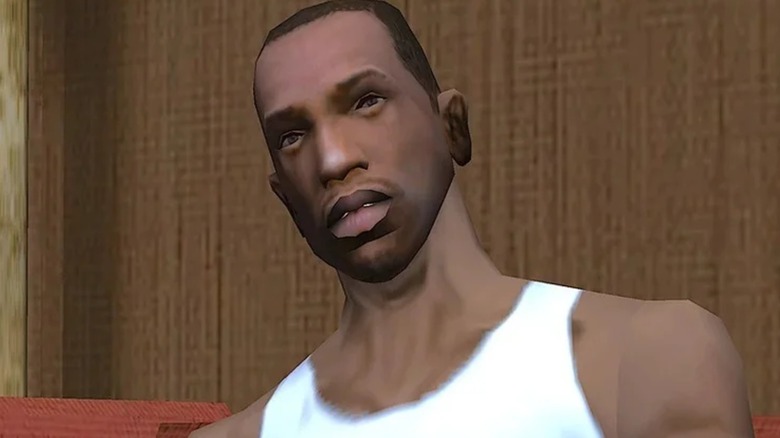
People get worked up about violence in video games, but sex has caused even more dramatic controversies. Every "GTA" game from Rockstar is filled with questionable content, but in 2012 the developer got in serious hot water for a minigame in "Grand Theft Auto: San Andreas" that came to be known as "hot coffee." The minigame allowed players to use button presses to guide protagonist CJ through a sexual encounter with an NPC. Rockstar actually cut the game from the final release of "San Andreas," and the company never intended for any real players to see it.
Gamers are a crafty bunch, however, and it didn't take long for some to find the "hot coffee" code in the game. Dedicated players modded "San Andreas" so they could play through the minigame, and those modders caused a legitimate political firestorm in the video game industry. Parents and activist groups were outraged that kids had potentially been exposed to sexual content via the game, and Rockstar faced a class action lawsuit for leaving the "hot coffee" code in "San Andreas." On top of that, some lawmakers proposed a bill that would heavily fine retailers who sold M-rated games like "San Andreas" to minors. Rockstar learned a serious lesson about cut content from the whole ordeal.
Call of Duty's No Russian mission
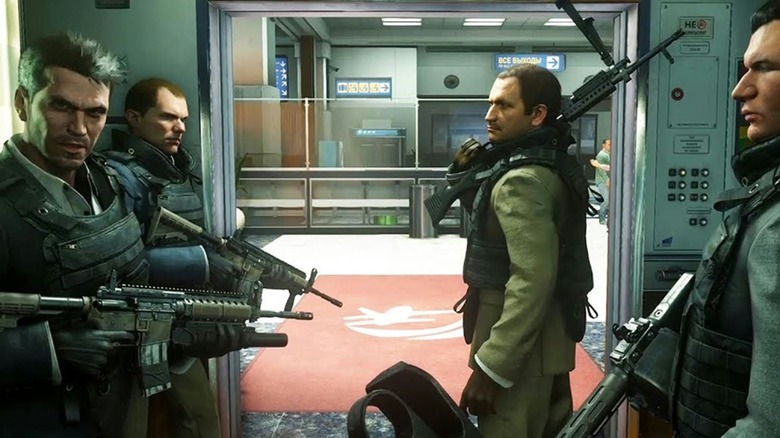
Say the words "No Russian" to any "Call of Duty" fan and you'll likely get a visceral reaction out of them. That was the title of a level in 2009's "Modern Warfare 2" that caused a massive stir and remains the most controversial sequence in the entire franchise's history. In the level, players take control of a Russian terrorist who's part of a small cell sent to slaughter civilians in an airport. Players have the option to mow down NPCs with an assault rifle as they slowly walk through the airport, and the experience can be chilling.
It's not surprising that "No Russian" caused some outrage when "Modern Warfare 2" was first released, or that Sony Russia didn't want to release the game. It is weird, however, that the level has such a dark reputation when other game sequences might deserve it more. Players don't have to fire a single shot while playing "No Russian," and the game even lets players skip past the level entirely with a content warning before the entire sequence begins.
By contrast, "Spec Ops: The Line" contains a mandatory segment where players are forced to use a chemical weapon on civilians from the perspective of a drone. That game came out just a few years after "Modern Warfare 2" and didn't cause nearly the same level of controversy, which goes to show that gaming drama is as much about an individual title's popularity as anything else.
The entire Star Citizen situation is strange
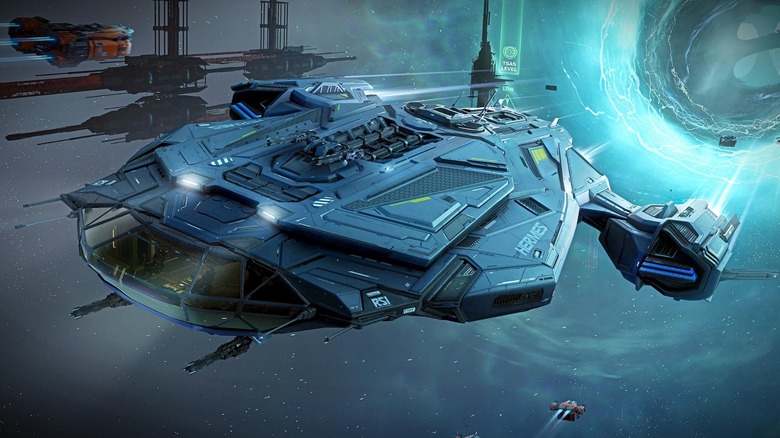
Depending on who you ask, "Star Citizen" is either the most ambitious sci-fi video game of all time, or it's an elaborate scam designed to steal thousands of dollars from gullible gamers. The game is a ridiculously detailed sci-fi MMO that allows players to travel the galaxy in their own custom ships and interact with other space captains through exciting missions and gripping combat. At least, that's what the game will be when it's finished, but "Star Citizen" has been in a sort of early-access stage of development for longer than some MMOs have existed.
"Star Citizen" is a crowd-funded project, and though the game has been the source of many controversies, the biggest have been about its monetization system. Dedicated fans have bought into the game on the premise that it will someday be finished, but there's no detailed roadmap or clear timeline for when the game will reach its final state.
On top of that, years after the initial crowdfunding push, "Star Citizen" introduced new microtransactions and paid mechanics that made some players think the developers were prioritizing making money over finishing the game. Of course, the devs need money to finish the game, but considering the initial Kickstarter campaign launched in 2012, fans are justified in their anger. The title's not-quite-finished state of existence is a weird situation that's totally unique to the gaming industry.
A Fallout helmet was filled with mold
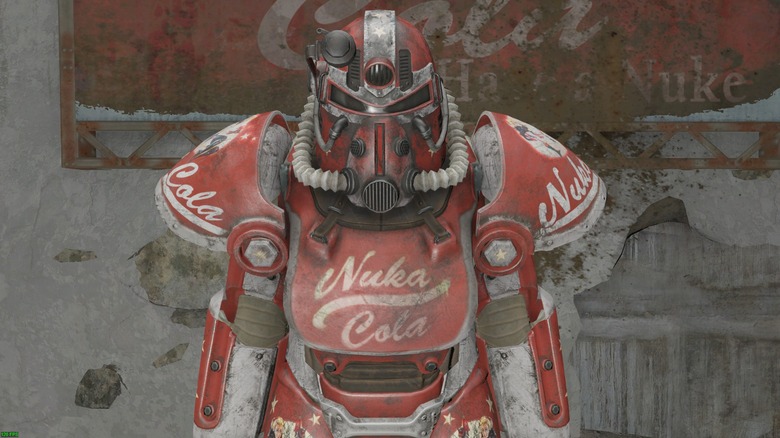
Bethesda has gotten itself into trouble with fans for selling certain in-game items, but one time a real-world item sold by the company caused a minor controversy. "Fallout" fans were thrilled when Bethesda revealed that a red-painted power armor helmet statue would be sold at GameStop. The helmet had a Nuke-Cola paint scheme just like the one found in "Fallout 76," and it would have made a great addition to any fan's merch collection. Unfortunately, the helmets turned out to be literally deadly.
All 20,000 power armor helmets had to be recalled because extremely high levels of mold were found in them. The mold was severe enough to potentially cause respiratory issues for anyone exposed, which is why a full refund was offered to anyone who purchased a helmet. Supposedly the other collectible helmets that Bethesda had for sale at the time were completely mold-free, but their owners probably thought twice before putting them on.
Spider-Man faced down Puddlegate
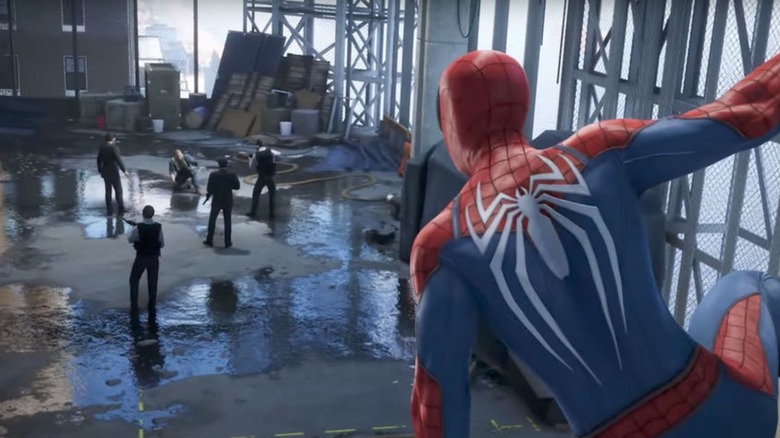
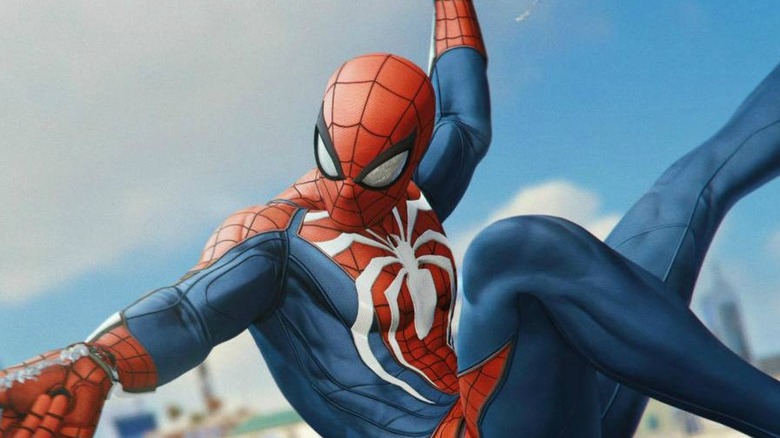
It doesn't take much to set off gamers, and they'll call out video game developers for even the most minor of perceived slights. Insomniac Games learned that the hard way in the lead-up to the release of "Marvel's Spider-Man" on the PS4. The company offered fans a look at the game in 2017, and gamers noticed something a little different when they saw footage from "Spider-Man" again in 2018. In one sequence from the game's trailer, a large puddle that had been present in the 2017 version wasn't in the pre-release version.
Gamers took to the internet to call out Insomniac Games and accuse the developer of downgrading the game's graphics before the official release. Insomniac actually responded online, writing in a blunt post on X, "It's just a change in the puddle size, there's no downgrade at all." Other people who'd worked on the game also spoke up in the dev's defense, saying that the change in puddle size had absolutely nothing to do with the game's graphical performance. By the time players actually got their hands on "Spider-Man," all concerns about lackluster puddle graphics died away completely.
Gamergate is as bizarre as it gets
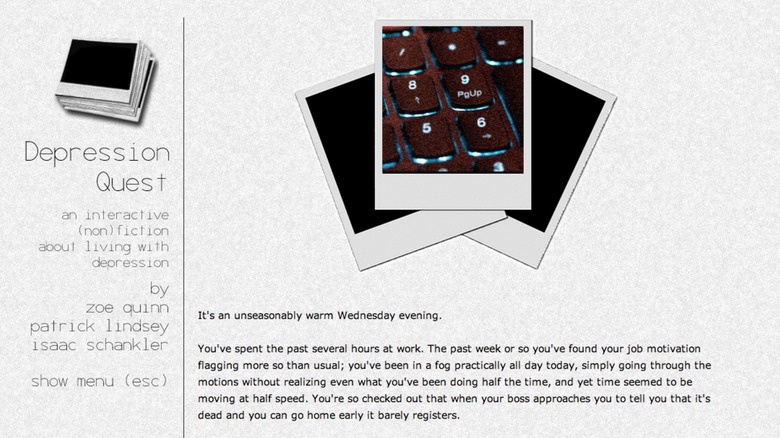
Gamergate is far and away the most bizarre gaming controversy of all time, less because of what happened at the time and more because of everything that came after. In August 2014, a man made a lengthy online post about his relationship with a video game developer named Zoë Quinn, who he accused of sleeping with a gaming journalist in exchange for a positive review of her game at Kotaku. The post included no evidence, and Kotaku never actually reviewed Quinn's game, but it ignited a firestorm of hate online.
Angry "gamergaters" led a hate campaign against Quinn, which eventually turned into a prolonged series of attacks against other gaming journalists and high-profile women in the gaming industry. Death threats and doxxing were standard tactics used by the movement, and sadly those have become even more common online since then.
In fact, the weirdest thing about gamergate isn't how baseless the initial controversy was, but how it contributed to other toxic parts of internet culture. Coverage of the movement helped popularize the online outlet Breitbart, and the movement later became tied to the QAnon and Pizzagate conspiracy theories. Gamergate began out of video game-related grievances, but it quickly began pulling in people with other complaints and spiraled completely out of control.