
5 Hit Arcade Games From 1976 That Nobody Talks About Anymore
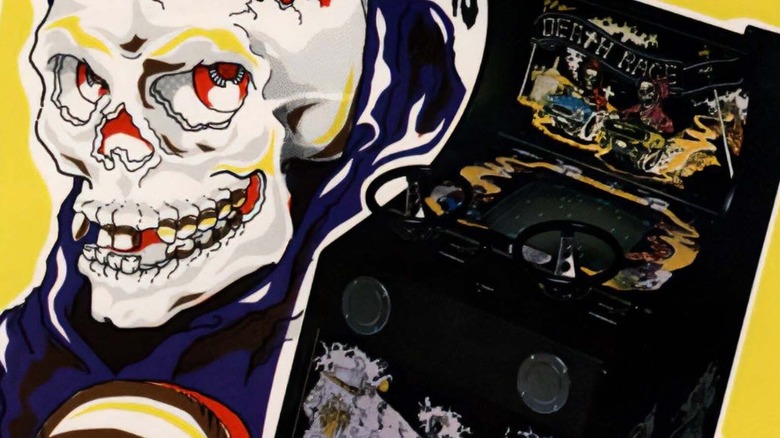
The 1970s was a foundational decade for the video game industry as arcade machines and home gaming platforms became widespread. Some titles that came out in the '70s changed gaming forever, with their impact still felt today. It was the decade that made a household name out of companies like Atari as the industry positioned itself for even greater heights in the '80s.
For many '70s titles, the arcade scene helped drive innovation in terms of gameplay and technical capabilities, though many hit titles from the time have since fallen out of wider recognition: There are several hit '70s games that no one remembers today, and a bunch of them dropped in 1976. These are five hit arcade games from '76 that nobody talks about anymore despite being successful at the time.
Sea Wolf
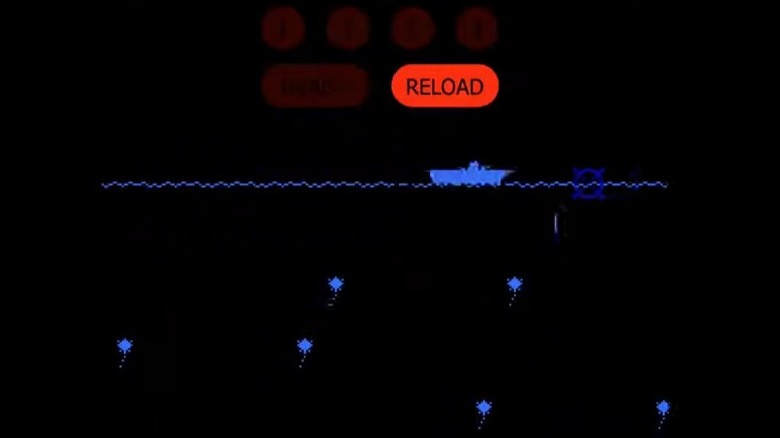
Many arcade cabinets in the '70s featured novelty controllers and designs to help them stand out from the crowd. This includes "Sea Wolf," a submarine simulator that had players looking through a built-in periscope to oversee the gameplay. From this unique perspective, players navigate their submarine through the level, trying to sink ships to build up their score. Players must also avoid sea mines and other obstacles strewn around the screen to keep the seafaring action going.
"Sea Wolf" is a game perhaps better known for its arcade hardware gimmick than for its actual gameplay experience, if it's remembered at all. Looking back, the periscope screen feels more cumbersome than innovative, but it did help it gain attention at the time. The novelty paid off, because "Sea Wolf" ended up shipping over 10,000 arcade units and spawned a sequel in 1978. A side-scrolling shooter that embraced its undersea premise, "Sea Wolf" was a major arcade hit throughout the '70s that's rarely mentioned these days.
Death Race
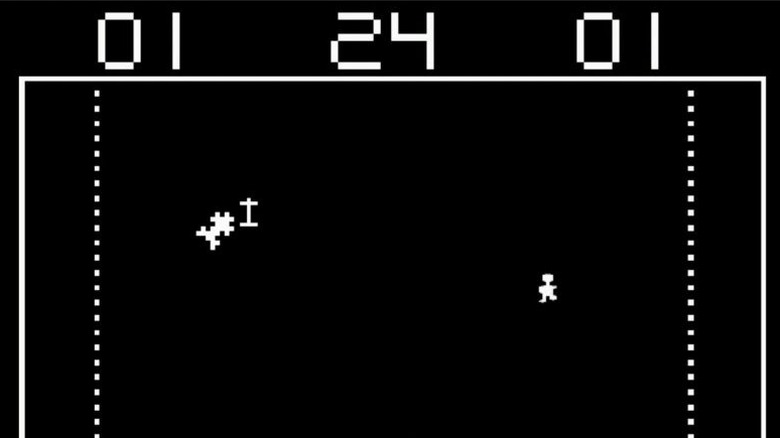
An early controversial game that made waves in 1976 is the vehicular mayhem title "Death Race," developed and published by Exidy. The game plays out over a black and white display, with players controlling a crudely animated car. The object of the game is to run over gremlins to build up the high score, with each creature letting out a yelp when crushed. As gremlins are destroyed, they are replaced by tombstones, which players must avoid to keep playing, growing more challenging as the screen is filled up.
Even with its simplistic art design, "Death Race" spawned one of the weirdest gaming controversies of all time with its depiction of vehicular manslaughter. The game was banned in pockets of America in response to the backlash to its premise. This didn't stop "Death Race" from becoming a success, with the notoriety actually driving up the number of shipped arcade units. An early instance of gaming controversy and the value of bad publicity, "Death Race" was one of the biggest hits of its era, but it's been largely forgotten about.
Heavyweight Champ
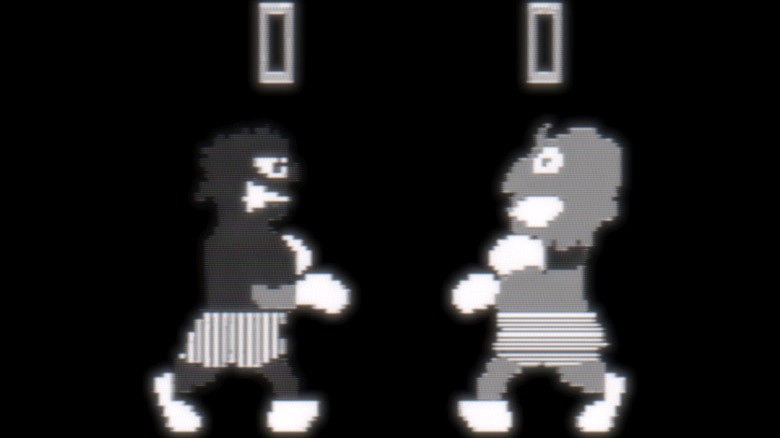
Fighting games were an arcade staple by the '80s, and their roots can be traced back to "Heavyweight Champ." Developed by Sega, the game has two boxers duking it out in the ring from a profile perspective. The arcade cabinet uses a controller that's a facsimile of a boxing glove, allowing for high and low punches. The game even offers two-person head-to-head multiplayer, with cabinets featuring two controllers facilitating the competitive fun.
"Heavyweight Champ" was successful in its native Japan. While very elementary in its gameplay and presentation, the title was enormously foundational, heavily influencing the fighting games that would follow it. The game received a remake in 1987, moving to a third-person perspective, though many probably don't know it was a remake at all. 1987 also saw Nintendo's definitive boxing game "Punch-Out!!" released for home consoles, dooming "Heavyweight Champ" to relative obscurity.
Sprint 2
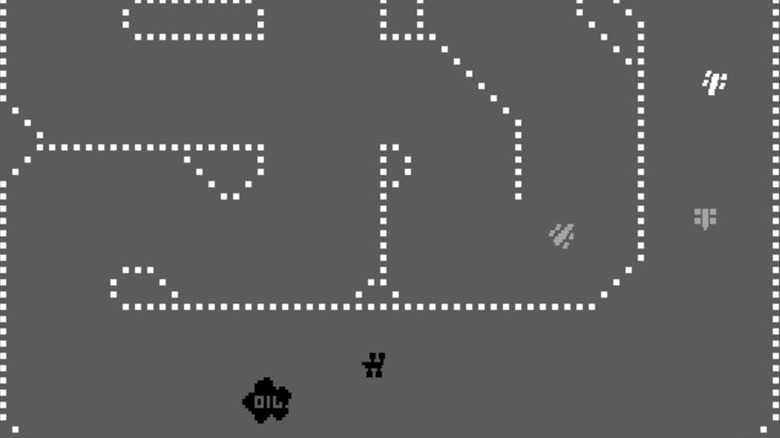
One of the more popular racing arcade games in the '70s was "Sprint 2," developed and published by Kee Games, a subsidiary of Atari. The game is a top-down perspective racer, with cars navigating around a circular track and allowing up to two simultaneous players. One of the game's big innovations was computer-controlled competitors who were programmed to drive around the track themselves on random paths, which was revolutionary at the time. The tracks also have minor road hazards to keep an eye out for, including oil patches that will delay those who drive over them.
"Sprint 2," with the title referring to the number of players it allowed and not suggesting it was a sequel, spawned a whole line of follow-ups. The arcade cabinets grew more ambitious and sophisticated, with sequels later providing inputs for four simultaneous players rather than just two. As racing games made the leap to color and featured more impressive art designs, the "Sprint" series got left in the dust, but from the mid to late-1970s, the "Sprint" franchise was an arcade mainstay, with the inaugural release becoming one of the most popular arcade games of 1976.
Blockade
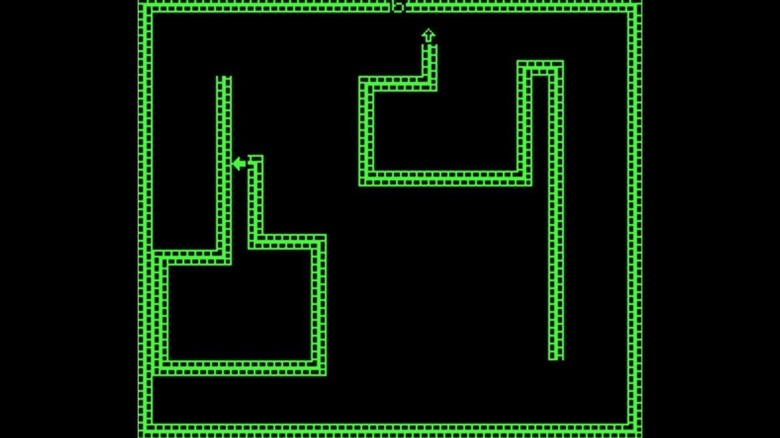
"Blockade" created the foundation for what would become known as snake games. It has players control moving arrows from a top-down perspective that leave a solid trail behind them. With these trails extending the longer the game progresses, players need to avoid colliding with them or the sides of the level. Depending on the arcade cabinet settings, players have anywhere from three to six lives, with the last arrow standing crowned the winner.
Developed and published by Gremlin, "Blockade" was first presented at an arcade operators convention in Chicago, and orders for the game numbered at 3,000 units based on its impressive showing. The year after its arcade debut, "Blockade" was ported to the Noval 760, one of the earliest home gaming platforms. Gremlin became a victim of its own success, and, with no major hits outside of "Blockade" to support its rapid growth, it was acquired by Sega in 1978.