
The First Video Game Microtransactions Came From A Classic '80s Arcade Game
One of the weirdest gaming controversies of all time was Bethesda Softworks' decision to include a microtransaction in "The Elder Scrolls IV: Oblivion" for cosmetic horse armor. Though costing less than $3 at the time, the idea of players having to pay for additional, minor content for a game they already purchased vocally ruffled feathers. Though video game microtransactions became widely hated, they've also since become an industry staple, offering everything from season passes to cosmetics. However, to Bethesda's credit, "The Elder Scrolls IV: Oblivion" was not the first game to employ microtransactions. It was predated by decades in that dubious trend.
In truth, microtransactions had existed since the arcade scene's heyday in the '80s and early '90s, incentivizing players pouring in more quarters to optimize their experience. One notable example is 1990's "Double Dragon 3: The Rosetta Stone," which featured an item shop within the occasional level. By inserting more quarters while stopping at the item shop, players could increase their health bar, their attack power, or gain new techniques to help them beat the game. However, even this example was predated by the arcade title "Lost Tomb," which was released in 1983.
Here's how "Lost Tomb," an obscure title for today's audiences, was a pioneer in creating the divisive practice of in-game microtransactions.
How Lost Tomb utilized microtransactions
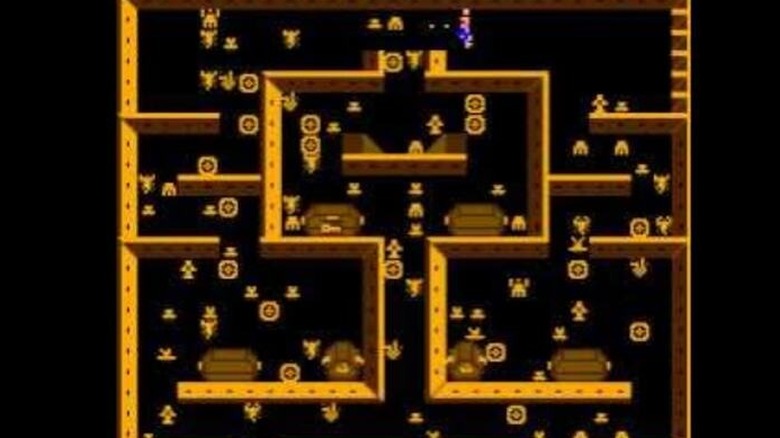
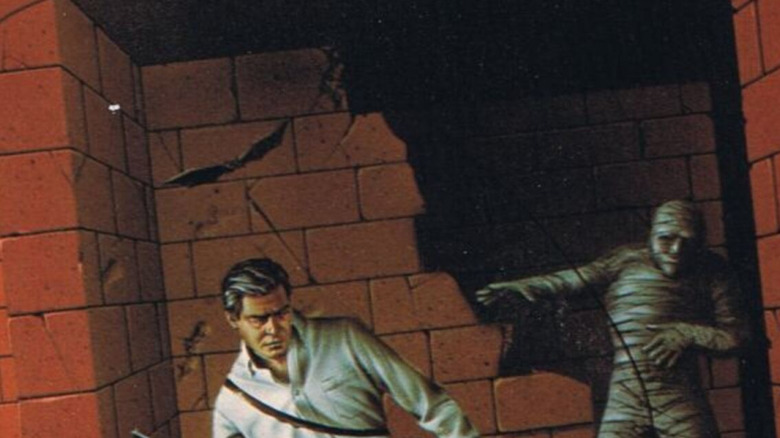
Developed and published by Stern Electronics, "Lost Tomb" has players control a treasure hunter exploring an ancient South American pyramid. Using a whip like Indiana Jones, the player character fends off deadly fauna and mummies as they pillage treasure from the site. This derivative choice in weapon is where the microtransactions come in for the original arcade version. With whip usage limited, as if it were ammunition, players have the option to purchase more whips between levels by inserting additional quarters.
Other games prior to "Lost Tomb," like "Gorf," gave players the option to insert quarters to grant additional lives and retain their score rather than risk a game over. These don't quite qualify as a microtransaction, at least not in my opinion, as they're the equivalent of purchasing additional credits, which became an industry standard. By comparison, "Lost Tomb" is utilizing microtransactions to directly impact and improve player performance in-game. The home platform ports of "Lost Tomb" even retained the microtransaction mechanic, albeit with players using in-game points to purchase additional whips.
So the next time you think a game includes a microtransaction feature it should be ashamed of, remember to thank "Lost Tomb" for popularizing the mechanic.