
5 Arcade Games From 1989 That Still Hold Up Today
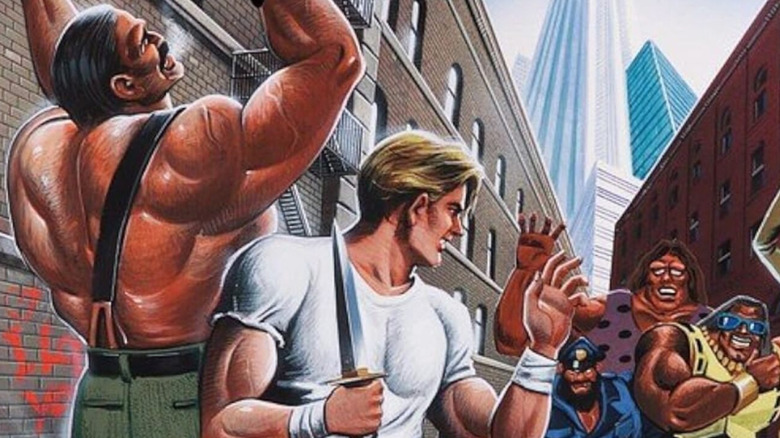
With arcade games still thriving in the late '80s, many of the medium's most iconic titles were released in 1989. From beat'em-ups to shoot'em-ups, the year saw plenty of fan-favorite titles that are still just as entertaining nearly 40 years later. While several of these games were ported to home platforms later, there is still a certain charm to the original arcade format. With that in mind, we're looking at some of the standout arcade games from 1989 that are still incredibly fun to play.
Heavy hitters like Capcom, Sega, and Konami brought out several marquee arcade titles worldwide in 1989, keeping the medium fresh. These ranged from games that spawned their own franchises to licensed properties that captured the raw appeal of their respective source material. Many of these games are best enjoyed with friends, working together to blitz through waves of enemies. These are the five best arcade games from 1989 that still hold up today, many of which are still available to play.
Strider
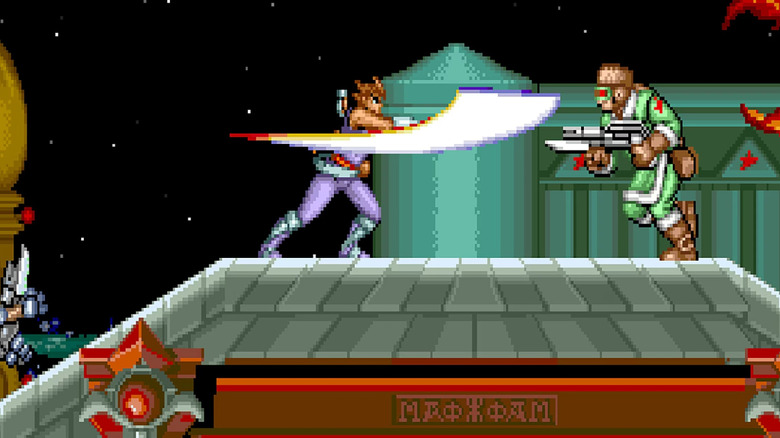
Expect several Capcom games on this list, because the company was really hitting its stride in 1989 with its arcade titles. Among them was the hack-and-slash platformer "Strider," which launched a franchise for the company that spread to various home platforms. Set in a cyberpunk future, the game's protagonist is a ninja known as Strider Hiryu. Armed with a plasma sword, he moves to topple a brutal dictator. The gameplay mixes hack-and-slash action with Hiryu's acrobatics as he advances through enemy and obstacle-filled levels.
"Strider" is one of the most vibrantly rendered games on this list and, given its protagonist's ninjutsu background, is superbly animated to capture his movements. This sumptuous presentation is matched by intuitive gameplay — though it's not for the faint of heart, with a difficulty level that evokes similar titles like "Ninja Gaiden." For fans who are only used to the console-based "Strider" games, the original arcade title is available through the 2022 compilation "Capcom Arcade Stadium." The start of another hit Capcom series, "Strider" definitely stood out from the rest of the arcade crowd in 1989.
Golden Axe
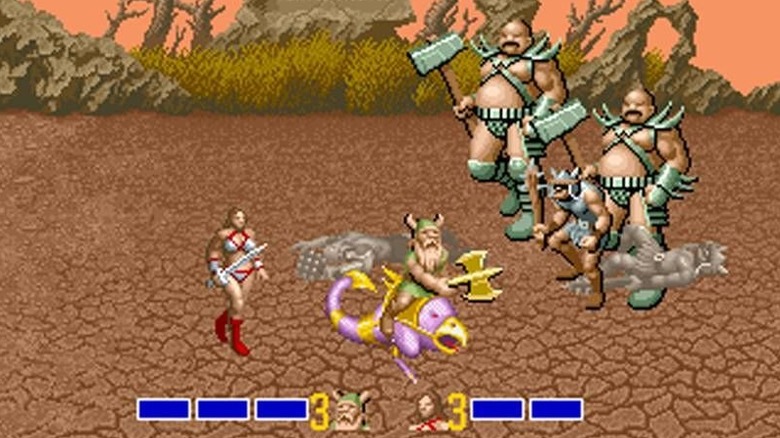
Before it became a staple franchise for the Sega Genesis, the fantasy hack-and-slash series "Golden Axe" started out as an arcade game. The game opens with the villainous Death Adder usurping the throne of the high fantasy realm of Yuria, kidnapping the royal family and demanding to be recognized as the kingdom's ruler. Players choose between three fantasy hero archetypes, each with their own unique play style, to defeat Death Adder's forces. The arcade version actually has a unique ending compared to its home platform ports, with the heroes shown emerging from the arcade cabinet in the final video.
Some of the best Sega Genesis games of all time are side-scrolling beat'em-ups and "Golden Axe" captures those same vibes, though it's technically a hack-and-slash title. The game laid the template for subsequent Sega mainstays, including "Streets of Rage" and "Alien Syndrome," with its technical presentation and choice of playable characters. While "Golden Axe" would go on to receive several sequels, there is something undeniably appealing about the series' original arcade title. Quietly influential, certainly among Sega projects, "Golden Axe" mixes steady action with memorable dark fantasy imagery.
U.N. Squadron
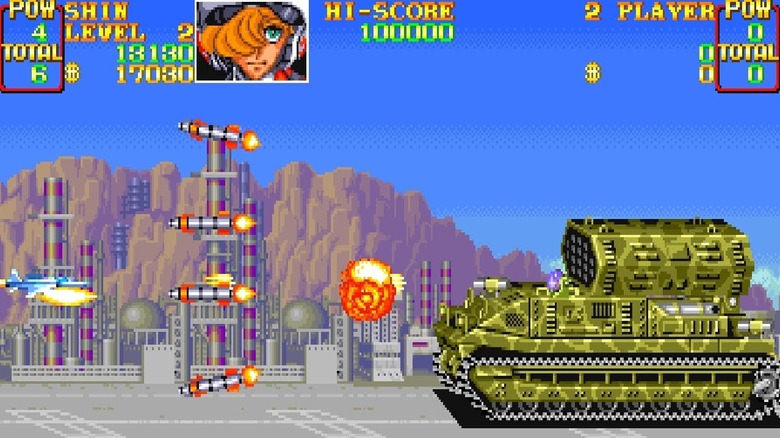
The 1979 manga series "Area 88" by Kaoru Shintani was adapted into an arcade game retitled "U.N. Squadron" for its North American release. A side-scrolling shoot'em-up title, players choose between three different pilots, each of whom has their own unique jet fighter with accompanying features. Rather than being destroyed after a single hit like most shoot'em-ups (i.e. "Galaga" or "1942"), players are given a health bar to maintain as they progress. In between levels, players can use funds they earned destroying enemies towards upgrading their planes with additional weapons.
"U.N. Squadron" is one of the best shoot'em-up titles of its generation, and not as unforgiving as games like "Gradius" or "R-Type." This comes from a more scalable difficulty curve and more gameplay depth through its different playable characters. Unfortunately, outside of a relatively faithful Super Nintendo port in 1991, the game has been unreleased for modern platforms, likely due to licensing because of its source material. If you can track down an SNES copy of "U.N. Squadrons," go for it, because it's one of the best games in the genre that Capcom ever made.
Teenage Mutant Ninja Turtles
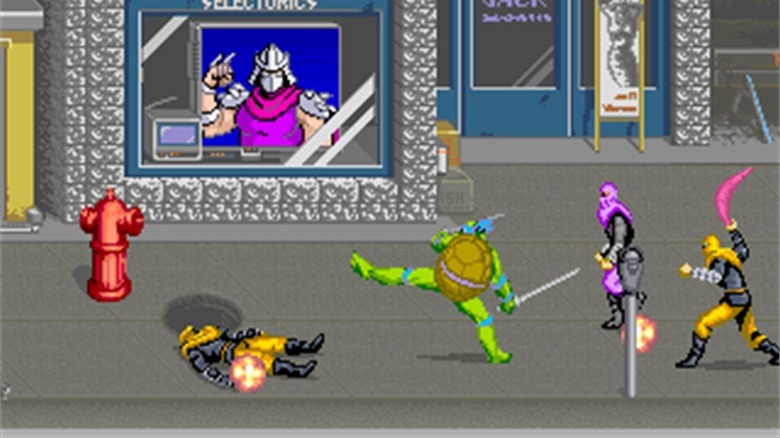
While the first Teenage Mutant Ninja Turtles video game for the Nintendo Entertainment System veered into action-adventure territory, its arcade counterpart was a beat'em-up title. The game was a tie-in for the popular animated series from the same era, complete with the show's voice cast reprising their roles and cutscenes evoking the show. The story starts with Shredder and his Foot Clan staging an attack on Manhattan, kidnapping April O'Neil, and prompting the Ninja Turtles to leap into action. This leads the heroes to battle through most of their major supervillain enemies from the time, culminating in a showdown at the subterranean Technodrome.
The 1989 "Teenage Mutant Ninja Turtles" is still the bar against which all subsequent games in the franchise are judged. While subsequent games like "Turtles in Time" arguably surpassed it, the 1989 title still represents the four-player fun that the series strives for. As enjoyable as it is, the NES port of the arcade game never quite fully replicates the appeal, not least because it only allows for two players. Fortunately, "Teenage Mutant Ninja Turtles: The Cowabunga Collection" contains both versions of the game, letting players compare both experiences for themselves.
Final Fight
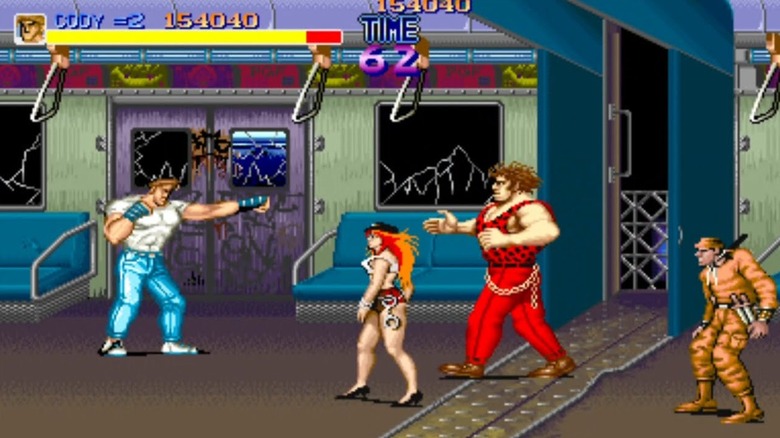
Never one to be counted out, Capcom introduced its own popular beat'em-up franchise to arcades in 1989 with "Final Fight." The arcade game introduces Metro City, an American metropolis overrun by crime — to the chagrin of its mayor, Mike Haggar. After Haggar's daughter is kidnapped by a nefarious street gang known as Mad Gear, he teams up with fighters Cody Travers and Guy to rescue her. Up to three players can work together as the heroes battle Mad Gear, with each playable character featuring their own unique moves.
"Final Fight" feels like the logical successor to the "Double Dragon" franchise, evolving its hard-hitting scope for more advanced hardware. Capcom also draws from the fighting game acumen it developed with its "Street Fighter" franchise to give players more options in how to pummel their enemies. "Final Fight" spawned a series for Capcom, with the franchise hitting its heyday on the Super Nintendo, and the arcade version is still available through compilations like "Capcom Arcade Stadium." All this and we're still not over the game having some of the most brutal continue screens for an arcade title.