
5 Best Video Games Like Max Payne
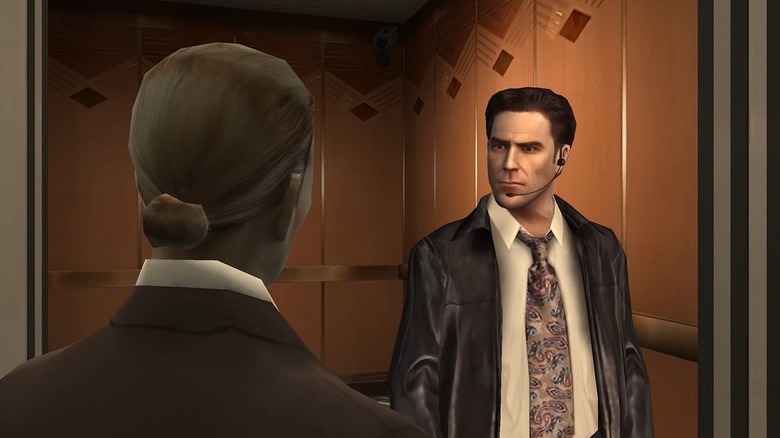
In 2001, Remedy changed the gaming landscape with the release of "Max Payne," a revolutionary third-person shooter that gave players tight control of the aiming reticle as they blasted bad guys, often in slow-motion, and frequently while diving through the air like Chow Yun-fat. The game was followed by two sequels in 2003 and 2012, and a remake of the first two games is currently in the works by Remedy and Rockstar Games.
But in addition to its own sequels, "Max Payne" inspired a slew of imitators. A great many games owe their existence to the "Max Payne" series, from its balletic gunplay and film noir storytelling to its cinematic presentation and incredible voice acting. Let's take a look at five games that owe a debt of gratitude to "Max Payne." These titles range from imitators to spiritual successors and they all wear their "Max Payne" influence proudly on their sleeve. If you love the "Max Payne" series and just can't wait for the upcoming remake, these games might be able to tide you over until then.
Dead to Rights
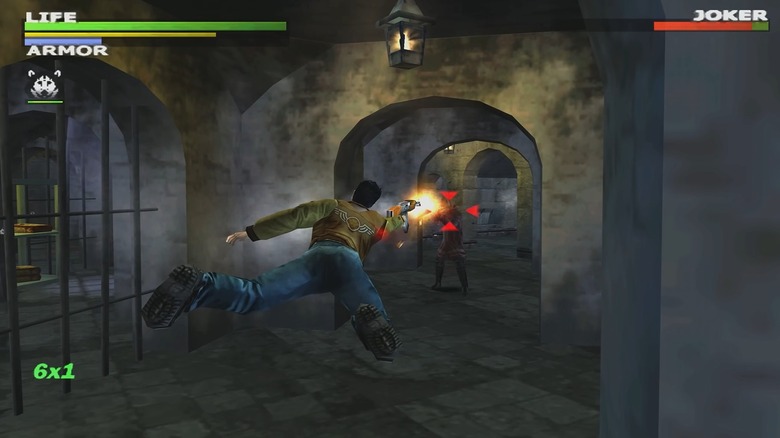
Let's start off with a game that's frequently listed as a "Max Payne" imitator, but it's really not. At a glance, sure, 2002's "Dead to Rights" looks a lot like "Max Payne." It's a dark-and-gritty story following a hard-boiled big-city cop who specializes in diving through the air and shooting bad guys in slow-motion. But that's where the similarities end.
"Dead to Rights," developed and published by Namco, has way more gameplay variety than "Max Payne," for better or worse. Rather than the tight, FPS-style reticle control of "Max Payne," "Dead to Rights" used an arcade-like auto-aim system for its shooting. It also featured a robust hand-to-hand combat system and a slew of minigames during key moments in the story. The shooting gameplay was pretty sub-par, even for its time, but the hand-to-hand combat was delightful and felt like a then-modern tribute to 2D arcade brawlers. Likewise, the delightfully ham-fisted over-the-top story indicated that Namco had their tongue firmly in-cheek when developing the world of "Dead to Rights."
The game was followed by a sequel (and a PSP spin-off), neither of which recaptured the magic of the original. In 2010, the series was given a next-gen reboot with "Dead to Rights: Retribution," which didn't make much of a splash but has solidified itself as a cult classic thanks to its outrageous levels of bloody violence and fantastic voice acting by Peter Giles as the protagonist, Jack Slate. Oh, and did we mention that all games feature Jack's dog, Shadow, who can bite enemies to death, either by ripping their throats out or even more, ahem, sensitive areas? It's as awesome as it sounds.
Control
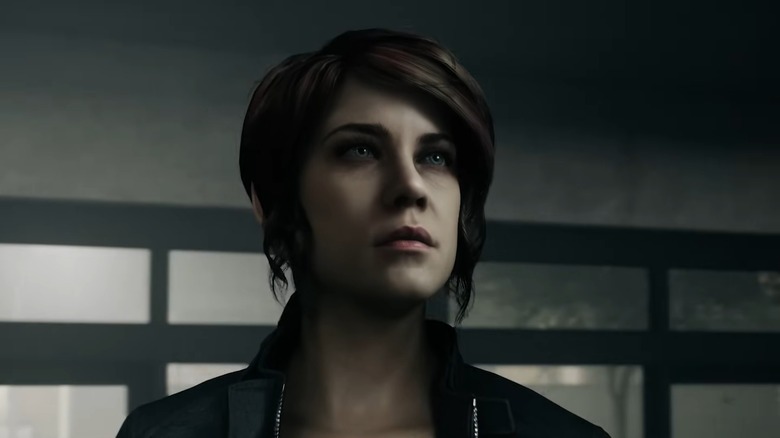
Who better to succeed "Max Payne" than the developers of that classic? After "Max Payne 2," Remedy moved on to other projects, including "Alan Wake," "Quantum Break," and the subject of this entry, "Control," which is part of the Remedy Connected Universe.
"Control" follows Jesse Faden, a young woman who goes to Manhattan to find her missing brother in The Oldest House, the headquarters of the mysterious FBC, or Federal Bureau of Control. Think of the FBC as something Fox Mulder from "The X-Files" would create if he had unlimited funds to start his own paranormal agency. After she finds the bureau director, Zachariah Trench (voiced by Max Payne himself, James McCaffrey) dead at his desk, she inherits the Service Weapon (it's a title, really) and becomes the new director. And that's the first five minutes of "Control."
It gets weirder from there, with Jesse having to fight off some kind of inter-dimensional invasion while exploring The Oldest House and uncovering some of its many secrets. But the core movement and gunplay feels ripped straight out of "Max Payne," with more telekinesis and other supernatural powers. A sequel, "Control Resonant," is available, with players taking on the role of Jesse's brother, Dylan. He specializes in heavy-hitting melee combat, rather than his sister's precision gunplay.
The Punisher
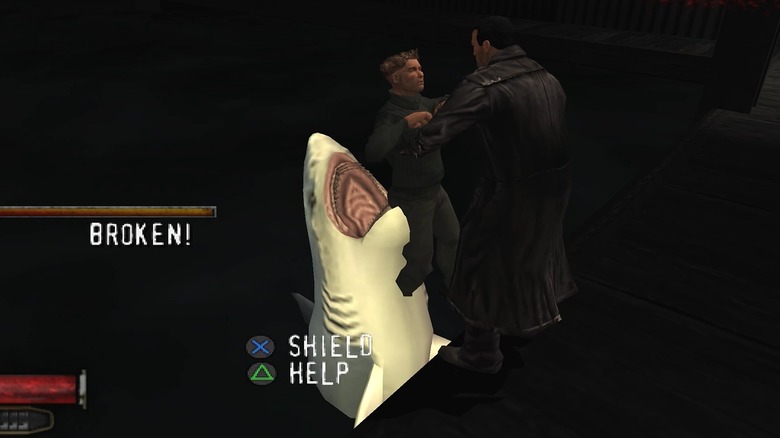
If you're hip to pop culture, you probably know the story of Frank Castle, aka The Punisher, by now. After his family is killed as collateral damage in a mob hit, the military veteran dedicates his life to a one-man war on crime, fought on his terms. The Punisher is one of Marvel Comics' most violent and controversial characters, and he got his own big-budget video game adaptation in 2005.
Ostensibly a sequel to the 2004 Thomas Jane film (with Jane reprising his role), "The Punisher," developed by Volition ("Red Faction," "Saints Row") draws its inspiration from the comics, and even counts comics legends Garth Ennis and Jimmy Palmiotti among its writing team. "The Punisher" is a third-person shooter with a unique 'interrogation' mechanic, where Frank can bring thugs to context-sensitive interrogation spots and scare them into giving up valuable information ... And then shove them through a table saw, drop them from a rooftop, or push their face into an airplane propeller, just to name some of the less extreme examples.
"The Punisher" is an absolute blast to play if you can stomach the violence, which got the game censored in its original release. If you're a Marvel fan, it features Black Widow and Nick Fury in supporting roles, with plenty more cameos and Easter Eggs peppered in throughout the story. Needless to say, it's surreal to see Iron Man suit up and kick some butt in an M-rated game. That's something that probably wouldn't happen today.
The Darkness
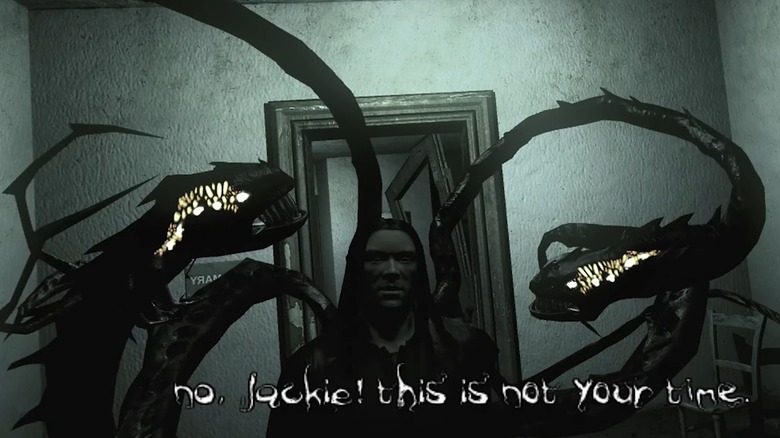
Like "Max Payne" and "The Punisher," 2007's "The Darkness" is set in the dingy streets of New York City and features dual-wielding gun combat. "The Darkness" has more of a supernatural edge, though, as it's based on the comic book of the same name. The tale sees a small-time gangster gifted with the powers of the eponymous Darkness, a demonic entity that helps young Jackie Estacado (voiced by Kirk Acevedo) to take out his enemies.
Developed by Starbreeze Studios, "The Darkness" is a spiritual successor to the studio's earlier game, "The Chronicles of Riddick: Escape from Butcher Bay." It's not a straightforward shooter, but a narrative-based adventure game with lots of stealth elements, exploration, RPG-style questing, and character interactions, in addition to the frantic gunplay. The story is dark, dramatic, and tremendously well-acted, full of shocking twists and one of the best love stories in video game history.
"The Darkness" was followed by a 2012 sequel. While less novel than the original, it upped the violence and action quotient and featured a new developer (Digital Extremes, today better known for "Warframe") and a cel-shaded art style. It's not a dramatic powerhouse like the original, but if you're looking for six hours or so of engaging FPS gun combat and hyper-violence, you're gonna have a good time with the sequel, as long as you keep your expectations in check.
John Woo Presents: Stranglehold
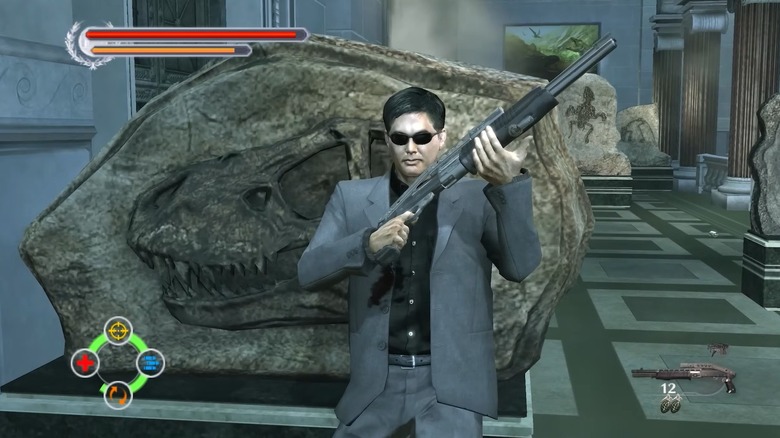
They say imitation is the sincerest form of flattery. The original "Max Payne" was proudly inspired by Hong Kong action cinema and had in-game shout-outs to legendary action director John Woo and the star of "Hard Boiled" and "The Killer," Chow Yun-fat. It turns out imitation can go both ways, as when John Woo and Chow Yun-fat teamed up for "Stranglehold," a video game sequel to 1992's "Hard Boiled," the game was heavily influenced by "Max Payne."
Developed by Midway Studios Chicago and released in 2007, "Stranglehold" plays a lot like "Max Payne," particularly the second game, but with more mobility options. Inspector Tequila can run along rails, swing from chandeliers, and ride on conspicuously placed food carts. The game also features unparalleled levels of environmental destruction. To this day, no game has implemented better destruction tech than "Stranglehold."
Critics were surprisingly lukewarm on "Stranglehold," dismissing it as little more than a mindless shooting gallery. They're not wrong, but that's hardly a bad thing! "Stranglehold" is six hours of non-stop shooting (literally non-stop, as Tequila never has to reload any of his guns!) with style and visceral impact. That might seem short, but it's the kind of game you'll find yourself returning to every now and then, because it's just that fun to blast enemies and the environment until everyone's dead and everything is broken to pieces. Cue the doves.