
5 Best Video Games Like Control Resonant
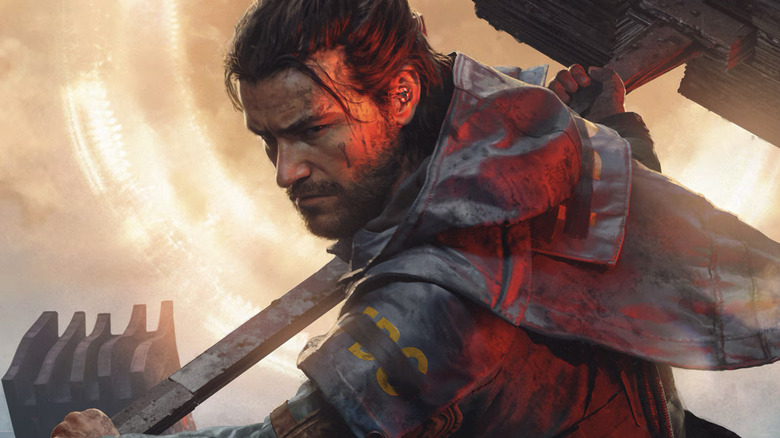
"Control Resonant," the follow-up to "Control" (both of which are set in the same universe as "Alan Wake") is arguably the most ambitious game yet released by developer Remedy Entertainment. And that's saying a lot for a developer that pushes creative and technological boundaries with every release. The mind-bending sci-fi action epic forgoes the largely indoor, office building-based environs of its predecessor and lets protagonist Dylan Faden loose in a version of Manhattan that sees him fling enemies through dense city streets and off the tops of skyscrapers.
Make no mistake: There is nothing else out there like "Control Resonant," save for the other games in its own series — and even then, "Control Resonant" stands alone. After all, Remedy's games typically inspire subsequent games rather than the other way around (though one of these examples proves there are exceptions to that). Still, there are a handful of games that share various elements of "Control Resonant," from the setting to the gameplay mechanics to the blending of sci-fi and the supernatural.
Infamous: Second Son
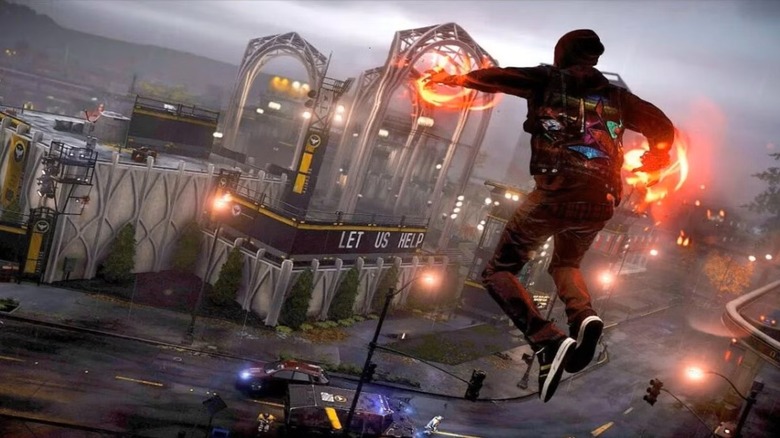
PlayStation's "Infamous" series of open-world action games comprise some of the best superhero video games ever made. The actual powers vary slightly from game to game depending on who the protagonist is, but they all center around similar combat and traversal abilities to what Dylan has in "Control Resonant." Also like Dylan, you are typically in the shoes of an antihero type in whatever "Infamous" game you are playing — though one of the franchise's best mechanics involves the player having a fair amount of choice in just how much they want to be a hero, an antihero, or even a straight-up villain, with the narrative ideal typically falling somewhere in the middle.
It's debatable what the actual best "Infamous" game is. The consensus seems to lean towards "Infamous 2" taking that distinction, though "Infamous: Second Son" usually fares plenty well. But we went with "Second Son" for three reasons. First, it just seems to "feel" the most like "Control Resonant" in terms of gameplay mechanics, plus its narrative sees the taking over of a new protagonist from the previously established one, just like "Control Resonant" does. Second, it's a technological marvel that pushed the PlayStation 4 to its limits. And lastly, but most importantly, "Second Son" was specifically cited as a source of inspiration for both the director and the combat designer for "Control Resonant."
Star Wars Jedi: Survivor
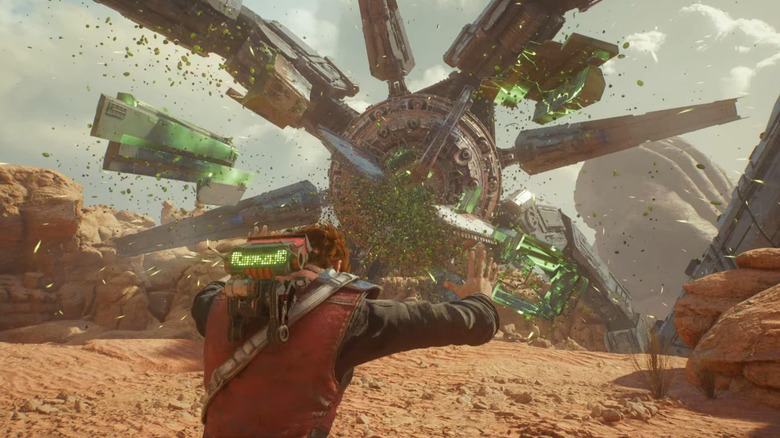
Any game that heavily features the mechanic of a character being able to push, lift, throw, and slam things around with their mind is bound to draw comparisons to the Force powers of the "Star Wars" universe. So any list of recommendations of games for fans of "Control Resonant" almost has to include a "Star Wars" game that stars a character who is especially adept in that regard. All due respect to Galen/Starkiller, the first "Star Wars" game character to lean heavily on Force push powers, but his games — "The Force Unleashed" series — never rose above mediocrity as a whole.
Fortunately, we have Cal Kestis to (Force) lean on, star of the "Star Wars Jedi" subseries of games. His first game, "Fallen Order," was great, but it's widely agreed upon that the follow up, "Survivor," improved upon it in almost every way. "Control Resonant" fans will be right at home in "Survivor," controlling a character with incredibly formidable telekenesis powers that is navigating impressive sci-fi locales while butting heads with an evil organization who seemingly controls pretty much everything. But you also get a lightsaber in "Survivor," so you've got that going for you, which is nice.
Prey (2017)
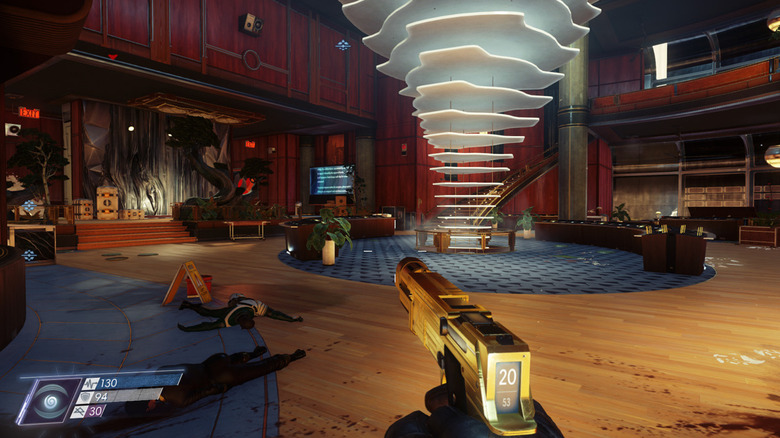
While it shares a name with 2006's "Prey" and features some similar elements, 2017's "Prey" is largely unconnected to its namesake. In fact, it feels more like a spiritual successor to "System Shock" than "Prey," and that confusion likely didn't do it any favors in its fate as a commercially underperforming game that saw all future franchise plans canceled as a result. That's really disappointing, since it's an absolutely awesome game.
So why are we recommending a first-person shooter to fans of "Control Resonant," a third-person action adventure game that features very little traditional "shooting?" It mostly comes down to the plot and the aesthetics of "Prey," which is also about a shadowy organization who must be stopped but must first actually be figured out in the process, all while taking players through areas that look a lot like real world environments but are soon proven to not be trustable as such.
Like "Control Resonant," you must be skeptical of every structure you see, every door you open, every corner you turn, and most importantly, every person you interact with in "Prey." And if you are lucky enough to play the game's opening without knowing how it ultimately unfolds, you are in for one of the coolest, most surprising opening sections of a video game you'll have ever played.
Metroid Prime Remastered
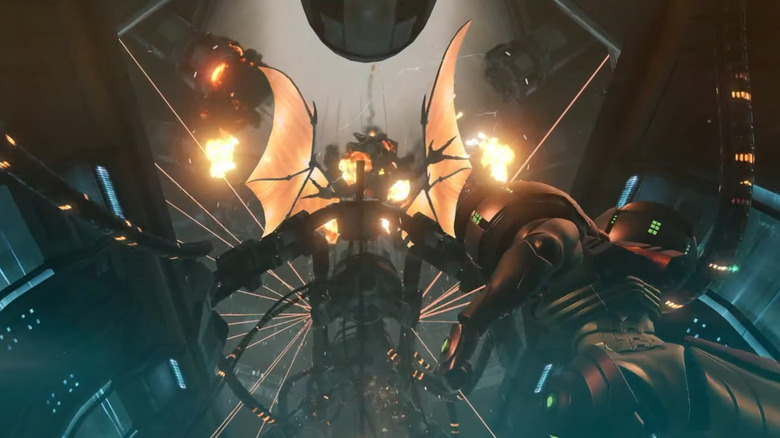
At first blush, it might not seem like "Control Resonant" would have absolutely anything in common with Nintendo's "Metroid" series. But it doesn't take too much analyzing (preferably with Samus's scan visor) before the throughlines shared by the two come into focus. Specifically, we're talking about "Metroid Prime," which is not only Samus's best 3D adventure to date, but is also the one that leans the heaviest on feelings of gloom, isolation, and unease that "Control Resonant" captures so well.
To be even more specific, we're recommending "Metroid Prime Remastered," the Switch version of the GameCube original. While titled as a remaster, it gets a bit closer to a remake in just how much the game was updated visually and the various quality of life tweaks that were brought into it. Most crucially, it's the only version of "Metroid Prime" to allow the choice between the lock on-based gameplay of the original and the free-look movement of the version in "Metroid Prime Trilogy."
This allows you to fully tailor the experience to your particular tactile preferences, making it the game's definitive release. Either way, you're in for a masterpiece of sci-fi action and exploration through a world that is either uncomfortably quiet or is trying to violently kill you from all sides, with no in between.
Psi-Ops: The Mindgate Conspiracy
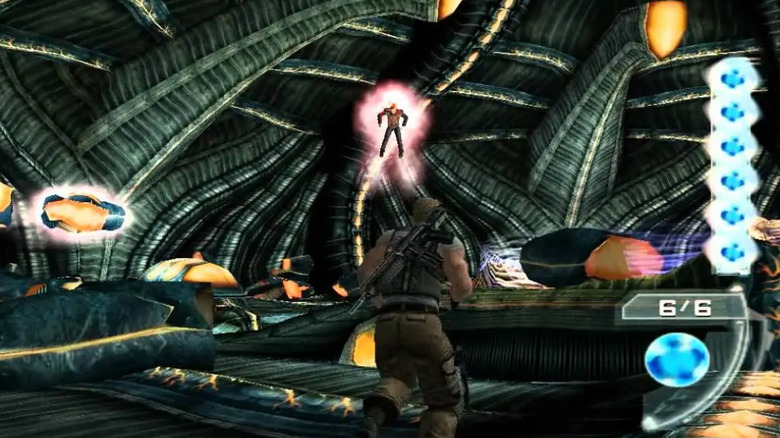
We saved this one for last because not everyone is going to be able to enjoy it. To go from "Control Resonant," one of the most graphically impressive games of all time, to a PlayStation 2-era game that didn't exactly push the limits of tech at the time won't be easy for most people. But if you have a fondness for early-2000s 3D games and have no trouble revisiting PS2, GameCube, and/or original Xbox games, you should definitely give "Psi-Ops: The Mindgate Conspiracy" a playthrough if you loved "Control Resonant."
While not the best-looking game of its era, "Psi-Ops" did a lot of groundbreaking things with its gameplay and how it allowed for manipulation of objects and enemies. The protagonist could lift both elements of the environment and enemies themselves with his mind, and could manipulate them as he saw fit to solve puzzles, overcome obstacles, and of course, to dispatch of said enemies. The gameplay was a little clunky, which is to be expected given all the ways "Psi-Ops" was tasking players with performing gameplay mechanics that were largely unseen before, but you get used to them after a couple of hours.
Once you've got the gameplay down, "Psi-Ops" became an enthralling, mind-bending technothriller that said a lot of the same things that "Control Resonant" says about corporate control, the dangers of putting too much trust into technology, and trying to keep oneself from becoming corrupted by the power at your literal fingertips.