
5 Best PlayStation Exclusives Of All Time, Ranked
The original PlayStation, first released in Japan in 1994, was Sony's attempt to break into the crowded video game market that was already dominated by Nintendo and Sega, with also-rans like the Atari Jaguar and 3DO struggling to keep up. Against all odds, Sony didn't just succeed, it utterly dominated the competition, with the Sony system selling over 102 million units, or about as much as the Super Nintendo, Nintendo 64, and Nintendo GameCube combined.
The PlayStation played host to hundreds of games. Sure, some of them were total stinkers, but some of them are among the greatest of all time. Some of these classics were also exclusive to Sony's machine. For this story, we're going to look at five of the the best PlayStation exclusives of all time. Some of these games were remade or remastered for later consoles or got digital re-releases as "PlayStation Classics" on future PlayStation generations, but in their initial release, were only on PlayStation.
That means we're not going to include games like "Metal Gear Solid" or "Final Fantasy VII," both of which received contemporary PC ports in their day, nor "Mega Man Legends," which was ported to the Nintendo 64 as "Mega Man 64."
Here are five games that are absolute must-plays for any PlayStation enthusiast.
Ape Escape
The original PlayStation controller looked a lot like a modified version of a Super Nintendo controller, with four face buttons, a directional pad, Start and Select buttons, and an extra pair of shoulder buttons compared to Nintendo's device. In 1997, PlayStation introduced the Dual Analog Controller and then the DualShock, presumably in response to the analog stick featured as part of the Nintendo 64 controller.
For the most part, the PlayStation never really took full advantage of the analog controller. Games could use the D-pad or the analog stick interchangeably, but there was one huge exception: 1999's "Ape Escape." This game could only be played using the analog controller and made use of the sticks, as well as the R3 and L3 buttons, which confused many 90s kids who didn't even realize you could click the sticks like buttons.
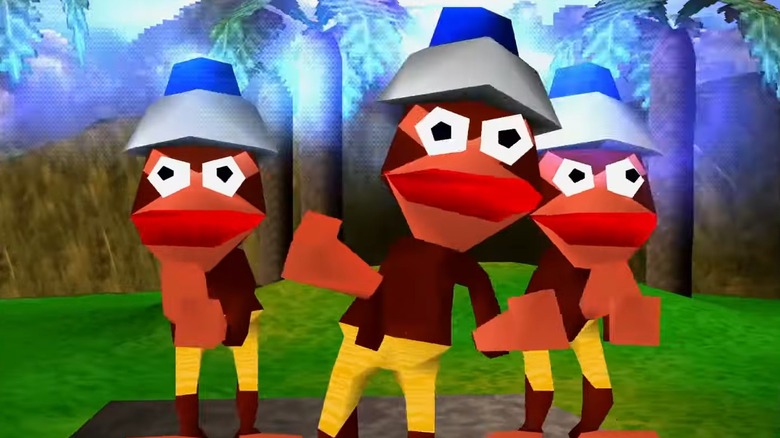
"Ape Escape" is a jolly action-platformer with stealth elements. Players control Spike, a young boy tasked with traveling through time to capture a whole bunch of runaway monkeys. It's a wacky game that balances its charmingly absurd premise with tricky platforming challenges and difficult combat against Uzi-toting monkeys and some truly devious boss encounters. Multiple sequels followed for PlayStation 2, but the series has been largely absent for decades, save for a glorious shout-out in 2024's "Astro Bot."
Spyro the Dragon
Following the blockbuster success of "Super Mario 64," every studio and publisher wanted their own 3D sandbox platformer to compete. Many of these games were mediocre and have thus been forgotten, but a few managed to become timeless classics themselves, such as "Spyro the Dragon."
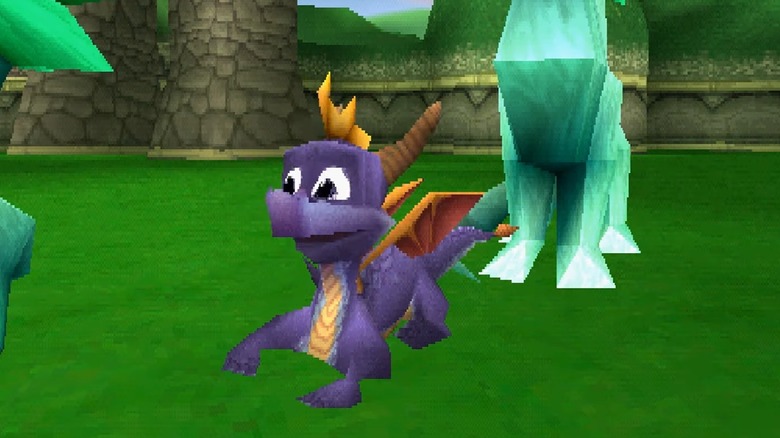
At a glance, "Spyro" looks a bit like "Mario 64." Levels allow for exploration in multiple directions and feature tons of collectables to find. But the gameplay is entirely different. The title character, a diminutive kid dragon, makes strong use of his dragon traits to navigate the world and fight enemies. He can use his wings to glide across long distances, he can breathe fire to torch bad guys (and sheep), and he can charge with his horns, knocking out any enemies in his way while benefitting from a nice speed boost. Moving around as Spyro is a fundamentally different experience to moving around as Mario, but it captures the same energy of making basic navigation fun.
"Spyro the Dragon" was a huge success for PlayStation and led to a trilogy of great titles for that classic console, as well as a slew of less-than-great sequels for PlayStation 2 and beyond. Eventually, the series went back to basics with the "Spyro Reignited Trilogy" for the PlayStation 4 era, which found great success. A new game, "Spyro: A Realm Beyond," from "Reignited" developers Toys for Bob, is slated for release in 2027.
Legend of Legaia
The 1990s were a golden era of turn-based JRPGs. It arguably began during the SNES era with games like "Final Fantasy IV," "Chrono Trigger," "Super Mario RPG," and Sega's "Phantasy Star" series, and it continued into the PlayStation era. Thanks to the extra storage space of CD-ROM technology over game cartridges, the PlayStation became the default home to the whole JRPG genre. Games like "Final Fantasy VII," "Legend of Dragoon," "Star Ocean: The Second Story," and "Wild Arms" are all excellent, but none pushed the PlayStation to its limits like "Legend of Legaia."
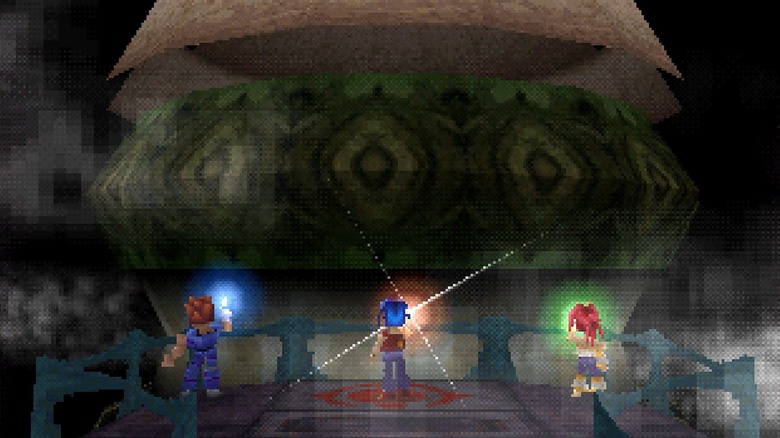
"Legend of Legaia" is a bit like "Chrono Trigger" in that it's a great RPG for newcomers to the genre, with a captivating battle system that encourages player creativity and features spectacular visual effects. The game also features an excellent story about a trio of young warriors who travel the world on a quest to revive the Genesis Trees that have the power to drive back The Mist, which has corrupted the land and turned friendly Seru creatures into savage monsters.
Unlike contemporary "Final Fantasy" games of the era, "Legend of Legaia" uses full 3D graphics instead of 2D backgrounds, allowing for dynamic camera angles and more expressive character close-ups. If you're someone who likes to speed through battles, maybe "Legend of Legaia" will be a bit too slow for you, but if you want a JRPG that features top-notch PS1 graphics and a wholly unique fighting system, there's nothing else out there quite like "Legend of Legaia," and it absolutely deserves a modern remake.
Crash Bandicoot 2
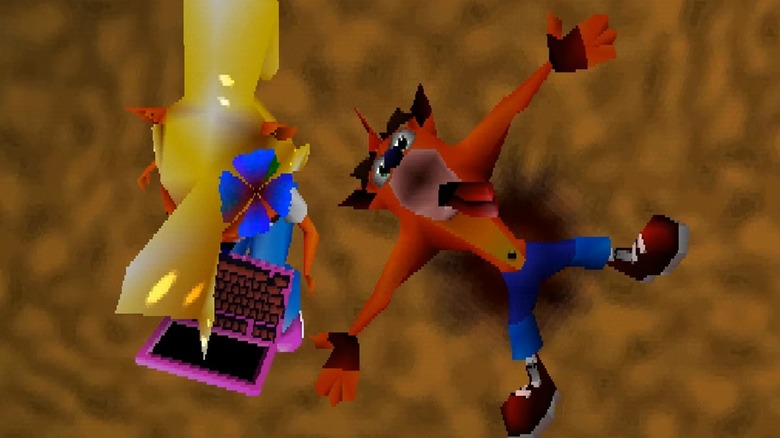
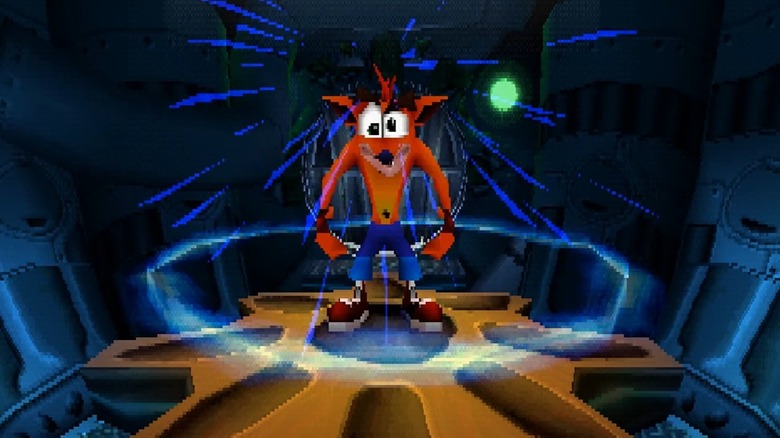
"Crash Bandicoot" wasn't the first high-profile PlayStation exclusive, but there was something about that anthropomorphic orange marsupial in blue jeans that resonated with players. Crash became the de facto mascot for PlayStation, and hopes were high for the sequel. To put it mildly, 1997's "Crash Bandicoot 2: Cortex Strikes Back" succeeded beyond all expectations.
Rather than attempting to switch gears and copy the success of "Mario 64," developer Naughty Dog decided to take the basic formula that worked in the original "Crash Bandicoot" and refine it to the point of perfection. The game was still 2.5D, with a fixed camera and linear levels, but the controls were improved, the jump physics were perfected, and the new slide-jump mechanic made platforming more fun than ever before. Levels were linear but still packed with secrets to discover.
From start to finish, "Crash 2" is non-stop platforming bliss. Some people prefer the audacious gameplay variety present in 1998's "Crash Bandicoot: Warped," but others, myself included, prefer the comparable simplicity of "Crash 2." It's not just an all-time PlayStation classic, but it's one of the greatest platforming games of all time.
Um Jammer Lammy
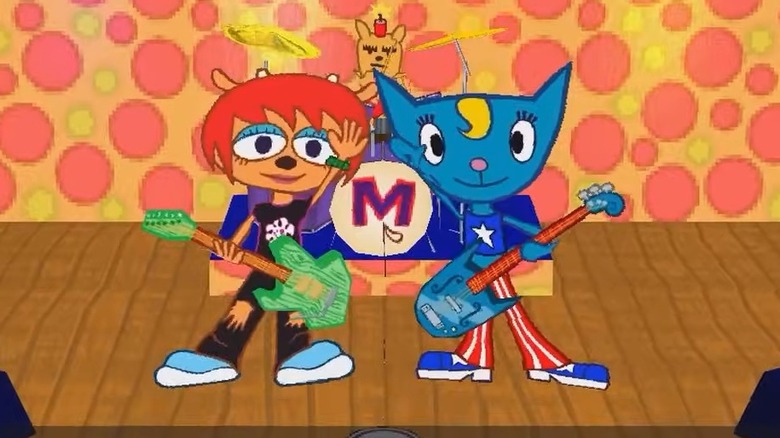
Before "Guitar Hero" and "Rock Band" took over the world of rhythm gaming, music-based titles were relatively niche. One of the most well-known music games on the PlayStation was "Parappa the Rapper," but I have to give the edge to its sequel/spin-off, "Um Jammer Lammy," released in 1999.
This game is a stand-alone sequel to "Parappa the Rapper" and follows young guitar player Lammy as she has one heck of a day trying to get to her band's big gig. The gameplay is practically identical to "Parappa the Rapper," but it's even better thanks to Lammy's use of a guitar as her instrument of choice. Improvising guitar licks feels more natural than Parappa's rapping.
The soundtrack of original songs is full of delightful tunes ("Baby Baby!!" is my favorite) that can be played in solo story mode, as well as multiplayer versus and co-op modes with a playable Parappa as a special guest. For an arcade-style rhythm game, there's actually quite a bit of content here for players to sink their teeth into, as well as an extremely high skill ceiling that few players will ever be able to truly master. If you've played the "Parappa" games but haven't played "Um Jammer Lammy" yet, you're missing the best one, not to mention one of the best PS1 games ever made.