
5 Nintendo 64 Games With The Best Graphics, Ranked
In the mid-1990s, the video game industry was leaning away from cartridge-based media towards the CD-ROM format. CDs were cheaper to produce, could hold more data, and were more versatile than game cartridges. The Sega Saturn and PlayStation used CD media, but Nintendo rejected the format, opting to stick with game cartridge technology.
For better or worse, this gave the Nintendo 64 a unique identity. Nintendo 64 games were simply different from the competition. N64 versions of multiplatform titles often felt different enough to be like their own experience. They simply looked and felt different to play (and usually lacked FMV sequences due to memory limitations).
While some N64 games struggled to make use of Nintendo's formidable hardware, others leaned into its strengths and created experiences that were impossible on rival platforms. Let's look at a quintet of excellent games that pushed the N64 hardware to its limits. These titles have visuals above and beyond their contemporaries and showed that the N64 was, indeed, a truly remarkable machine.
Star Wars Episode I: Battle For Naboo
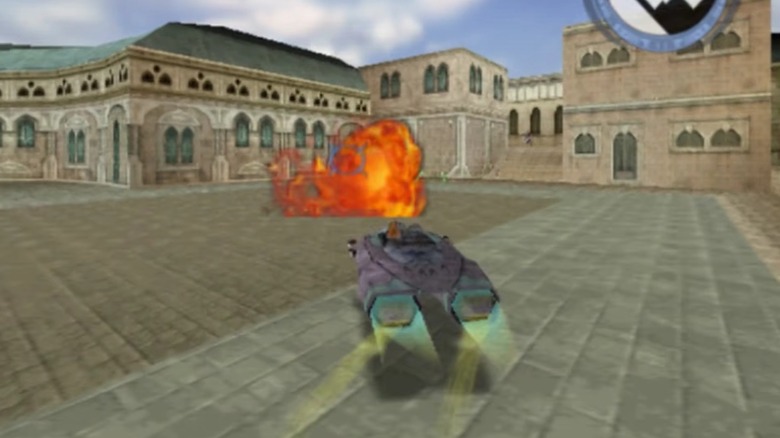
Everyone remembers "Star Wars: Rogue Squadron," and everyone remembers its sequel on GameCube, "Star Wars Rogue Squadron II: Rogue Leader," but who remembers "Star Wars Episode I: Battle for Naboo"? Released for Nintendo 64 in December of 2000, it was a late tie-in for a movie released in May of 1999, and the writing was already on the wall for the N64. Thus, "Battle for Naboo" was a great game that was nevertheless too little, too late.
Essentially a pseudo-sequel/spin-off to "Rogue Squadron," "Battle for Naboo" features vehicular combat in the "Star Wars" universe, though rather than X-Wings and other spaceships, "Battle for Naboo" also includes land and amphibious vehicles. Despite being set nearly entirely on Naboo, the game features a broad visual variety, with large-scale battles and surprisingly far draw distances — at least, by N64 standards.
It's a shame that "Battle for Naboo" isn't remembered as fondly as the "Rogue Squadron" games, since it's ostensibly a lost chapter in that saga, and certainly a better game than "Rebel Strike," with its ill-advised on-foot segments. It also squeezed every mega-byte out of the N64, even going so far as to include unlockable audio commentaries on its levels. While that's not technically a visual feature, it's evidence that developer Factor 5 were absolute masters of the N64 hardware.
Resident Evil 2
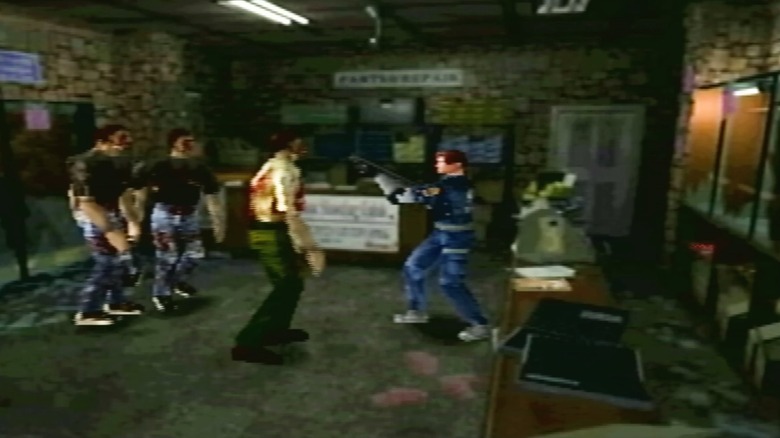
This is the only title in this story that isn't a Nintendo 64 exclusive. Originally released on two CD-Roms for the Sony PlayStation in January of 1998, the Nintendo 64 port of "Resident Evil 2" launched in November of 1999, nearly two years later. At a glance, "Resident Evil 2" seems like the kind of game that shouldn't exist on N64. It features extensive voice acting, FMV sequences, and tons of pre-rendered backgrounds.
However, thanks to the wizards at Angel Studios (now known as Rockstar San Diego), they managed to cram all the "Resident Evil 2" game data onto a single 64mb game cart. It's a miracle port. There's no other way to describe it. Are there compromises? Yes. The audio is heavily compressed to fit on the game cartridge, and one of the FMV sequences is copied across both the Leon and Claire scenarios, while it's two different cutscenes on PlayStation. But it also has features that weren't on the PlayStation version, like a randomizer mode, a surround sound soundtrack, and EX Files that tied in with the larger "RE" mythology, including games that hadn't been released yet, including "Code Veronica" and "Resident Evil Zero."
At the end of the day, "Resident Evil 2" on Nintendo 64 is an amazing conversion of the PlayStation original and a testament to how skilled programmers could coax Nintendo's machine into delivering incredible results. It might not look as slick as the Dreamcast version (or the oft-forgotten GameCube port), but it's amazing that they were able to get "Resident Evil 2" running on N64 at all.
GoldenEye 007
You might think "Perfect Dark" is more deserving of a spot than "GoldenEye 007." After all, it has bigger levels, more complex weapons, and more ambitious visuals. This is true, but it also runs like hot garbage on original hardware, with the framerate frequently dragging down to single digits.
The visuals of the "Perfect Dark" spiritual predecessor, "GoldenEye 007," hold up better in hindsight. The framerate isn't great, mind you, especially in four-player splitscreen, but it's rarely as downright dreadful as in "Perfect Dark."
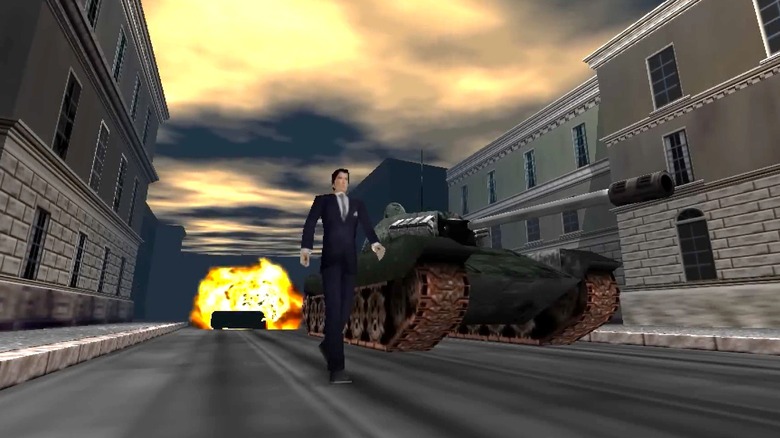
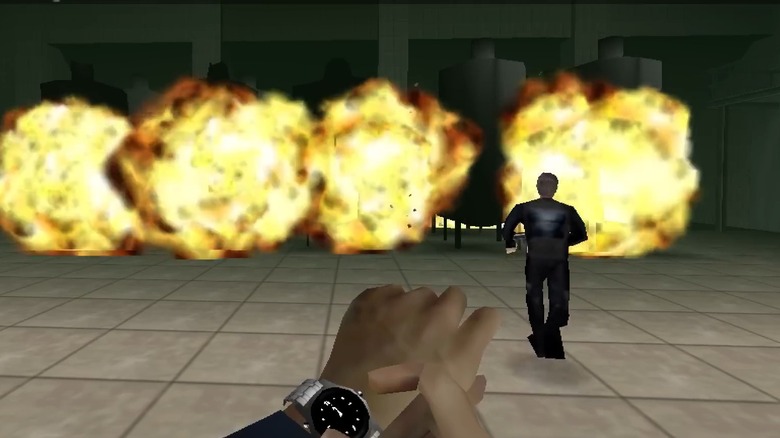
"GoldenEye 007" lets you run around in levels ripped straight out of the film on which it's based, and they all have an earthy, grounded feel to them. The game really shines with its environmental interactions, since tons of objects across the levels can be shot to pieces. Even better, many objects explode, regardless of whether they even seem flammable. It's a little silly, sure, but it's also glorious.
"GoldenEye 007" was a groundbreaking FPS when it first released back in 1997, and it's still an absolute joy to play today, whether you're playing the solo story mode or blasting your buddies in local multiplayer, which was a console-defining experience. Of course, the best way to play in 2026 is via the Xbox remaster, but it's still a ton of fun on original hardware, if you still have an N64 lying around.
The Legend of Zelda: Majora's Mask
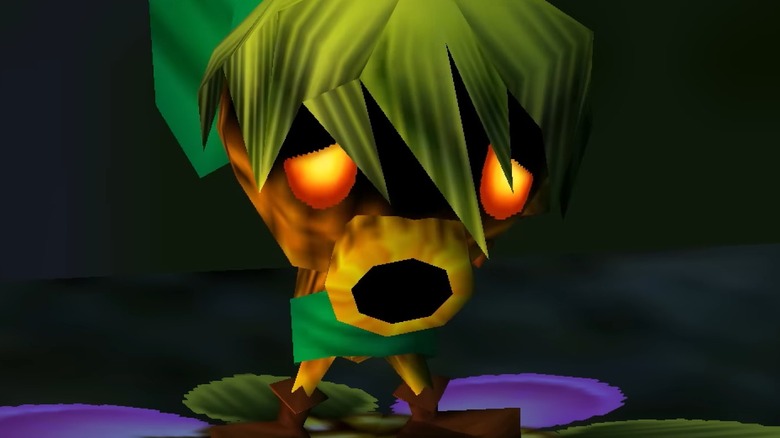
Sure, "Ocarina of Time" gets all the attention as one of the games owned by every N64 player, but "The Legend of Zelda: Majora's Mask" is the cult favorite among hardcore "Zelda" enthusiasts. While "Ocarina of Time" proved that the classic Nintendo series could work in 3D, "Majora's Mask" took the "Link's Awakening" approach, eschewing the mythology of the series for something delightfully weird.
The legend goes that "Majora's Mask" was conceived as a quick-and-dirty asset flip of "Ocarina of Time," a way to make a new game with a limited budget in just a year or so. In a safer, less ambitious universe, "Majora's Mask" would be little more than an expansion for "Ocarina of Time." Thankfully, Nintendo went in a different direction, going for a surreal, dark, and other-worldly vibe, using familiar assets to create something akin to a bizarro version of "Ocarina of Time." There's nothing creepier than wearing a mask to transform into a Deku or Zora. The transformation is not depicted as jolly, but as harrowing and spooky.
It's worth noting that "Majora's Mask" requires the N64 Expansion Pak to play, which means it can punch above and beyond what its predecessor could do. The world feels smaller than that of "Ocarina," but the land of Termina is rich with detail and dense with characters whose stories are just waiting to be explored. Clock Town feels bigger and more alive than any location from any other "Zelda" game, before or since. The graphics of "Majora's Mask" might seem similar to those of "Ocarina of Time," but it does more with them than "Ocarina" could have ever imagined.
Paper Mario
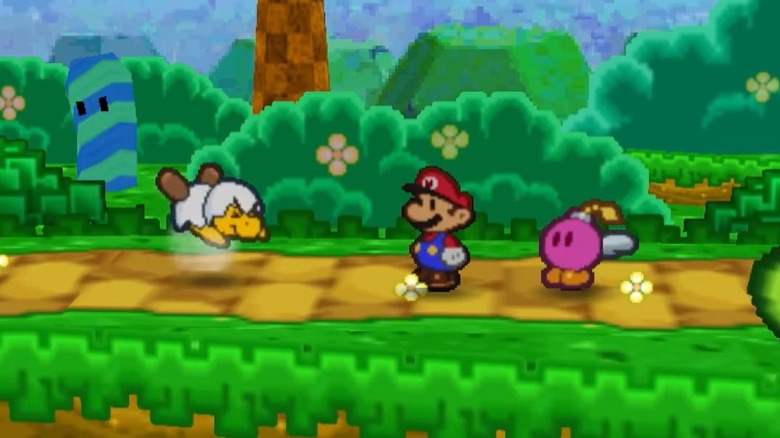
The legend goes that "Paper Mario" started out as "Super Mario RPG 2," but for one reason or another it was decided it should be a stand-alone experience. Nevertheless, if you play "Paper Mario" looking for a successor to "Super Mario RPG," you won't be disappointed. "Paper Mario" features an evolved version of the 'timed hits' system from "Mario RPG," a comical story, and even characters and locations from that SNES classic.
In any case, "Paper Mario" is best remembered for its incredible art style. The game features a 3D world, albeit with fixed camera angles, but the characters are all comprised of 2D sprites that look like literal paper cutouts. The art style is so perfectly conveyed, "Paper Mario" immediately cemented its place as one of the most gorgeous video games of all time. The game never received an official remake/remaster, though it is available to play on Nintendo Switch as part of its 'Nintendo 64' classics lineup, and it's easily the best-looking of the bunch.
"Paper Mario" released in America in 2001 as one of the final high-profile N64 games. Despite the console's reputation for innovation and unique experiences, the hardware didn't catch on with players like the PlayStation did. Even so, "Paper Mario" allowed the system to go out on one heck of a high note. It's easily the best RPG on the system (though it admittedly had very little competition in that race), as well as one of the most beautiful games ever made.