
5 PS2 Games With The Best Graphics, Ranked
If the PlayStation marked the proper debut of 3D gaming into the mainstream console space, then the PlayStation 2 perfected the look and feel of this new 3D status quo. Gone were the warped textures and excessive dithering of the PS1 generation. In the PS2 era, more and more games featured flashy particle effects, high framerates, and fully-realized massive worlds that would have been impossible on prior consoles.
Let's take a look at five particularly stunning PS2 games. These titles were all console exclusives in their original release. Coincidentally, all five of these games have since been remastered for subsequent generations, but we're only looking at the merits of the PS2 originals for this story. They were also all noteworthy hits, not forgotten classics that pushed the system to its limits.
These games used their incredible visuals as more than just window-dressing. The visual fidelity of these games enabled next-gen gameplay and storytelling that was only possible with the power of the advanced PS2 hardware. Here are five PlayStation 2 games from the 21st century with incredible visuals beyond what anyone could have imagined back in PS1 days.
5. Kingdom Hearts II
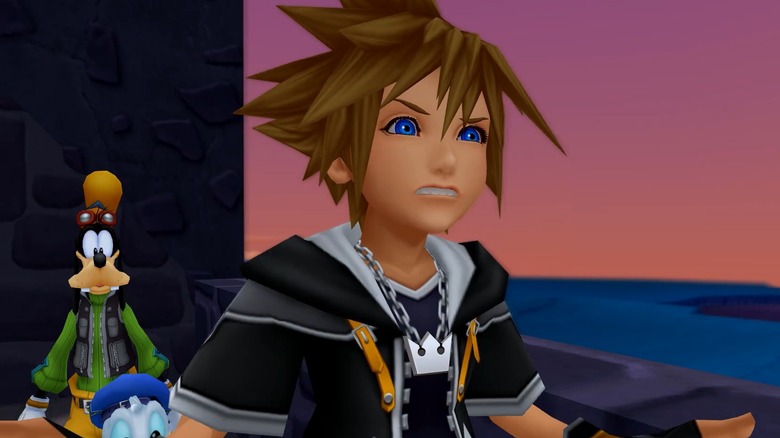
The original "Kingdom Hearts" was an unlikely fusion of Disney and "Final Fantasy." Its success spawned a franchise that's been going strong for well over 20 years. However, it was the 2005 sequel (released in North America in 2006) that established the series as a visual powerhouse.
"Kingdom Hearts II" built on the foundation of the original game but pushed up the visual fidelity in every conceivable way. The combat was faster and flashier, with incredible animations and screen-filling particle effects. The environments were larger and more detailed. The character models were better and had high quality textures.
In the original game, only a couple of worlds had Sora and his party don new outfits to fit in, but "Kingdom Hearts II" pushed it to the next level, with the world based on "The Lion King" featuring an adorable feline version of Sora, and the 'Space Paranoids' world from "Tron" seeing the gang decked out in cyber-themed outfits that came straight out of that classic 1980s film. And don't even get me started on the legendary 'Timeless River' world, based on classic Disney cartoons from the 1920s and 1930s.
To this day, games like "Kingdom Hearts: Melody of Memory" still use visuals based on "Kingdom Hearts II." In fact, when "KHII" was remastered for PlayStation 3 (and then re-remastered for PS4 and even re-re-remastered for PS5 in 2026), "Kingdom Hearts II" stood out as having a particularly timeless look.
4. God of War II
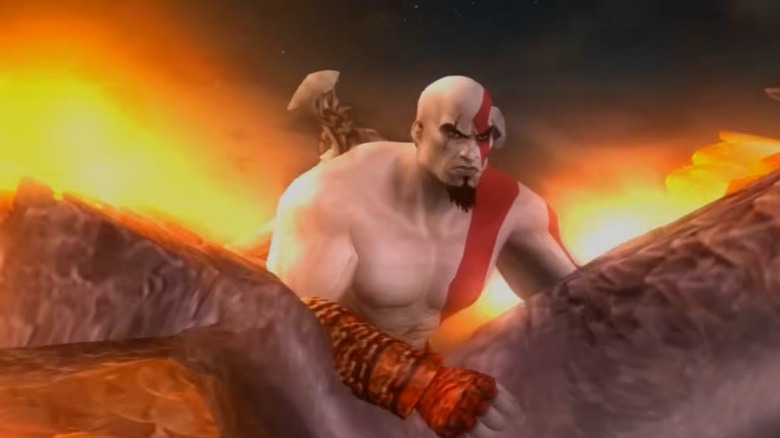
The PlayStation 3 released in late 2006, and "God of War II" released in March of 2007, as a PlayStation 2 exclusive. However, thanks to the PS3's lack of popularity early on, "God of War II" wasn't drowned out by the early days of the new console, since it took quite a while for the PS3 to become popular.
In a way, "God of War II" was proof that you didn't need to upgrade to the PS3 just yet in early 2007. It was basically just like the first game, but bigger and better, especially with regard to the visuals. The game made use of the same fixed cameras as the original to allow for a highly curated visual experience. Due to the lack of camera control, the player would only ever see what the game decided you needed to see, and that allowed for truly breathtaking setpiece moments. Kratos goes up against enemies that are absolutely massive, and when the camera pulls out to show these gigantic foes while still allowing the player to control Kratos (even when he's the size of a speck on the corner of the screen), you really feel like you're on a larger-than-life mythical adventure worthy of the Greek mythology on which "God of War II" is based.
In the end, "God of War II" ends on an iconic cliffhanger that leads directly into "God of War III," which would be released in 2010 for PlayStation 3. That game would likewise showcase the capabilities of the PS3, but it did so by standing on the shoulders of what "God of War II" accomplished on PS2.
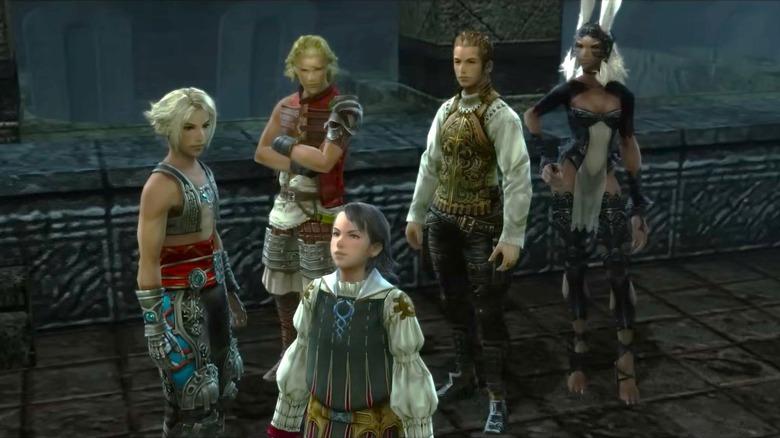
3. Final Fantasy XII
If the PS1 era marked something of a golden age for JRPGs and the "Final Fantasy" series in particular, then the PS2 years were a combination of a victory lap and an experimental phase. Games like "Final Fantasy X-2," "Final Fantasy Crystal Chronicles," and "Final Fantasy XI" distanced themselves from the traditional formula, but they were nonetheless beloved by their disparate fanbases, all of whom considered themselves fans of "Final Fantasy."
This era of the series culminated with 2006's "Final Fantasy XII," the last mainline "Final Fantasy" released for the PS2. Regardless of one's feelings on the game itself, everyone could agree that it's a real looker. "FFXII" has one of the largest-feeling worlds ever seen in the series. In a major change for the series, the game no longer has random encounters, but battles that occur on the field without a transition to a battle screen. The character models are all extremely detailed and the environments are large and believable in a way that was unprecedented for the series.
Of course, that's not even including the pre-rendered FMV sequences, which once again raised the bar for the series. Traditionally, "Final Fantasy" games since "FFVII" were legendary for their use of FMV cutscenes during key story moments. Perhaps, then, it's telling that "Final Fantasy XII" felt like the first time in the series the in-game graphics had reached a level of fidelity that meant pre-rendered FMV sequences were no longer necessary.
2. Shadow of the Colossus
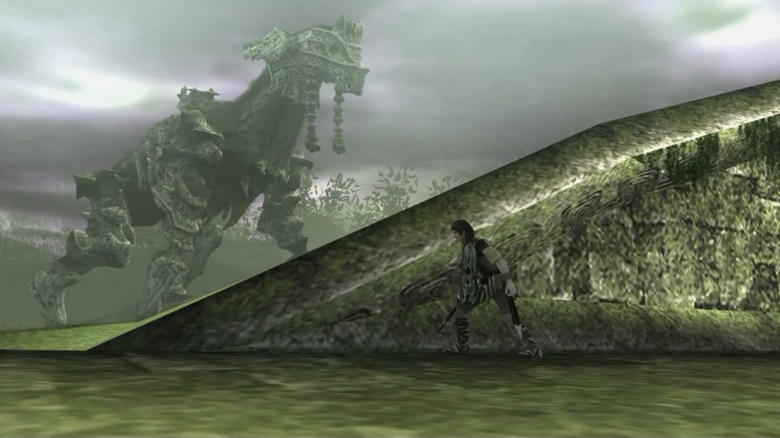
Following the cult success of "ICO," director Fumito Ueda and his team set out to develop a pseudo-sequel, and the result was 2005's "Shadow of the Colossus." Set in a massive and curiously empty open world, the game has the player character exploring, finding the titular colossi, and brutally slaying them in an effort to bring his fallen love back to life, no matter the cost to the world and his own soul.
It's a tale told via minimalist cutscenes, palpable atmosphere, and ample visual storytelling. Each fight against a Colossus is an epic battle of attrition, with the player tasked with climbing the massive creatures and stabbing them to death with his sword. You know you hit a weak point when a veritable fountain of ink-black blood spurts from their wound. The size and scale of some of these monsters is truly awe-inspiring, even if the framerate struggles to keep up during these hectic battles.
Even more than two decades later, "Shadow of the Colossus" is still talked about by fans who debate its themes and deeper messages. The game was remastered (alongside "ICO") for PlayStation 3 and received a full remake for PlayStation 4 in 2018. While both of those versions have their strengths and weaknesses, there's still nothing in the world quite like playing the original version of "Shadow of the Colossus" on original PS2 hardware on a CRT television. Maybe you just had to be there.
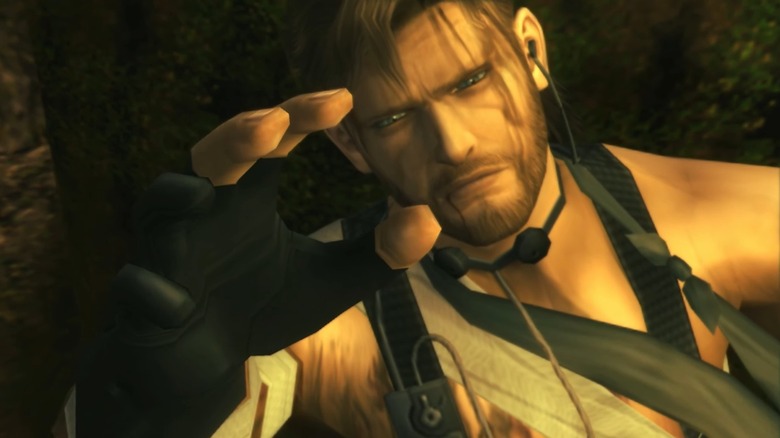
1. Metal Gear Solid 3: Snake Eater
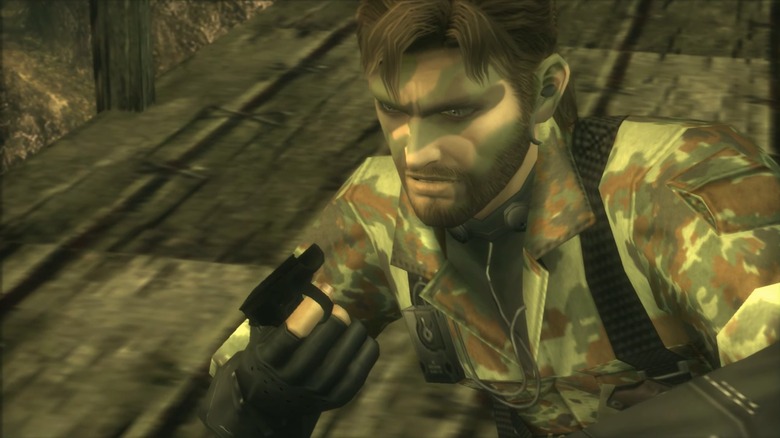
After the revolutionary release of "MGS2" in 2001, fans were curious to see what Kojima and his team at Konami would do next in the ongoing and ever-expanding story of the franchise. For better and for worse, "Metal Gear Solid 3: Snake Eater" pushes the PS2 to its absolute limits, but probably should have been held over for the next generation of Sony hardware.
"MGS3" features a brand new graphics engine compared to its predecessor. While the framerate has been cut to 30 FPS from the stellar 60 FPS present in "MGS2," every other aspect of the visual presentation has been greatly improved. The facial animations are much more complex and lifelike, the environments are larger and more dynamic, and the environment is literally full of life, with tons of animals walking, flying, and slithering around the jungles, mountains, and caves of Tselinoyarsk.
However, the setting of "MGS3" is not an open world, but a series of rooms separated by loading screens, just like previous "Metal Gear Solid" games. It's certainly 'wider' than prior games, but you still feel like you're making your way through a linear path; it just happens to look like a big, gorgeous, jungle. It's a pity, then, that when Konami remade the game as "Metal Gear Solid Delta" in 2025, they opted for a safe, 'shot-for-shot' style using the same level design as the original, rather than reimagining the game's fundamental design from the ground up.