
5 Best Video Game Endings Of All Time, Ranked
When it comes to any grand adventure, they say it's about the journey, not the destination. We guess that's true, but you know what? It would sure be swell if the destination turned out to be worth the effort it took to get there. While a game's opening is also important, if a game (or movie or TV show, for that matter) nails the ending, you can forgive a meandering middle, or an otherwise undercooked third act.
Let's take a look at some games with truly exceptional endings. Note that we are looking at individual games, not overall franchises. Even if a game ends on a cliffhanger, that's still an ending. Sometimes a cliffhanger can be the best kind of ending, since it can present so many questions, so much possibility, all while passing the buck to the next entry to actually bring things to a close. Is it a cheat? Maybe. Can it inspire years of discourse and theorizing about the future and deeper meaning of the story at hand? Absolutely.
Needless to say, there will be unmarked spoilers for all of the games mentioned in this story, so if you haven't played one of them yet, feel free to skip to the next entry. Now, without further ado, here are a selection of video games with, what we think, have the best endings.
Red Dead Redemption
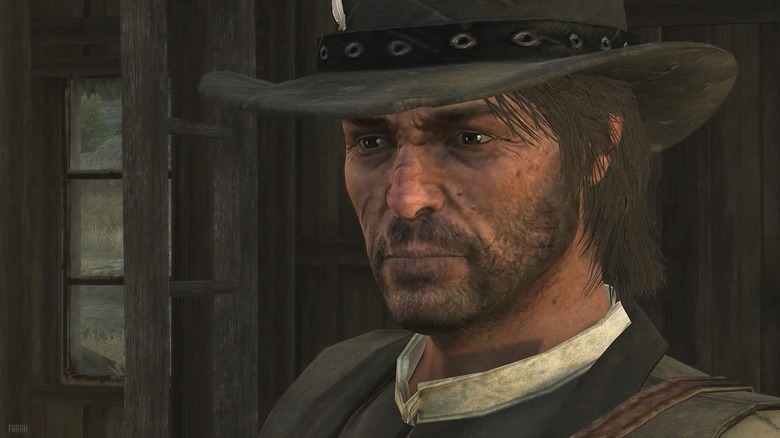
Speaking of being "blown away," let's begin with "Red Dead Redemption." This GTA-inspired Western from Rockstar Games follows protagonist John Marston as he hunts down members of his old gang on orders from agents of the United States government. In exchange for his freedom (and more immediately, the safety of his loved ones), Marston tracks and kills all of his old friends, along with plenty of others along the way.
In the end, though, Marston accomplished his mission, but learns the hard way that G-Men never intended to honor the deal, ultimately meaning he outlived his usefulness. He makes his last stand at his family's homestead, buying time for his wife and son to escape while he takes on a team of highly trained Army soldiers. Alas, he can't hold them off forever, and ultimately goes down in a bloody hail of gunfire.
But that's not the true ending. The game picks up again three years later, with the player taking on the role of the son, Jack Marston, as he begins his own outlaw journey by confronting Edgar Ross, the agent responsible for the whole debacle in the first place. The younger Marston challenges Ross to a duel and guns down the old retiree with little effort. It's hard to believe the cycle of violent revenge ended with Jack's murder of Ross, though. Even as the era of the Old West draws to a close, man's inhumanity towards man continues.
The Last of Us
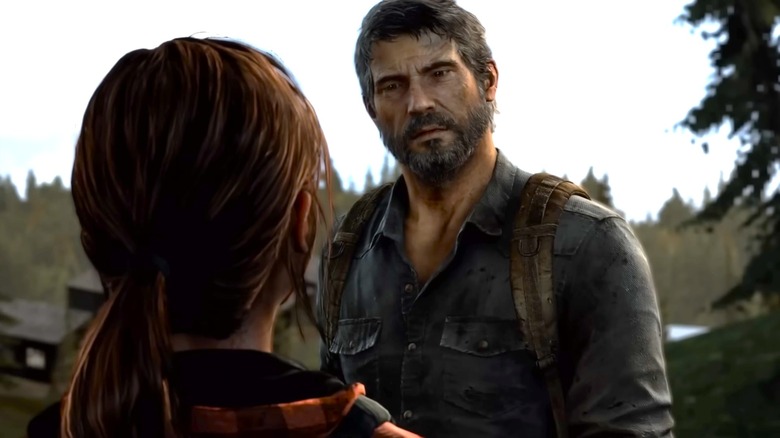
"The Last of Us" follows Joel and Ellie. Joel is a jaded cynic who lost it all and now makes a living doing jobs that only a hardened, post-apocalyptic killer can do. Ellie is a young girl who is mysteriously immune to the infection. Joel has to take her on a cross-country trip to deliver her to the rebel group, the Fireflies, who claim they can use her special properties to cure the world.
But there's a catch: They have to tear out her brain to study it, which would obviously kill her in the process. After spending the whole game bonding with Ellie and essentially adopting her as a replacement for his daughter who died at the outbreak's onset, Joel will not let anyone hurt her. Even if she's willing to go through the procedure for the greater good.
Joel storms the hospital, killing nearly everyone inside, including the doctor who wants to perform the unethical surgery. He carries Ellie's unconscious body away and makes up a story about how the Fireflies have given up on the prospect of a cure. The game ends with Ellie clearly knowing that Joel is lying to her. It's a tragic and complicated ending that asks players to decide for themselves if Joel did the right thing. In fact, the entire story of "The Last of Us Part II" revolves around the fallout of this ending, with Joel and Ellie's relationship fractured as she searches for new purpose after Joel saved her life but arguably doomed the world.
Final Fantasy VII: Rebirth
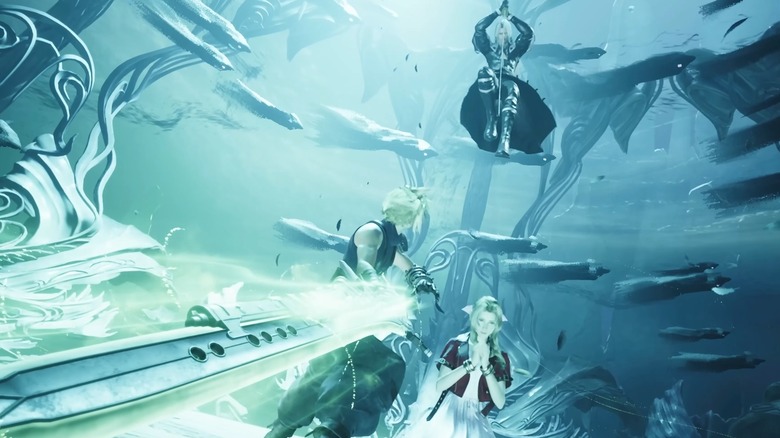
There are cliffhangers, and then there's "Final Fantasy VII: Rebirth." From the outset, Square Enix made clear that this second part of the Final Fantasy Remake trilogy would end at the Forgotten City, the end of Disk 1 of the original PlayStation classic. Fans of the PS1 game remember what happened in the original at this point. This is where Sephiroth brutally murders Aerith, the flower girl from the slums and one of protagonist Cloud's dearest friends.
The trick behind the Final Fantasy Remake games is that they're not step-by-step remakes. As a twist, there is the unique possibility that things can be different in this retelling, that there are forces behind the scenes conspiring to change the outcome of the original story. Naturally, this led to the question: "Can Aerith survive?" After all, her death in the original was so shocking that rumors persisted for years that she could somehow be saved from her fate or revived afterwards. These rumors were untrue, of course, but the idea of being able to save her was too good to ignore for this redux, a literal "redo" of the events of "Final Fantasy VII."
In the end, "Rebirth" kind of has it both ways. We get the crowd-pleasing image of Cloud deflecting Sephiroth's blade and saving Aerith's life, but also a final revelation that Cloud didn't really save her. He is so immediately traumatized that his already fragile mind was completely shattered. At least... That's what we think happened. Ask Reddit or your Final Fantasy-enthusiast buddies, and you'll find no shortage of theories regarding the ending and its implications for the future. We'll find out for sure when "Final Fantasy VII: Revelation" releases in April 2027.
Wolfenstein II: The New Colossus
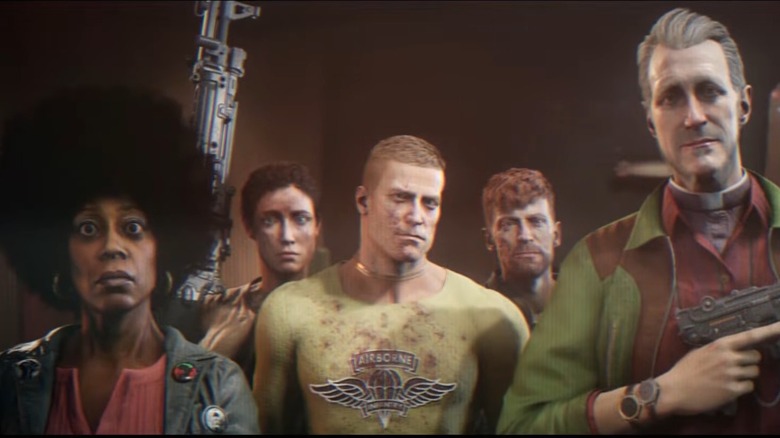
Halfway through "Wolfenstein II: The New Colossus," the evil Nazi Frau Engel brutally decapitates hero B.J. Blazkowicz in a public execution. Thanks to his allies and some wacky pulp-fiction ancient technology, his allies are able to save him and attach his head to a new body. It's a little absurd and even silly, but the magic of these "Wolfenstein" games comes from the fact that it's all played so completely sincerely.
Anyway, fast-forward a few hours, and the tables are turned. Frau Engel is the special guest on a Johnny Carson-esque late-night talk show, but B.J. and his Kreisau Circle allies have other plans. B.J. infiltrates the live broadcast and, in front of the studio audience and millions of TV viewers across the country, embeds his hatchet into Engel's face. Then, with a simple twist of his arm, he cracks her head open like a pistachio nut. Even in a series built on horrific displays of violence, this moment stands out as brutally righteous.
Even better, the game ends with Grace Walker (played by Debra Wilson) giving a final speech that kicks off a new American Revolution to expel fascism from the Land of the Free. This is capped off with a heavy metal cover of "We're Not Gonna Take It" by Twisted Sister, the use of which is foreshadowed by the song's lyrics as dialogue in the game (much like how the previous game used "I Believe" by Chris Isaak).
Metal Gear Solid 2: Sons of Liberty
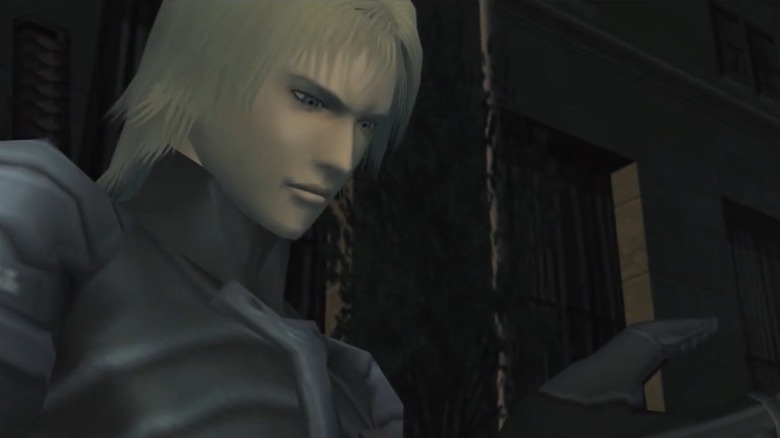
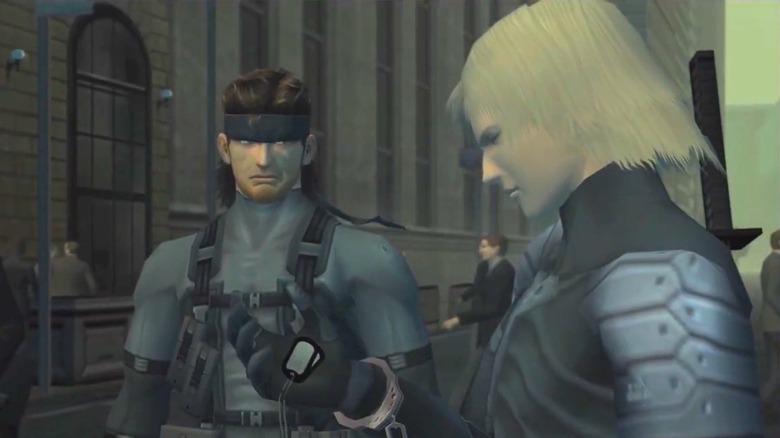
"Metal Gear Solid 2: Sons of Liberty" has a tremendous story stuffed with details and numerous thematic throughlines for players to latch onto and use as a prism through which to interpret the story. But the one that sticks with most players is how the plot itself breaks down and gives way to the message that the player is free to live their life based on lessons learned from the past. This is conveyed by protagonist Raiden, up to this point an avatar for the player, getting a backstory and traits that distance him from his initial status.
As the game begins, the player is prompted to enter their name to display on Raiden's dog tags, thus entwining the player with the character. Fast-forward to the end, though, and Solid Snake asks Raiden about the dog tags hanging from his neck: "Anyone you know?" Raiden looks at them and sees the name you, the player, typed in a dozen hours ago, likely your own real-life name, and replies, "Never heard the name before," throwing them away. Raiden is his own man now, free to choose what parts of his journey he will bring with him to his new life.
And that's just one slice of the ending of "Metal Gear Solid 2." A game so densely layered with storytelling that we've only scratched the surface of its incredible finale, which, if you're interested enough, can be broken down in so many ways.