
The Worst Things Mario Has Ever Done
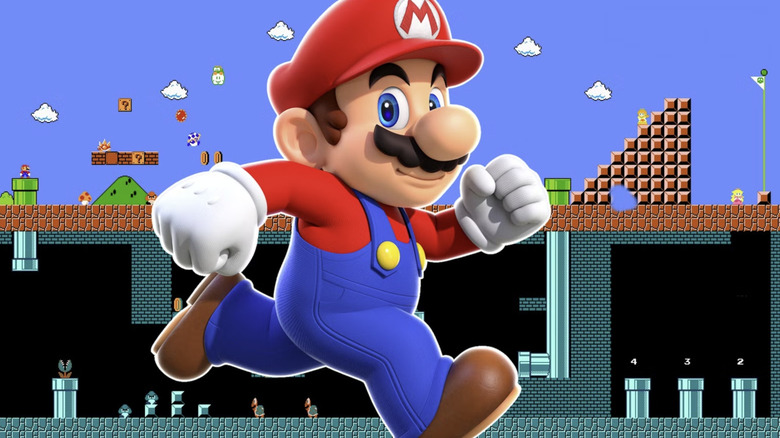
Don't be fooled. The truth about Super Mario is that underneath that red hat and bushy moustache lies an absolute monster. Just think about it. How else does a humble blue-collar plumber rise from obscurity to hook up with a princess, make a million bucks, and become even more famous than Mickey Mouse?
We'll tell you: by eliminating anyone who gets in his way. Bowser? Not a threat. Donkey Kong? He hasn't been a real problem for Mario since 1981. Luigi, or Yoshi, or Toad, or Princess Peach? All victims of Mario's duplicity.
Mario's cruelty has been a well-documented trend for decades, and it's not stopping anytime soon. Mario has been a menace for over 35 years, and he shows no signs of stopping any time soon.
He forced Donkey Kong to perform impossible tricks
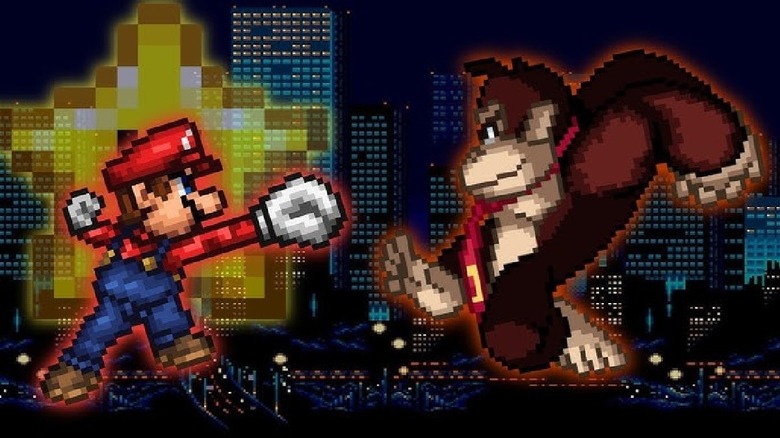
As it turns out, Donkey Kong's reign of terror against Mario doesn't just occur because the big ape gives in to his animal nature — Kong actually has a really personal grudge against Nintendo's plucky plumber. Before "Donkey Kong" took place, Mario ran a circus, and that DK was the Italian's star attraction.
The story, or at least what there is of it, takes place in the aptly named Game & Watch title "Donkey Kong's Circus," in which players control a captive Donkey Kong while a slave-driving Mario watches. Under Mario's unwavering eye, Donkey Kong is forced to roll left and right on a barrel, juggling pineapples while avoiding fireballs. That'd be an impressive trick for a skilled performer—for a regular ape, it's near impossible. Just look at Donkey Kong's face. Every moment of this is pure torture.
Sooner or later the player (and therefore Donkey Kong) is going to mess up, and that's when Mario's cruelty really shows through. When Donkey Kong drops a pineapple, Mario points and laughs. When DK gets hit by a fireball — literally setting injuring himself for the humans' amusement — Mario goes ballistic and chews him out. It's a textbook example of animal abuse, and completely justifies Donkey Kong's later aggressions.
At least Kong is in good company. Before "Donkey Kong Circus," Nintendo released the same game as a Disney-themed title, with Donald Duck serving as the ringmaster and Mickey Mouse playing his unfortunate victim.
He broke up Donkey Kong's family
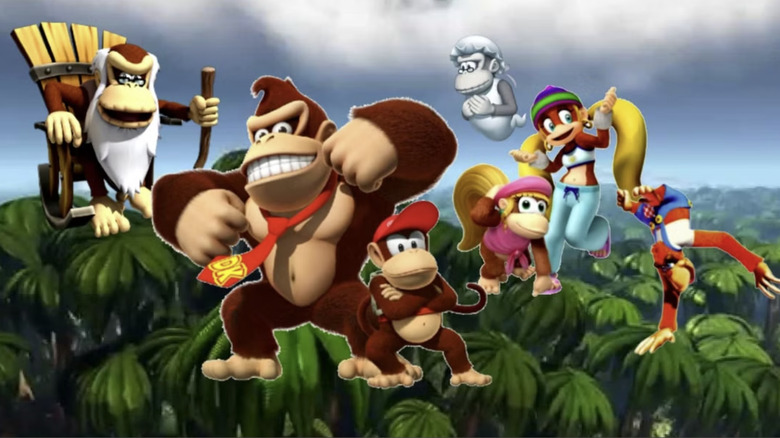
So what happened after Mario saved Pauline (or "Lady," as she's known in Japan) from Donkey Kong's clutches? Why, Mario locked his nemesis in a cage and took him prisoner, of course. That kind of makes sense, but Mario's treatment of Donkey Kong goes from an iffy abuse of power to full-on cruel and unusual punishment when Donkey Kong's son gets involved.
In "Donkey Kong Jr.," Mario returns to menace the Kong family, and in the process does everything that he possibly can to stop Donkey Kong from reuniting with his son, Junior. As Donkey Kong Jr. climbs the vines to hunt down the keys that he needs to save his old man, Mario sends sentient bear traps, killer birds, and living electric sparks on a mission to take the young gorilla down. Rescuing Donkey Kong doesn't solve the problem, either, at least not permanently — after a brief cutscene, the game resets, returning Donkey Kong to his chains and making Mario even more determined than ever to keep the Kong family apart.
It doesn't seem like Donkey Kong ever got over his abuse, either. When Cranky Kong reappears in the "Donkey Kong Country" series, he's a bitter and cynical old man (er, gorilla). Some of that is probably just old age. The rest? Likely a result of Mario breaking his spirit and ruining his marriage, if not his family life (after all, while "Donkey Kong Country" stars Cranky Kong's grandson, Donkey Kong Jr. and his mysterious mother are nowhere to be found).
He slaughtered thousands of citizens of the Mushroom Kingdom
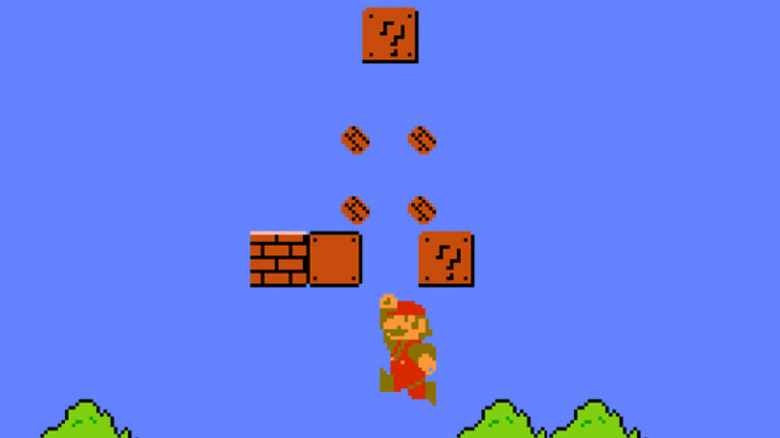
You've seen Mario shatter blocks, right? Aside from jumping, it's pretty much his signature move. And yet, what if we told you every time that Mario breaks a block, he's actually taking a Toad's life?
It's true. In Super Mario Bros.' manual, Nintendo explains that when the Koopa — "a tribe of turtles famous for their black magic"—invaded the Mushroom Kingdom and took Princess Peach hostage, "the quiet, peace-loving Mushroom People were turned into mere stones, bricks and even field horse-hair plants." Accordingly, every time Mario leaps into the air and punches a brick, he's killing one of the very civilians he's set out to save.
If there's a coin or a power-up inside the block, it's even worse. In those cases, not only is Mario murdering Toads, but he's effectively robbing their corpses, too. No wonder Toad flips Mario the bird every four levels — instead of actually saving the Princess, the only person who can transform the Mushroom Kingdom's citizens back into real people, he's storming the wrong castles and committing light genocide.
To be fair, Nintendo does seem aware of the problem. That same part of Super Mario Bros.' manual refers to Mario as "the hero of the story (maybe)," implying Mario's good deeds might just be a matter of perspective, and leaving the possibility that he isn't actually the hero at all wide open.
He cheated on Peach with Luigi's girlfriend
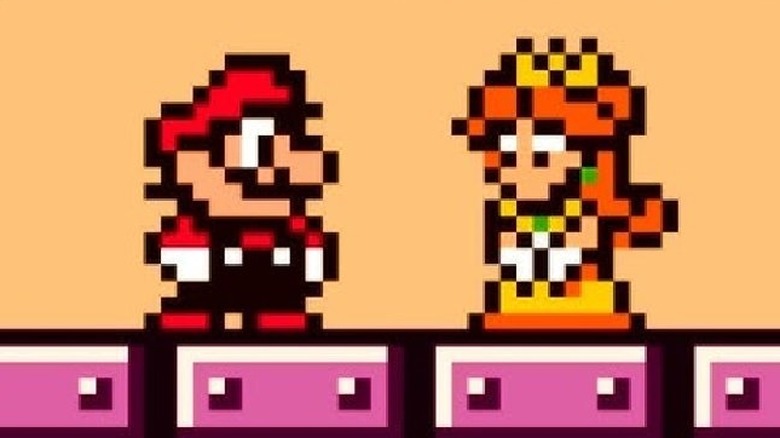
For a short, fat guy with ill-advised facial hair, Mario really gets around. After "Donkey Kong," Mario ditched Pauline for Peach (because why settle for a regular woman when you can date cake-baking royalty, right?), and while she's been his main squeeze ever since, Peach isn't the only princess in Mario's life. In "Super Mario Galaxy," Mario strikes up an innocent friendship with Rosalina, queen of the cosmos, while in "Super Mario Land" — one of the five best Game Boy games ever — he enjoys a brief fling with Princess Daisy.
That's right: the woman who's portrayed as Luigi's boo in games like "Mario Party," "Mario Tennis," and "Mario Kart" made her big debut as Mario's side piece. In "Super Mario Land," the first Mario title on the Game Boy, the plumber travels to Sarasaland, a world far, far away from the Mushroom Kingdom, where the local monarch has been kidnapped by an alien invader named Tatanga. After battling through Sarasaland's four kingdoms—Birabuto, Muda, Easton and Chai—and besting Tatanga in a one-on-one dogfight, Mario and Daisy hop into Mario's plane, the Sky Hop, for a romantic cruise through the clouds.
Don't dismiss Daisy and Mario's relationship as strictly platonic, either. In the end-game cinematic of "Super Mario Land," Mario and Daisy embrace, and a single heart floats above their heads. That might seem innocent, but it's about as explicit as Mario ever gets. Face it, folks. Mario is a player.
He stole Wario's fortune
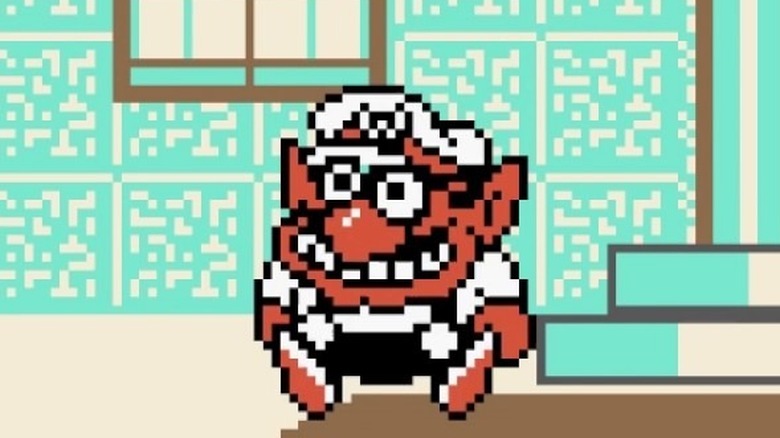
Wario is the bad guy in "Super Mario Land 2: 6 Golden Coins," having stolen Mario's castle while the so-called hero was away rescuing Princess Daisy (note, by the way, that Mario lives in a castle decorated with his own logo in a place called Mario Land, which makes him less of a humble plumber and more of an ego-driven despot). However, like Donkey Kong before him, Wario flipped alignments in his second appearance. In "Wario Land: Super Mario Land 3," Wario is the good guy, and Mario is his main foil.
After Mario boots Wario out of his home, Wario embarks on an epic treasure hunt to replace the money that he lost. The goal is to locate a solid gold statue of Princess Peach, which was originally stolen by the Brown Sugar Pirates, and ransom it back to the Mushroom Kingdom. Wario's plan almost works, too. After battling the pirates through seven worlds and finally toppling their leader, Captain Syrup, Wario finds the statue hidden in the foundation of Syrup's castle, and prepares to receive his fortune.
And then Mario shows up. Just as Wario begins to celebrate his good fortune, Mario swoops down in a helicopter, picks the statue up with a magnet, and hauls it off to the Mushroom Kingdom, where he's no doubt going to take credit for all of Wario's hard work. Wario doesn't go home empty-handed — a greedy genie will give Wario one of six houses, ranging from a birdhouse to his own planet, depending on how much treasure Wario collected during his journey — but that doesn't negate just how much of an a-hole Mario is to Wario.
Spoiler alert: it doesn't get better.
He bullied Wario as a child
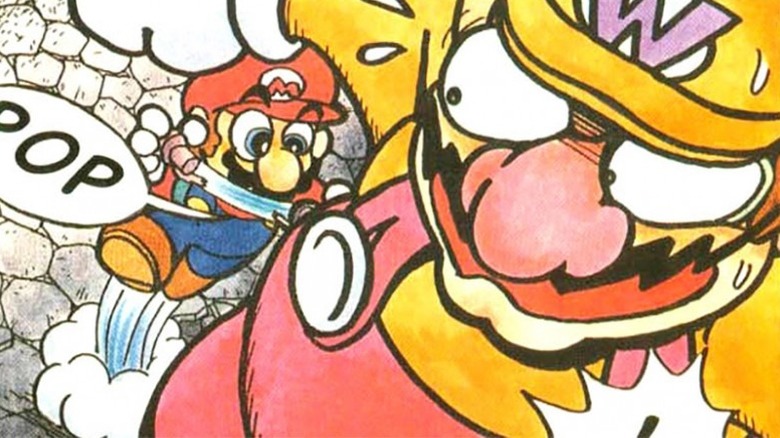
Wario isn't driven completely by greed. His ongoing feud with Mario is fueled by a personal grudge, not just a desire for loot. Sure, Mario might the hero now, but back when the duo were kids, according to an obscure comic, Mario was a total bully — and Wario was his favorite victim.
In a brief nine-page comic that originally appeared in "Nintendo Power," artist Charlie Nozawa and writers Kentaro Takekuma and Leslie Swan give the Mario-vs-Wario rivalry some much needed backstory, and the red-clad plumber doesn't come out of the story looking all that great. As a child, Wario just wanted to be accepted and have a friend, and Mario took advantage of his buddy's insecurity to have fun at Wario's expense.
Mario asks Wario to help him with some gardening, and then picks turnips while Wario harvests teeth-baring Piranha Plants. Mario offers to show Wario how to flatten coins, but when they start playing with Thwomps, it's Wario who's squashed, not the pieces of gold. Finally, while Mario and Wario played "Sheriff and Rustler" 1,256 times, Wario only got to be the sheriff once. When he did, Mario spent the whole time laughing at him. Honestly, after that, it's hardly a surprise that Wario became a criminal—Mario spent their entire childhoods treating him like one.
And if you think Mario's bullying was just a phase, well, think again. After inviting Mario over to his castle for a well-earned spot of revenge, not only does Mario refuse to apologize ("It's been 20 years! Let bygones be bygones," Mario says), but he actually whips out the squirt guns for a game of "Sherriff and Rustler," with a sobbing Wario once again playing the bad guy. For shame, Mario. You're an adult. It's time to start acting like one.
He killed Yoshi again and again and again
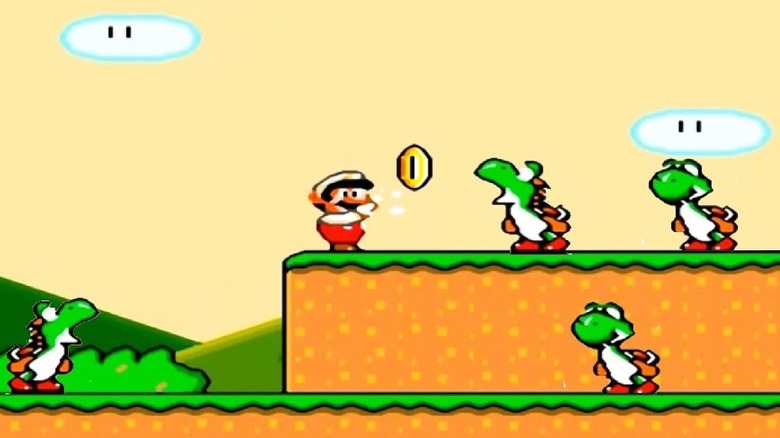
Imagine, for a second, that you are Yoshi. You and your family worked to return two lost babies to their parents, even though the little ones are being chased by monsters and the make the most annoying sounds of all time. Decades later, an evil turtle takes over your homeland, captures your friends and locks them up in castle basements all over the world, and turns you into an egg. Later, a human saves you — and it happens to be the same little boy you rescued so many years ago, all grown up and able to fend for himself. You'd think, maybe, he'd treat you with a little respect, right?
You'd be wrong. Not only is the Koopa invasion all Mario's fault — Bowser and his minions only took a trip to Dinosaur Land because that's where Mario, Luigi, and Princess Peach were taking a vacation — but Mario has absolutely no respect for Yoshi's well-being. Case in point? While Yoshi obviously doesn't mind being ridden around (he wears a saddle as a fashion accessory, for heaven's sake), the mustachioed plumber has no problem leaping off Yoshi's back if he needs to get some extra air. That's good for Mario, but often works out pretty poorly for Yoshi, given that the dino-sacrifice usually happens while the pair are hovering over a bottomless pit.
It's hard to imagine any decent person letting their pet fall to their demise, to say nothing of their onetime babysitter, but Mario does it repeatedly. Don't let Mario off the hook by assuming Yoshi magically comes back to life, either. As "Yoshi's Island" confirmed, there are many, many Yoshis out there, so Mario is probably just offing them one by one until there are none left.
He's constantly crowding Luigi out of the spotlight
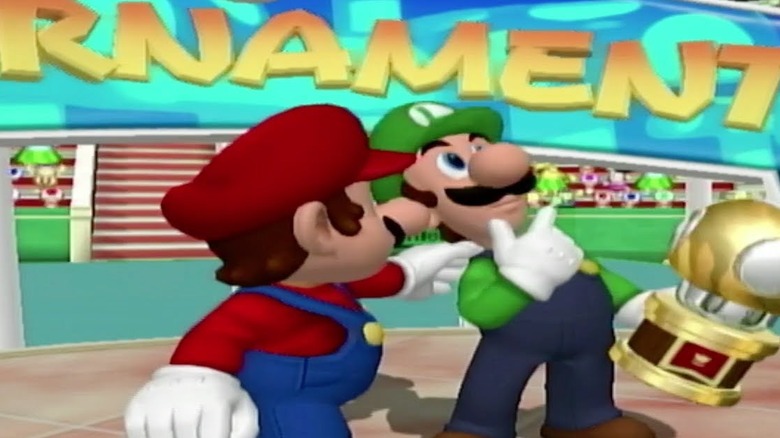
If anyone has suffered at Mario's hands, it's Luigi. In "Mario Bros.," "Super Mario Bros.," and other Mario games, Luigi works just as hard as his brother (at least when there's a second player around), but gets absolutely none of the credit. When Princess Peach bakes a cake for Mario in "Super Mario 64," Mario eats the whole thing himself. When Mario and his crew take a trip to tropical Delfino Island, they forget to bring Luigi along. And when Luigi finally got to star in his own game, it was a damn edutainment title — and Mario's name, not Luigi's, is still in the title.
So, when Luigi finally wins it all in "Mario Power Tennis," the celebration is a long time coming — until Mario ruins it. First, Mario crashes the stage Kanye-style, half-heartedly clapping as his confused brother looks on. Next, he slaps Luigi on the back and, when that doesn't get a reaction, winds up and hits him harder. Finally, Mario lifts his shoe and starts grinding his heel into Luigi's foot, causing Luigi to wince in pain.
Funny? Sort of. Weirdly passive-aggressive? Absolutely. Completely uncalled for? You bet. It's no wonder that Luigi is royally ticked off when he appears in "Mario Kart 8." A person can only be pushed too far before he snaps, and Luigi's put up with more abuse than any other character in the Mushroom Kingdom. Watch your back, Mario. Luigi is coming.
He prescribed pills with no formal medical training
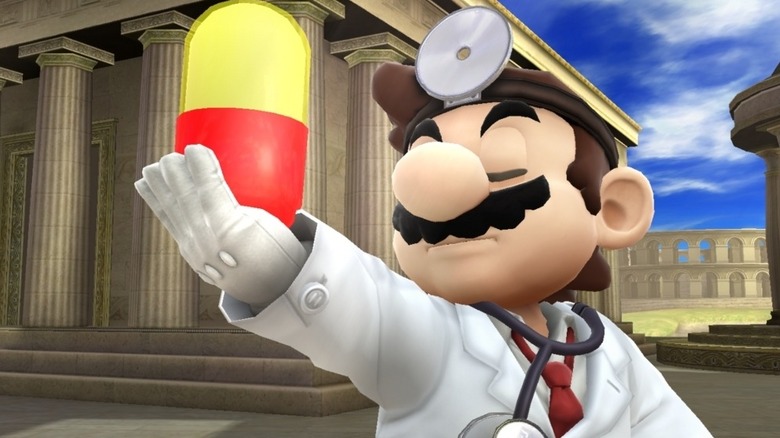
Everyone knows that Mario's primary profession is plumber. The whole reason he ends up in the Mushroom Kingdom to begin with is that he is doing plumbing work and falls into a giant pipe that warps him into the land of Toads and Yoshis. He has also moonlighted as a carpenter and construction worker, though they're in the same general field of blue collar work as plumbing.
But there is one career detour that Mario takes from time to time that stands out from the rest. No, we're not talking about his time spent running his own hotel, or when he steps in to referee boxing and tennis matches. We're referring to his incredibly unsettling side career as a medical professional. Brazenly referring to himself as "Dr. Mario," he wears a lab coat and tosses around pills like they are candy.
To be fair, he definitely lived a whole life on Earth before he first went to the Mushroom Kingdom, but there's no way he had time to get an actual medical degree. And just because he does seem to be pretty good at killing viruses with those pills, that doesn't mean it's any less dangerous for him to be prescribing them in the first place.
He possessed other beings and robbed them of free will
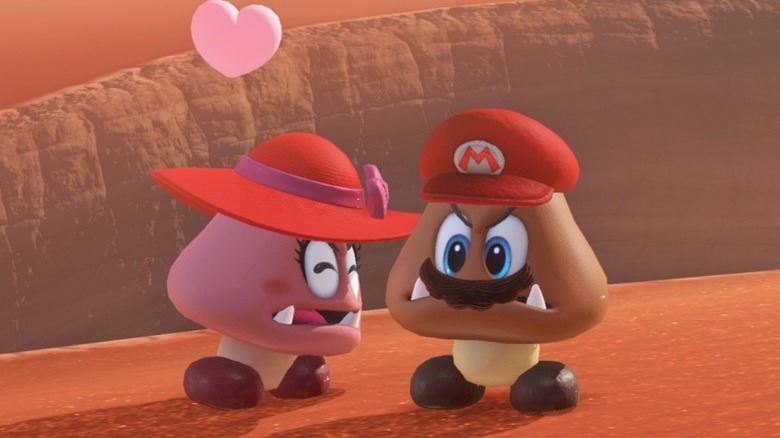
The primary gimmick of "Super Mario Odyssey" — Mario's first 3D adventure on the Nintendo Switch — was his new sidekick, Cappy. Like all fellow Bonneters, Cappy is a spectral being that is essentially a hat ghost. Bonneters are able to not only morph into any type of hat they wish, but can also possess whatever person, creature, or even inanimate object they come to rest upon. Cappy doesn't do this to Mario, as they are partners, and it's a process that only occurs when Cappy is used by Mario to "capture" enemies and objects.
Throughout "Super Mario Odyssey," Mario flings Cappy at a variety of beings, thereby possessing them. At that point, the being is robbed of all free will as Mario takes full control over their movements. The justification is that Mario is only doing this to "bad guys," but that doesn't make it any less twisted that Mario is going around controlling things to do with as he sees fit.
While wearing Cappy, Mario can make creatures battle their friends, do silly things, or literally just walk to their deaths. The moral — not to mention metaphysical — ramifications of the process are nearly impossible to full reckon with. But Mario doesn't care, so long as it gets him some more coins.
He threw an innocent baby penguin off a cliff
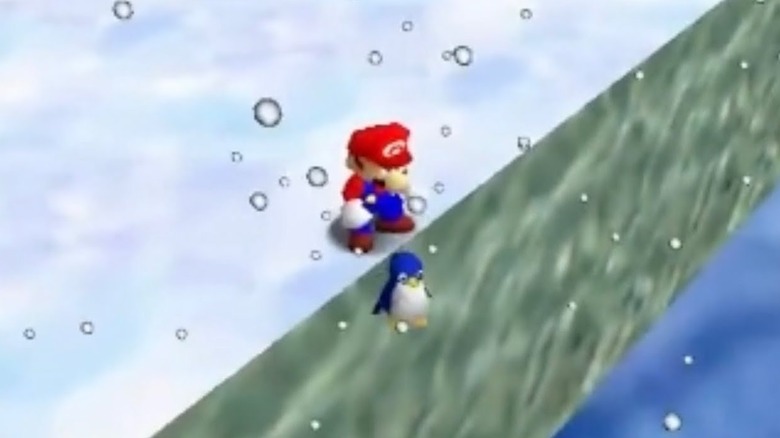
There is a mission in one of the earliest levels of "Super Mario 64" where Mario is asked by a mother penguin to find her baby. Mario then has to find the baby, carry it across slippery and treacherous terrain, and plop the baby in front of its mother to earn one of the game's 120 stars. So how does this result in another example of Mario's cruelty?
Well, nearly every single person who has ever played that area of "Mario 64" has seen fit to intentionally drop the baby penguin off the cliff — and, presumably, to its death. Some do it instead of bringing the baby to its mother. Other especially mean players will deliver the baby to its mother, collect the reward, and then yeet the penguin off the cliff anyway.
No, the game doesn't instruct nor require you to do this. But it allows you to do it, which is almost as bad; Nintendo certainly isn't shy about making sure you can't do naughty stuff in its games when it wants to. But millions of people have sent the baby penguin to its doom, which means Mario has done it too — over and over and over again.
He invited Bowser and other bad guys to hang out and play games
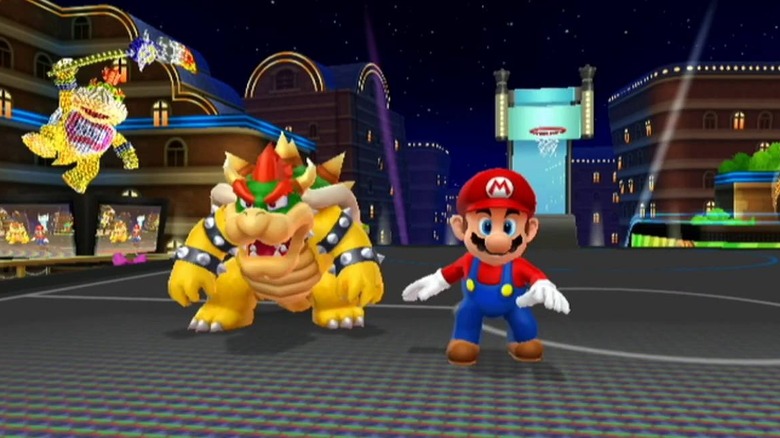
Bowser is clearly obsessed with Princess Peach. This is something we knew long before the version from "The Super Mario Bros. Movie," played by Jack Black, belted out that now-iconic love song to her that consists of little more than chanting her name repeatedly. Kidnapping the ruler of a kingdom is definitely a power play, but it goes much deeper than that with Bowser and Peach.
So why, then, does Mario see fit to keep inviting Bowser to parties and sporting events, ones that will also be attended by Peach? It would seem that the bare minimum in preventing Bowser from kidnapping Peach is to keep them away from each other. Yet Peach is constantly having to play fun games with her ceaseless captor.
One might argue here that Mario himself isn't necessarily organizing these go kart, tennis, golf, baseball, and other tournaments. It's the character who is organizing them that is choosing who to invite. Fine, but then Mario should decline to participate in any sporting tournaments that Bowser is also a part of, and insist that Peach do the same. Not only does he not do that, but Mario is on Bowser's team half the time, and smiling ear to ear in the process.
He beat up children
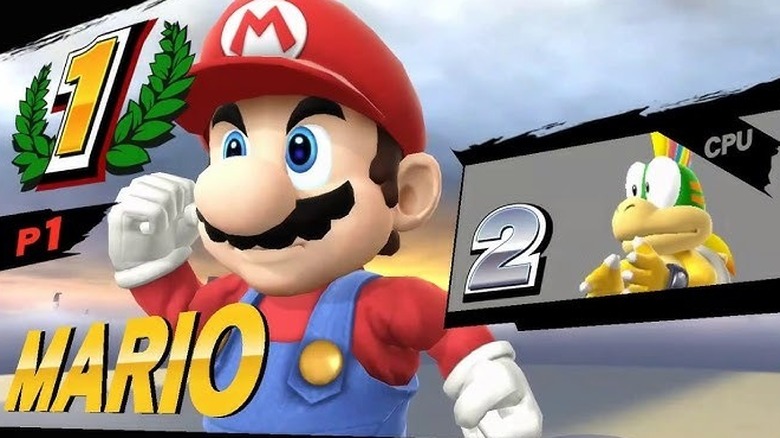
Just because Bowser isn't above the use of child soldiers, that doesn't make it okay for Mario to battle them on the way to rescuing Peach or foiling whatever Bowser's latest scheme might be. But any time Bowser has sent his son or one of the Koopalings against Mario, Mario hasn't thought twice about kicking, punching, and stomping these literal children, who are only doing what they're told.
It's not as though Mario has no other option. He could try a little bit harder to dispatch Bowser Jr., Larry Koopa, Iggy Koopa, Roy Koopa, Ludwig von Koopa, Morton Koopa Jr., and Lemmy Koopa in a less violent way. Instead, he uses fists and fireballs just like he does against bigger, more mature menaces. He doesn't even pull any punches against Wendy O. Koopa, the lone female of the Koopalings. If you get in Mario's way, you face his violent wrath, no matter your age or gender.
He attacked peaceful creatures that were minding their own business
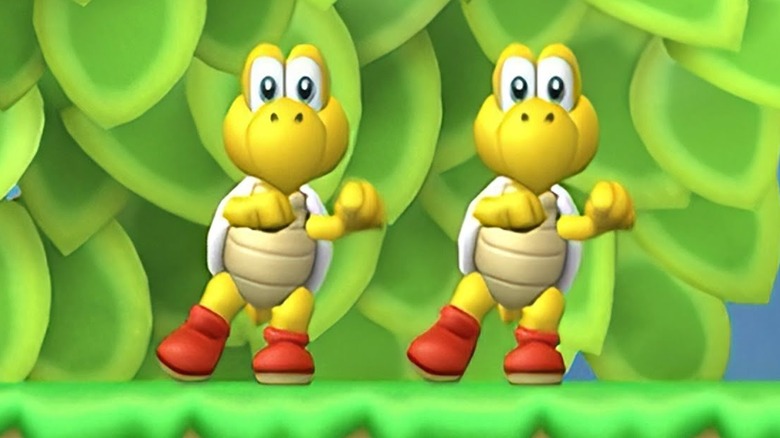
Many of the creatures that Mario has to overcome across the various "Super Mario" games are indeed members of Bowser's army and are specifically sent to take Mario down. We can debate just how much free will some of those creatures have, but that's a different discussion altogether. It's tough to argue against Mario being justified in defending himself by any means necessary against soldiers that are sent his way — well, except the child ones, but we already addressed that.
Playing Mario's games, however, it's difficult not to feel like some of the creatures and animals he stomps to death are never really a threat. Many seemingly don't even acknowledge or care about Mario's presence one way or another, but find themselves on the receiving end of his boot anyway.
Mario often comes running into an area and just takes out anything that moves, whether it's posing a threat or not. Sometimes creatures are literally just minding their own business and gleefully dancing when they are massacred by Mario just for being in his way — or being there at all.
He caused mindless destruction when he ate a Mega Mushroom
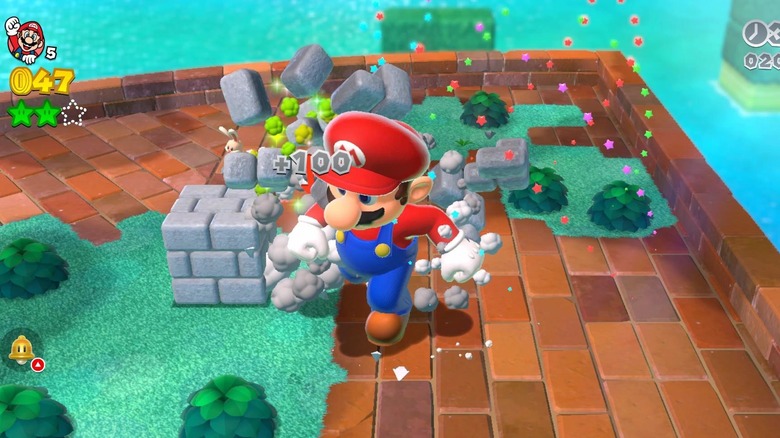
We previously discussed the unfathomable violence Mario enacts anytime he breaks a block in the Mushroom Kingdom. And that is certainly the worst thing he does in terms of environmental destruction. But that doesn't absolve him from the catastrophic damage he does any time he eats a Mega Mushroom and grows large enough and powerful enough to become a miniature Godzilla.
First introduced in "New Super Mario Bros.," a Mega Mushroom allows Mario to grow as much as six times his normal size. Once he is in that state, everything crumbles to dust in his path. And of course, Mario shows zero care or restraint at that point — he just goes stomping off in any random direction, breaking walls, leveling buildings, and obliterating pipes in his wake.
Does Mario really need to completely decimate the very infrastructure of the Mushroom Kingdom just to advance a little bit through a particular area? Of course not. He's proven how easily he can jump and flip over buildings and environments of all sizes. But the power is too much for him to resist. And we seriously doubt he's going back and helping to rebuild the buildings and reinstall the pipes he's wrecked after his mission is complete.
He just goofed around while Peach was waiting to be rescued
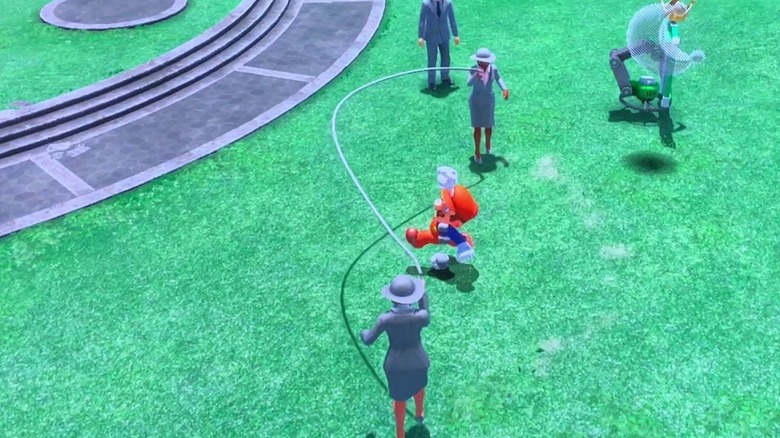
While few video game heroes are more guilty of letting unimportant side quests get in the way of the main goal than fellow Nintendo poster boy Link, Mario has done plenty of that across his various adventures. As Princess Peach is locked in a room or dangling over a pit of lava in a cage, Mario can't help but jump rope, play a game of volleyball, kick around a watermelon, play with an RC car, or any number of other things that are only prolonging Peach's time in captivity.
On some occasions, these excursions are in the name of some objective that will make Mario's quest easier upon completion. But more often than not, they're for little more than some shiny reward — or, in some cases, not even that — that will look nice on Mario's shelf but will certainly not delight Peach once she finally gets home and asks Mario when and where he earned it.