
5 Forgotten PS3 Games That Pushed The Console To Its Limits
The PlayStation 3 was Sony's first foray into HD gaming. It was an experimental time where, for the most part, 60 FPS frame rates were pushed aside in favor of high-quality graphics that created visuals that were scarcely imaginable in previous gaming generations. While some games still ran at 60 frames per second, they were relatively few and far between compared to the PlayStation 2 era.
During this HD era, we saw incredible games that pushed technology to its limits. Compare "Grand Theft Auto: San Andreas" on PS2 to "Grand Theft Auto IV" on PS3, and the leap in visual quality is genuinely mind-blowing. But it wasn't just HD visuals. Gameplay systems could be deeper, environmental interactions could be more tangible, and storytelling could be more realistic than what was possible on PS2. This was the era of "Uncharted," "Mass Effect," Batman: Arkham," and the "Modern Warfare" era of "Call of Duty."
Let's take a look at some would-be PlayStation 3 juggernauts that have been sadly forgotten via the passing of time. These are games that pushed the PS3 to its limits and made staggering achievements that would have been impossible on older hardware, but simply didn't connect with enough players. Some of them have since become cult classics, but none have been officially remastered as of this writing. Join us as we walk down memory lane and appreciate some lesser-known PS3 classics.
Syndicate
First-person shooters have been around since the glory days of "Wolfenstein" and "Doom," but they reached a whole new level of popularity after the 2007 release of "Call of Duty 4: Modern Warfare." In the wake of this staggering success, every studio wanted to have their own cinematic FPS to compete.
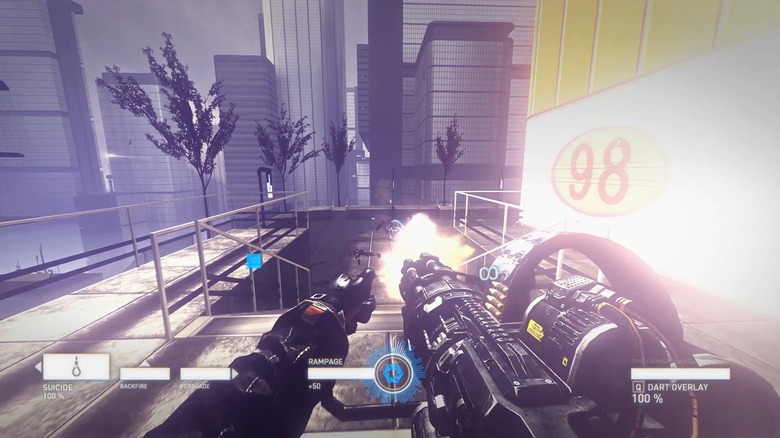
"Syndicate" started out as an isometric strategy game in the 1990s, but was quietly forgotten as the medium moved on from those types of titles. However, publisher Electronic Arts brought it back in 2012, but the new "Syndicate" played nothing like the classic titles. Instead, it was a cinematic FPS. New players were uninterested, old fans were irritated by the change in genre, and the game failed financially.
It's a shame, too, since "Syndicate" is actually pretty awesome. Does it reinvent the FPS genre? No. Does it have high-energy gun combat and amazing visuals? Yes. If "Blade Runner" and "Commando" had a baby, it would be "Syndicate." It effectively articulates the body horror that comes with cyborg augmentation, and the gunplay can be horrifically violent. The first time you get your hands on a minigun and literally slice an enemy in half with a hail of gunfire, your jaw will drop in awe. It's also a dark commentary on the priorities of big corporations, where human casualties, innocent or otherwise, are a non-factor on corporate spreadsheets. It's not a perfect game by any means, but it's unlike anything else you can play on PS3, or even subsequent video game consoles.
Eternal Sonata
There weren't a ton of turn-based JRPGs on PlayStation 3. The genre, which had thrived on previous generations of PlayStation, largely moved to handhelds like the Nintendo DS and PSP. Still, there were some bright spots here and there, like "Final Fantasy XIII," "Star Ocean: The Last Hope," and the game we're talking about today, "Eternal Sonata."
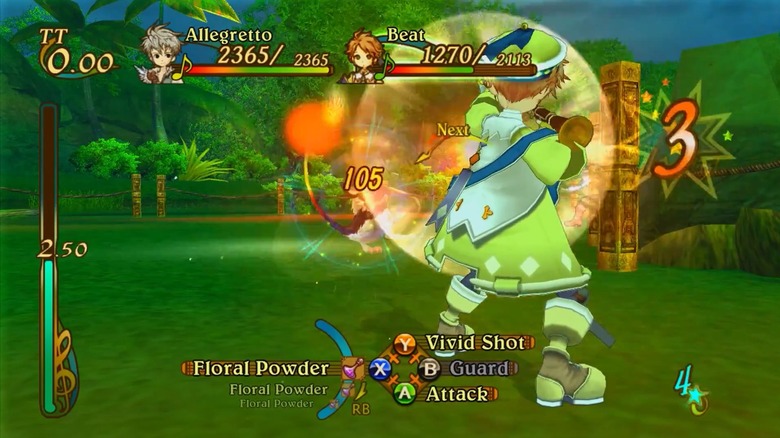
"Eternal Sonata" actually debuted on Xbox 360 in 2007 before being ported, in enhanced form, to PlayStation 3 in 2008. The game featured a whimsical JRPG story inspired by the life and music of Frédéric Chopin, the 19th century piano composer. In real life, he died of tuberculosis when he was just 39 years old, and the game explores his final moments as a "dying dream" that reinterprets and contextualizes his life and work as a JRPG with an anime aesthetic and a turn-based combat system.
While the graphics aren't too far beyond what you might expect from the PS2, the overall presentation is masterful. The art style is gorgeous, and its use of Chopin's music and life as inspiration gives it an extra layer of meaning for fans of the composer. Perhaps it doesn't go far enough into Chopin's real-life history, but if you're looking for a JRPG for PS3 with an ethereal audio/visual presentation rooted in the Romantic era of classical music, "Eternal Sonata" is pretty much your only option.
Mirror's Edge
This one is arguably the most popular game on the list. "Mirror's Edge" released in 2008 and was developed by DICE, the studio best known for the "Battlefield" games. Years before "Call of Duty: Black Ops III," "Titanfall," and "Dying Light" added parkour into first-person shooting games, there was "Mirror's Edge."
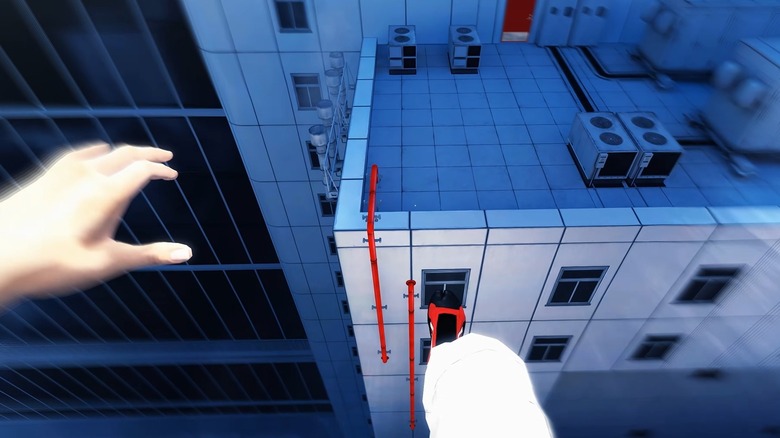
"Mirror's Edge" had shooting, but it was hardly a shooter. The focus was squarely on movement. Protagonist Faith could run across rooftops, hop across platforms, slide under obstacles, and otherwise bound around like a hamster trapped in a dystopian city. In addition to its amazing parkour mechanics, "Mirror's Edge" was bolstered by its gorgeous art style. The city is largely white, with tiny splashes of color to diegetically point Faith in the right direction.
Despite its unique mechanics and gorgeous look, "Mirror's Edge" was not a sales hit. Perhaps players were hoping for something closer to the previous year's "Call of Duty 4: Modern Warfare." Even so, the game was enough of a cult classic to warrant a 2016 reboot, "Mirror's Edge: Catalyst," which adopted an open-world approach to the parkour gameplay. Alas, "Catalyst" didn't move the needle, either, so it's unlikely we'll be seeing another "Mirror's Edge" title anytime soon. But a remaster collection would be nice!
Remember Me
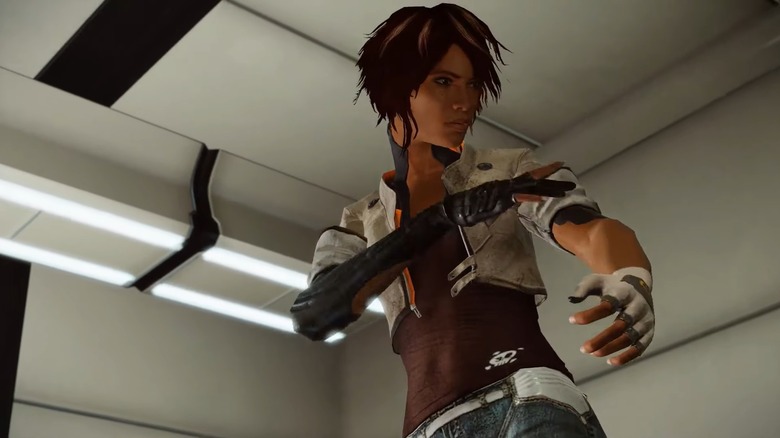
Before they began the iconic "Life is Strange" series, developer Dontnod Entertainment tried their hand at a big-budget action/adventure game. In terms of sales, it didn't work out. However, when measured as a unique experience, 2013's "Remember Me" deserves applause for its blend of hand-to-hand combat, sci-fi storytelling, and wild puzzles.
The main gimmick of "Remember Me" is its "memory-altering" sequences, puzzle stages in which the protagonist, Nilin, can use technology to hack the memories of her targets, causing them to have a completely changed perception of their own reality. It's a real head-trip and something that works uniquely well in a video game. On top of that, "Remember Me" also had a great hand-to-hand combat system where players could build their own combos and use them to pummel enemies into submission.
Throw in a cool sci-fi story set in a dystopian cyberpunk setting, and "Remember Me" really should have gotten more respect in its day. Unfortunately, it just didn't attract players upon its initial release. Curiously, despite being a latter-era PS3 game, it never got a PS4-era port. Maybe the game would have been more popular if it got a PS4 version to smooth out the iffy frame rate and boost the resolution. These days, Dontnod is known for great interactive story games like "Tell Me Why" and "Lost Records: Bloom & Rage," but fans of the studio would do well to seek out this title to see what the studio was up to back in the old days.
Binary Domain
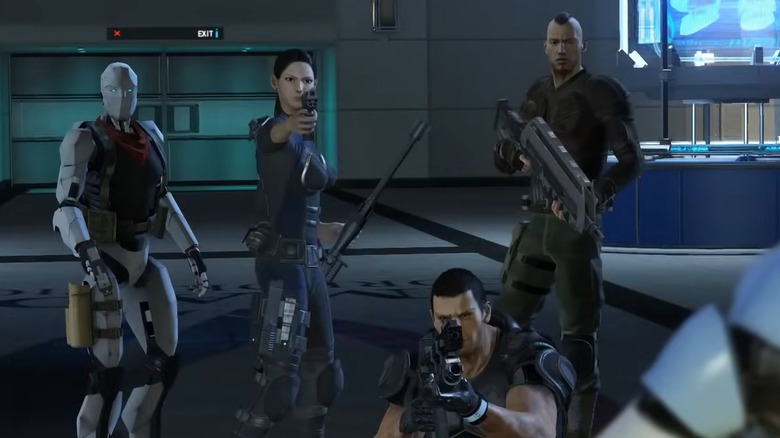
For the longest time, the "Yakuza" games (known in Japan as "Like a Dragon") were the ultimate cult classics in the West. Every time a game got localized for release in North America, it felt like a miracle, or at least a gift from Sega. The developer, RGG Studio, tried twice to achieve mainstream success in America and the West, once with 2011's "Yakuza: Dead Souls," which combined the "Like a Dragon" series with the zombie craze that was sweeping the nation during the PS3 era, and again with "Binary Domain," a sci-fi shooter released in 2012 that took its cues from "Gears of War."
While ostensibly a fast-paced cover shooter with squad mechanics, "Binary Domain" still feels very much like an RGG Studio game. It runs on the same graphics engine as the contemporary "Yakuza" games, features long cutscenes that feature a mix of over-the-top action and deep characterization, and even had a DLC pack that let you play as characters like Kiryu and Majima in the now-defunct multiplayer mode. But gameplay-wise, it was very much its own thing, with flashy shooting mechanics that let you blast parts off of enemy robots to disable them and rip them to pieces with gunfire.
Sadly, both "Yakuza: Dead Souls" and "Binary Domain" failed in America. "Yakuza: Dead Souls" pretty much killed off the whole "Yakuza" series in the West until the breakout success of "Yakuza 0" in 2017. As for "Binary Domain," it's completely forgotten by all but the most hardcore RGG enthusiasts. Maybe they should make "Binary Domain 0," or at least a remaster of the original game, to remind players the breadth of RGG Studio's skillset.